
Last updated November 15, 2026
 Wrought iron
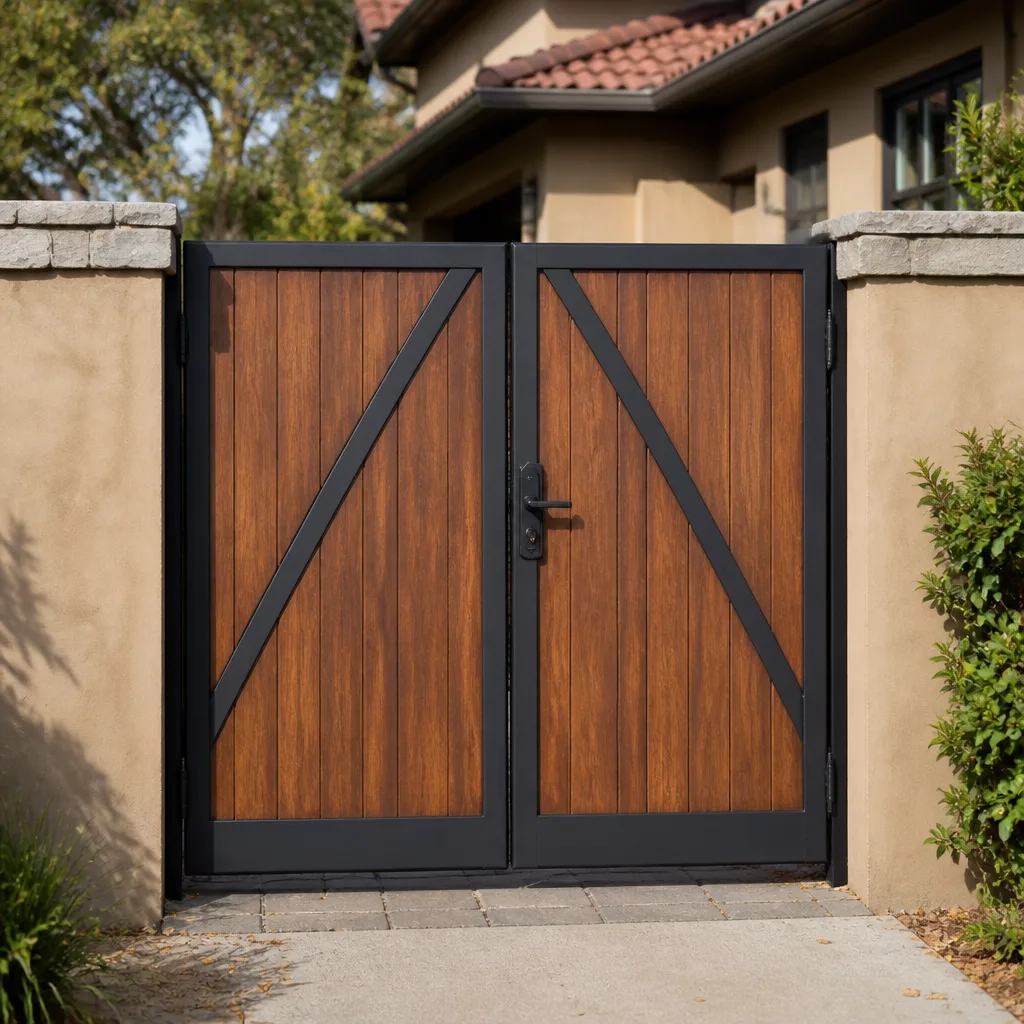 Wood & steel frame
 Farm & ranch
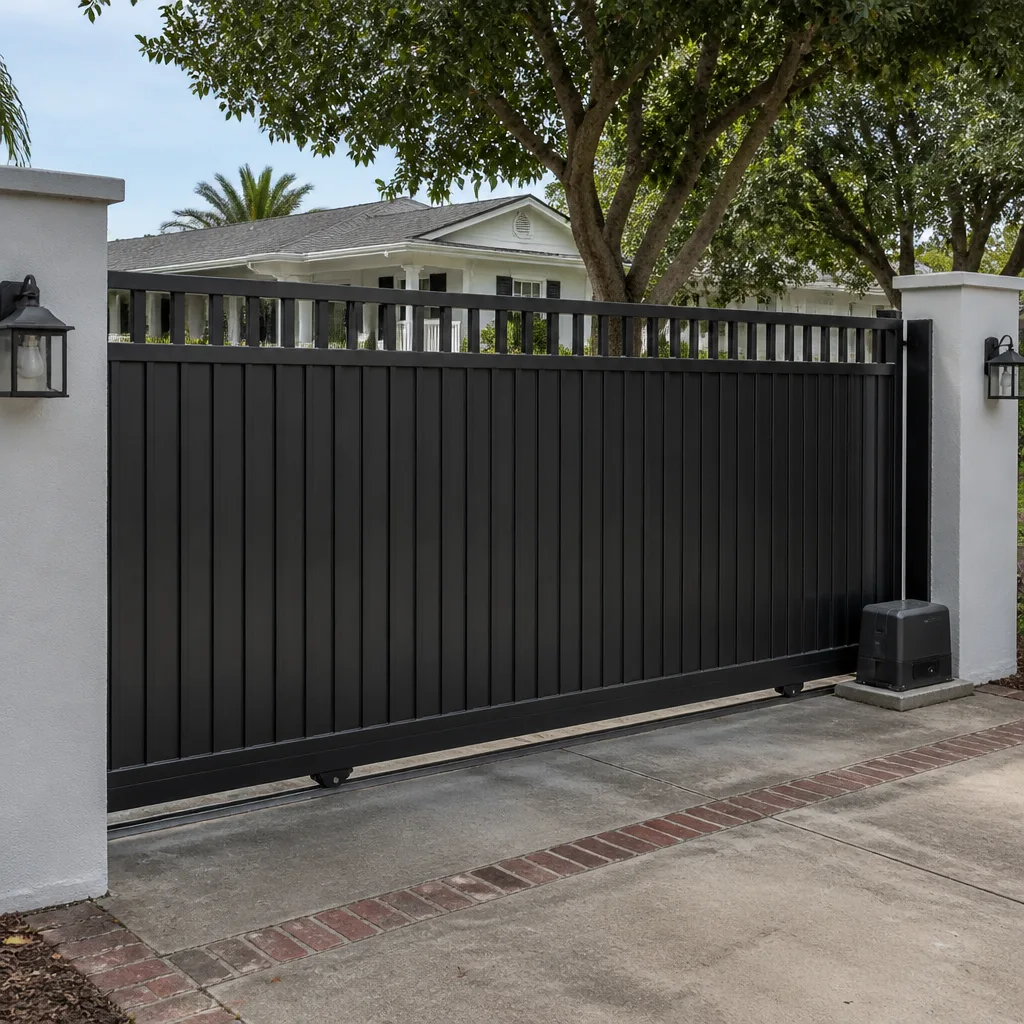 Sliding driveway gates
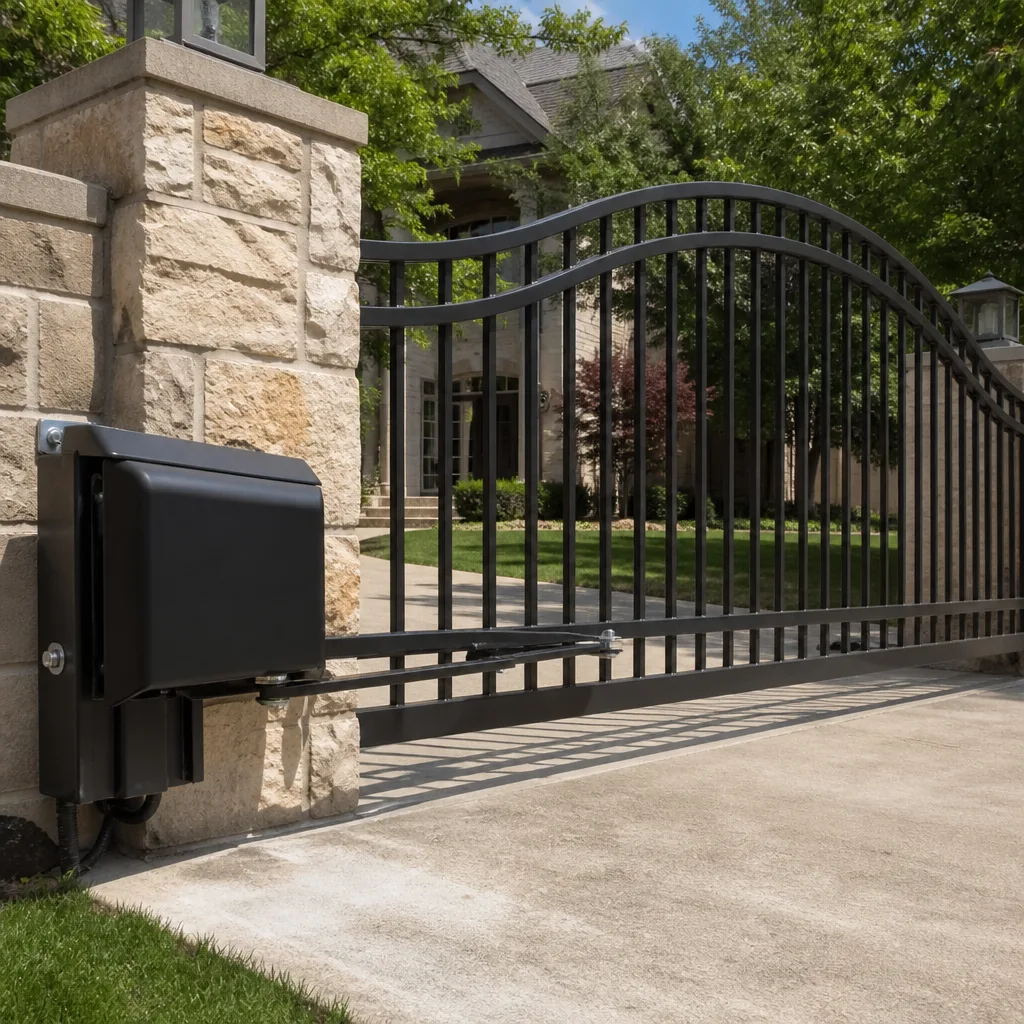 LiftMaster operators
Free on-site gate assessment - hinges, posts, and your LiftMaster or Nice gate operator checked before anything is quoted
The assessment is free and the quote is the invoice.
Get your free estimateGate Repair Maintenance Checklist for Bakersfield Homeowners
The dust that coats every driveway in this valley is the most expensive thing your gate never complains about. Most gate maintenance checklists floating around online were written for mild, damp climates. A gate maintenance checklist Bakersfield homeowners actually need looks different, because alkaline dust, triple-digit summer heat, and hard water from the tap attack gate hardware in ways a coastal homeowner never notices. Dust works its way into motor housings and scores actuator rods. Heat drains gel-cell batteries faster than their rating suggests. Minerals leave crust on exposed hardware until a pivot seizes. By the end of this guide, you’ll have a task-by-task checklist, a photo-eye test that catches failures most people miss, a battery routine built for high-heat conditions, and a log template that shows a contractor exactly what has and hasn’t been serviced. Call (866) 389-4932 for a free estimate. We answer 24/7. Fast dispatch from 7am to 7pm, Sunday through Friday.
Quick Answer
A gate maintenance checklist for Bakersfield should cover six components on a recurring schedule: hinges and pivots, the operator and motor, the control board, safety sensors and photo-eyes, the battery backup, and exposed hardware prone to mineral buildup. Because valley dust, heat, and hard water accelerate wear, inspect monthly, test photo-eyes and batteries on a 90-day cycle, and lubricate with a dry-film or silicone-based product rather than a wet grease that traps grit.
Styles & brands we work with
- Wrought iron
- Wood & steel frame
- Farm & ranch
- Sliding driveway gates
- LiftMaster operators
Table of Contents
- Why Gate Maintenance in Bakersfield Is Different
- The Monthly Walk-Around Inspection
- Hinges, Pivots, and Moving Hardware
- Operator and Motor Checks
- Testing Photo-Eye Alignment Every 90 Days
- Battery Backup Health in High Heat
- Hard-Water Mineral Buildup on Exposed Hardware
- Building a Maintenance Log That Saves You Money
Why Gate Maintenance in Bakersfield Is Different
Our technicians have up to 11 years of experience, and a large share of what we correct comes down to climate. The fine alkaline dust that blankets Bakersfield driveways isn’t just cosmetic. It infiltrates motor housings, scores linear actuator rods, and accelerates wear on nylon limit-switch cams at roughly twice the rate reported in coastal installs. Coastal installs sit in damp, heavy air where airborne grit settles out. Valley air is dry, and dust stays suspended until it lands on the exact surfaces you’d rather keep clean.
Heat is the other half of the equation. Summer afternoons push machine surfaces hot enough to thin out light oils and soften some greases, so a lubricant that works well in a coastal installation can migrate off a pivot here. Battery enclosures on a sun-exposed post can hit temperatures high enough to shorten the life of a gel cell well before its labeled service interval.
Hard water is the third stressor. Irrigation overspray and wash-down water leave calcium and mineral crust on exposed steel and chrome. Left alone, that crust holds moisture against the surface and works into pivots and hinge barrels.
None of that means a gate in Bakersfield is fragile. It means the maintenance calendar has to reflect the local environment. A schedule copied from a national template will skip exactly the checks that matter most here.
The Monthly Walk-Around Inspection
Most serious problems give a warning weeks before they stop a gate. A ten-minute walk-around catches them. Do this once a month, with the gate powered down where the check calls for it.
- Walk the full swing or slide path. Look for gravel, blown soil, or debris that migrated into the track or beneath the gate. A single stone in a slide track overloads the operator every cycle.
- Run the gate a full cycle and listen. Note any grinding, clicking, or hesitation. Sound changes early, long before the gate actually fails.
- Check for smooth travel. The gate should move evenly through the whole arc or run. Jerking or a slow spot usually points to a binding hinge, a worn roller, or a bent track.
- Inspect the mounting. Wiggle the operator housing and the hinge brackets by hand. Any movement at the anchors needs attention before it becomes a loosened post.
- Look at the wiring and conduit. Look for rodent damage, sun-checked insulation, or loose connectors at the operator and the control box.
- Dust the control enclosure and operator vents. A dry cloth or a low-pressure air puff keeps dust from caking into cooling vents and switch contacts.
This is the routine you can do safely yourself. Anything involving the motor’s internal components, the control board, or electrical connections belongs to a trained technician. If your inspection turns up something that needs a fix, our gate repair service handles everything from a single hinge to a full operator replacement.
Hinges, Pivots, and Moving Hardware
Hinges and pivots are the cheapest parts on the gate and the most common cause of operator failure. A dry hinge forces the motor to work harder every cycle, and that extra load shows up as control board faults and premature motor wear.
Clean before you lubricate. In Bakersfield, dust turns any wet lubricant into a grinding paste. Wipe each hinge barrel, pivot pin, and roller with a dry cloth, then apply a dry-film or silicone-based lubricant. Those products leave a protective film without holding grit. Avoid heavy grease on exposed outdoor hardware here; it collects dust and turns sticky within a season.
- Hinge barrels: one light application, worked in by opening and closing the gate by hand a few times.
- Pivot pins on swing gates: clean first, then lubricate; check for side-to-side play.
- Rollers on slide gates: clean the roller face and the track it rides in. Look for flat spots or cracked wheels.
- Latching hardware and stops: lubricate the moving contact points so the gate doesn’t slam or rebound.
Check for play while you’re there. Grab each hinge and try to move it. Any wobble means a worn bushing or a loosened fastener, and both get worse fast once the operator keeps pushing against them. Catching a worn hinge early is a quick fix. Catching it late usually means a bent gate frame or a motor that’s been straining for months.
Operator and Motor Checks
The operator is where dust and heat do the most expensive damage. Brand matters less than what’s inside the housing, but knowing your equipment helps. We work on LiftMaster, FAAC, BFT, Linear, Viking, Ghost Controls, DoorKing, Elite, and Mighty Mule systems, and the diagnostic logic is similar across residential and commercial gear even when the parts differ.
Here’s what to check on your monthly pass:
- Housing condition. Look for cracks, warping, or a gasket that’s pulled loose. A compromised housing lets dust straight into the motor compartment.
- Vent and drain paths. Keep them clear so the operator can breathe and shed any moisture that gets in.
- Manual release. Cycle the release lever so you know it works. A release that’s seized from disuse is a real problem if you ever lose power and need the gate open.
- Motor sound under load. A healthy operator runs at a steady pitch. Grinding or a labored hum means the motor is fighting something.
- Limit switch behavior. The gate should stop at the same points every cycle. If the open or closed position creeps, a limit switch or cam is slipping.
Limit switches and cams are a common failure point in this climate. Dust settles on the cam surfaces, and heat softens some of the nylon components. Once a cam starts slipping, the gate stops in the wrong place and the board throws faults. Those are the moments when a specialist’s eye pays for itself, and it’s why we treat electric gate repair as a diagnostic job first and a parts job second.
If your operator is a heavy-duty commercial unit, like a DoorKing or an FAAC, the same checks apply with higher stakes. Commercial systems cycle far more often, so an internal fault that a homeowner might notice in a year shows up in weeks on a property with steady traffic.
Testing Photo-Eye Alignment Every 90 Days
Photo-eyes are the most important safety component on an automated gate, and they’re the one most likely to pass a test they should fail. Dust accumulation on the lens can dim the beam just enough that the gate still reverses in a quick check but falters under real-world conditions. That’s what we mean by a false-pass reading.
Test them every 90 days, methodically:
- Clean both lenses with a soft dry cloth before you test anything. A dusty lens can pass a quick wave and still be unreliable.
- Look for physical misalignment. The emitter and receiver should face each other squarely. Check for brackets that shifted from wind, gate vibration, or a bumped post.
- Run the beam-block test. With the gate in motion, break the beam with a solid object and confirm the gate reverses every time.
- Test at multiple points along the gate’s travel. The beam should trip the reverse in the open direction, the closed direction, and mid-travel.
- Write down the result. Note the date and whether the test passed cleanly or felt borderline. Borderline is a warning, not a pass.
Log that result every cycle. After a few 90-day tests, you’ll build a real record of how the alignment has drifted, and that record is exactly what a technician needs to decide whether a re-aim will hold or the bracket itself needs work. If you’d rather have an electric gate specialist test the system properly, our Gate Repair Bakersfield team handles sensor and safety system service.
Battery Backup Health in High Heat
Battery backup is the component most homeowners forget until it fails during a power outage. Here, heat is the deciding factor. A gel cell mounted on a sun-exposed post or inside an unshaded enclosure sits at high ambient temperatures for much of the year. Heat accelerates capacity loss in gel cells, so a battery that would last several years in a mild climate can lose useful capacity much sooner. Its labeled service interval doesn’t account for that.
Test backup capacity rather than just checking that the battery is there:
- Check the terminals and clean them. Look for corrosion and confirm the connections are snug.
- Inspect the enclosure. Is it cracked, or is the lid not seating? Heat and sun make plastic brittle over time.
- Cut power briefly and observe. With the gate idle, switch off the circuit at the breaker and confirm the gate cycles on backup. Then restore power. If it can’t complete a full cycle or moves slowly, the battery is losing capacity.
- Note the date. A gel cell’s age matters as much as its voltage, especially in high-heat conditions.
- Look for swelling or a bulging case. That’s a sign of heat damage; a swollen battery needs replacing.
Do this test on the same 90-day rhythm as the photo-eyes. Battery behavior, photo-eye reliability, and operator health all tend to drift together, and testing them on one schedule makes the pattern easy to spot. If the gate can’t complete the cycle on backup, or if the operator is behaving unpredictably around the battery test, it’s worth having the system checked properly. Call (866) 389-4932 for a free estimate; we’ll tell you honestly whether you need a new battery or a deeper look at the charging circuit.
Hard-Water Mineral Buildup on Exposed Hardware
Bakersfield’s water leaves mineral crust on anything it touches. For gate hardware, that means irrigation overspray, wash-down water from the driveway, and the occasional leaking hose line all leave calcium and mineral deposits on exposed steel, chrome, and painted surfaces.
Know where to look:
- Hinge barrels and pivot pins. Mineral crust gets into the gaps and grinds against the pin.
- Slide-gate tracks and rollers. Burnt-on mineral wear over time, and gritty deposits in the track increase friction.
- Base plates and anchor bolts. Standing water with minerals in it works into any gap.
- Latch hardware and painted touch points. White crusty spots or chalking paint are your tell.
- Operator mounting brackets. Look at the base, where water pools.
Treatment is mostly patience. Clean with a soft cloth and warm water or a mild cleaner, and avoid abrasive pads that scuff the finish. A stiff brush can work on textured surfaces. For stubborn crust, let a mild solution sit for a bit before scrubbing. Mineral deposits under a hinge or in a track are the spots that do damage, not the visible crust itself.
There’s a point where replacement beats cleaning. If a hinge barrel is deeply pitted from corrosion, or a roller is worn and crusted at the same time, cleaning it only delays the next failure. A hinge that then seizes through a season of heat and load can bend the gate frame, and a bent frame is a much bigger job. On a roller or hinge that’s already pitted, replacement is usually the smarter spend. When the hardware is past cleaning, we can replace the parts and get the gate back in service.
Building a Maintenance Log That Saves You Money
A maintenance log does one thing well: it tells a technician exactly what has and hasn’t been done. Without a log, you end up paying for inspections of parts that were serviced last month and missing the one that’s actually moving out of spec. Duplicate work charges are real, and most homeowners don’t know they’re paying them.
Keep it simple and specific. A notebook on a clipboard and a pen still work:
| Date | Task Completed | Component | Result / Notes | Next Due |
|---|---|---|---|---|
| Notes here | e.g., photo-eye beam test | Safety sensors | Pass / borderline / fail | 90 days out |
| Notes here | e.g., hinge lubrication | Hinges | Grit removed, film applied | Next month |
| Notes here | e.g., backup cycle test | Battery | Completed full cycle slowly | Next 90 days |
| Notes here | e.g., track cleaning | Slide track | Mineral buildup removed | Next month |
What makes a log useful is specificity. “Photo-eye test, passed” tells a service technician almost nothing. “Photo-eye beam test, both directions, passed, one lens required cleaning, left bracket has slight play” tells them where to look first and whether to bring parts for the bracket.
Log the manufacturer and model too, whether that’s a Mighty Mule on a residential driveway or a DoorKing at a shared entrance. That one line tells whoever shows up next what parts to order before the visit, and it lets a gate specialist tell you upfront whether a replacement part is a stock item or a special order. With the log in hand, you can get a clear diagnosis and an upfront price from Bakersfield gate specialists before anyone lifts a tool.
Common Mistakes to Avoid
- Greasing exposed hinges with wet lubricant. Wet grease collects valley dust and turns into abrasive paste. Use a dry-film or silicone lubricant instead, and clean before you apply it.
- Treating the photo-eye quick-test as proof of safety. A gate that reverses once during a quick wave can still fail under real conditions when the lens is dusty. Test on the 90-day cycle, at multiple positions.
- Ignoring a battery that “still starts the gate”. In high heat, a gel cell loses capacity long before it fails outright. Test the backup under load, not just at rest.
- Scrubbing mineral crust with abrasives. Abrasive pads scuff finishes and open the surface to more corrosion. Clean gently, and replace hardware that’s already pitted.
- Waiting for a gate to fail before calling anyone. A strained operator and a binding hinge give weeks of warning. Listening to the gate once a month cheaply avoids a mid-motor-replacement bill.
- Skipping the manual release. A release that hasn’t been moved in years can seize. Test it a couple of times a year while the gate is idle.
- Letting dust cake in the operator vents. Blocked vents let heat build in a housing that’s already working in triple-digit temperatures. A quick clean every month protects the motor you can’t see.
See the difference
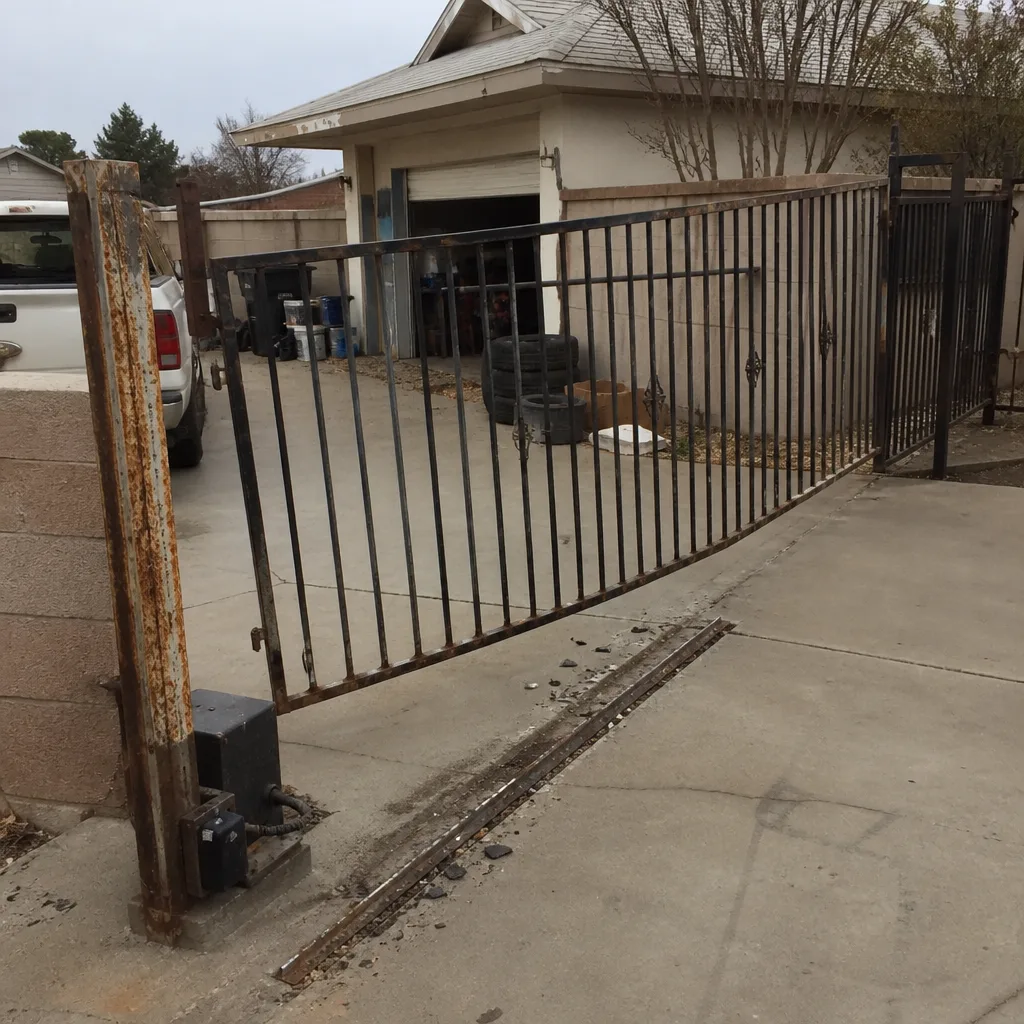 Before
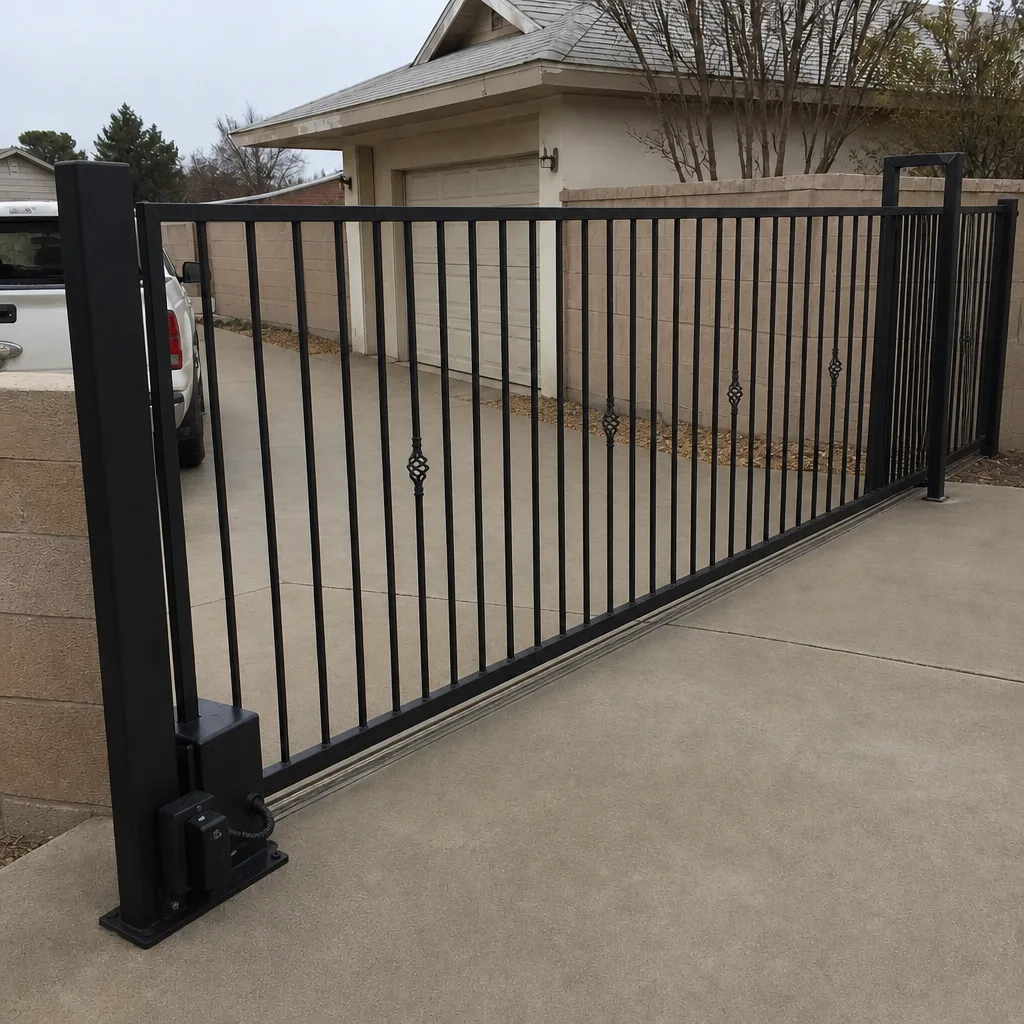 After
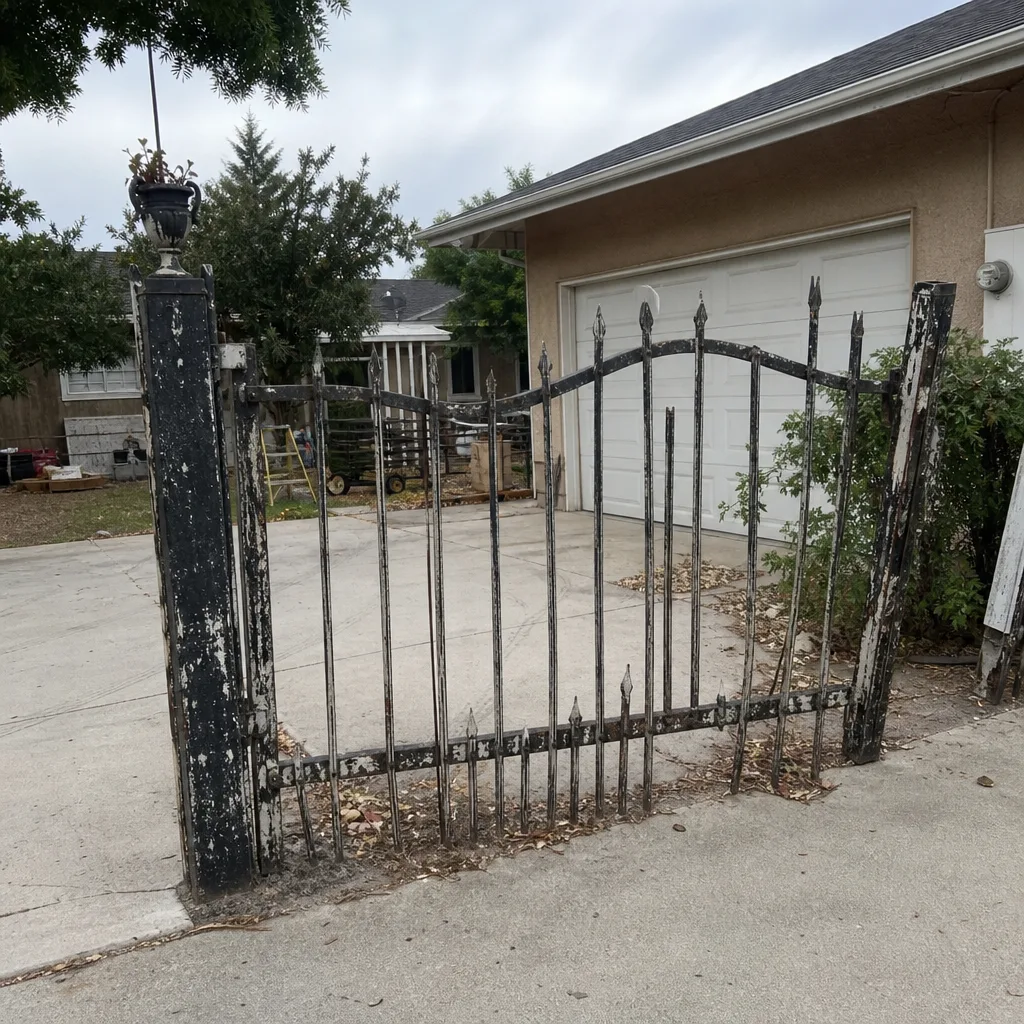 Before
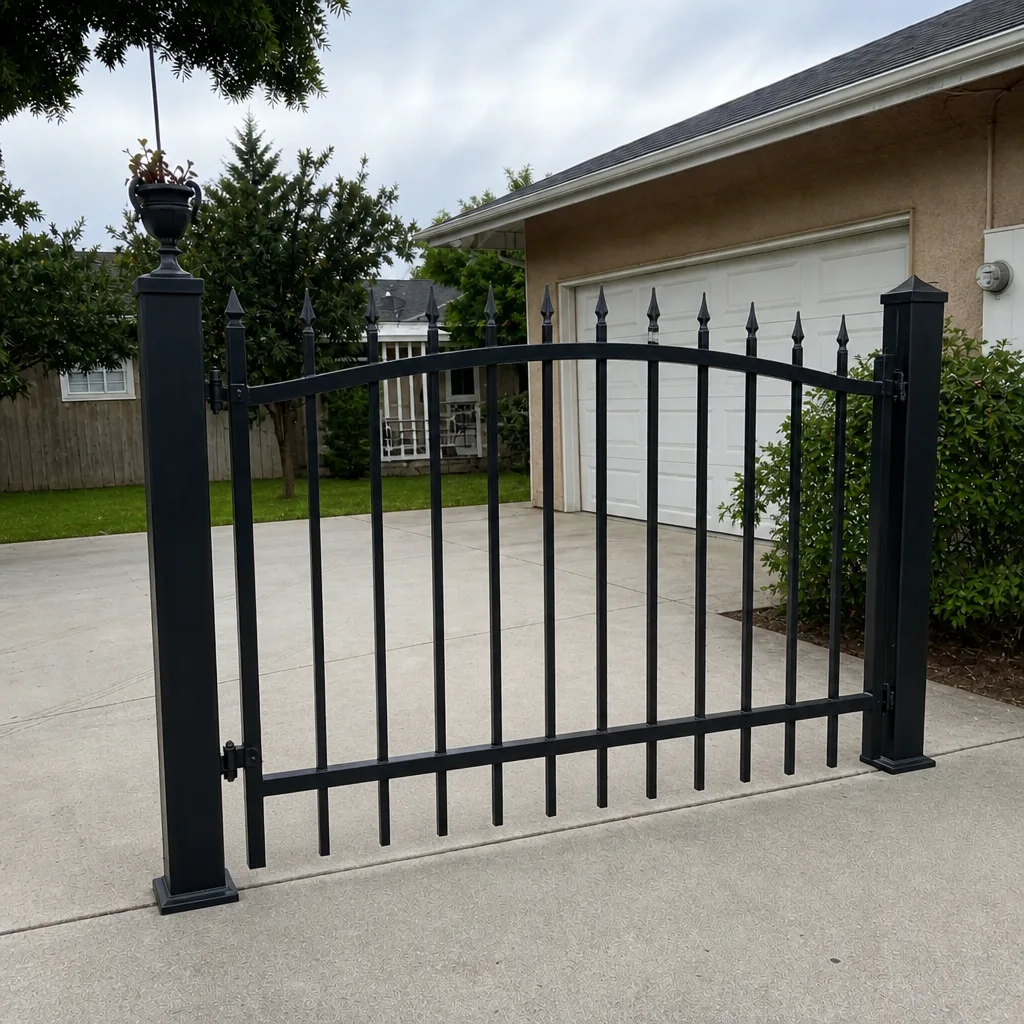 After
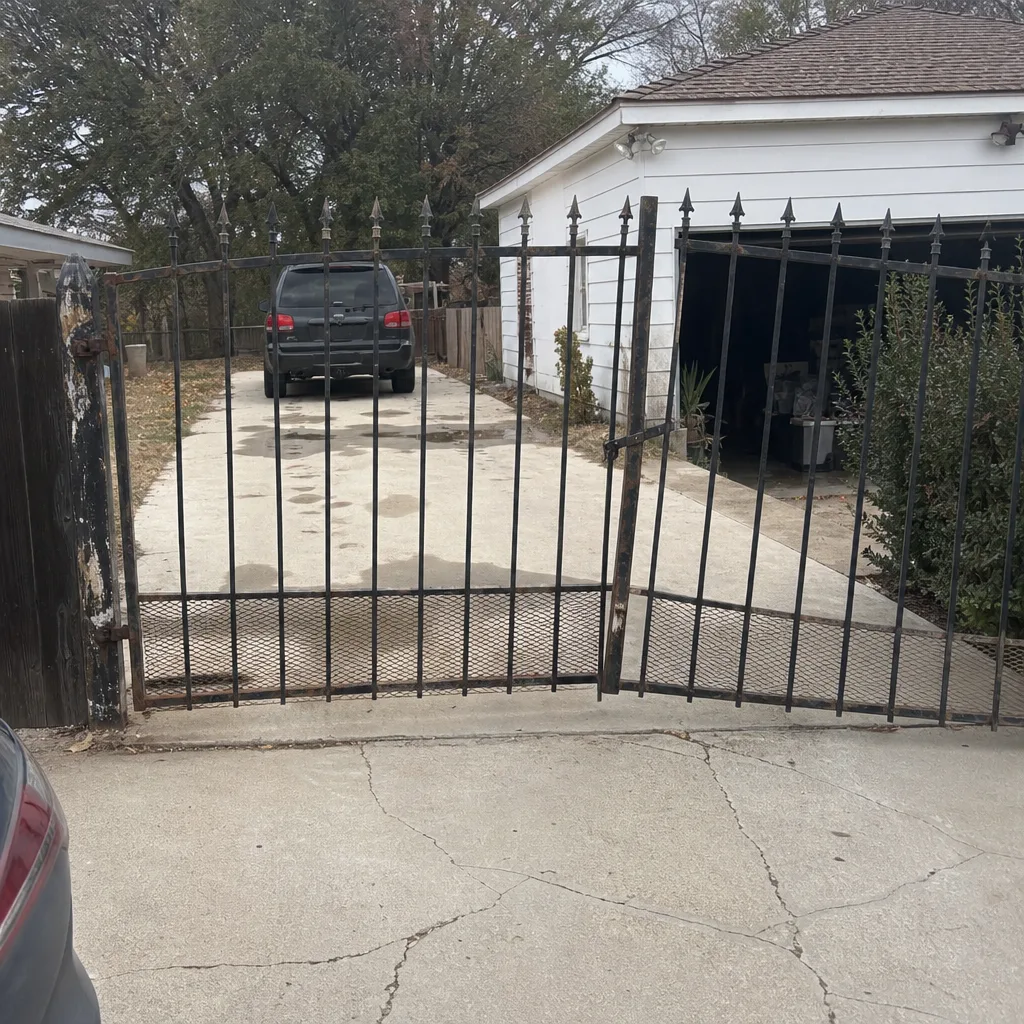 Before
 After
When to Call a Professional
Some jobs belong in the checklist. Others need a trained technician and a meter. Call a professional when the operator hums, grinds, or trips a breaker; when the control board flashes a fault you can’t clear; when the gate stops mid-travel or reverses on its own; when the housing or wiring shows damage; or when the photo-eye test fails after cleaning and realigning. Also call when a hinge or pivot is too seized to free without damaging the barrel, and whenever the work means getting inside the operator or the control box. A gate has no torsion springs, but a live electrical connection at a control box, a heavy panel that can swing or slide under power, and a slide gate that can come off its track are all genuine injury risks. Don’t poke at wiring you can’t identify.
Gate Repair Bakersfield offers free estimates in Bakersfield. Call (866) 389-4932. We answer 24/7, and fast dispatch from 7am to 7pm, Sunday through Friday. We work on residential and commercial systems, from a single-family driveway to an HOA entrance.
Frequently Asked Questions
Do a walk-around inspection once a month and test photo-eyes and battery backup every 90 days. Dust, heat, and hard water put more load on gate components here than in milder climates, so monthly hardware checks and a 90-day safety cycle keep small problems from becoming operator failures. Call (866) 389-4932 for a free estimate if you’d rather have a professional set the baseline.
Use a dry-film or silicone-based lubricant on exposed hinges and pivots, not heavy grease. In dry, dusty conditions a wet lubricant holds airborne grit against the pin and accelerates wear. Clean every surface before you apply anything. If a hinge is already seized or pitted beyond cleaning, replacement is the better fix, and we can get it done.
Test the beam in both directions at multiple points along the gate’s travel every 90 days, and note the result. False-pass readings happen when dust dims the lens just enough to pass a quick wave while being unreliable under real conditions. If the gate fails to reverse reliably even after cleaning, call (866) 389-4932 for an exact quote on sensor repair – the estimate is free.
Yes. A gate that stops after an outage is usually a battery backup that lost capacity, a board that needs a reset, or a control box that took a surge. We diagnose motors, control boards, sensors, and wiring rather than guessing at the most sellable part. Call (866) 389-4932; we answer 24/7, and fast dispatch from 7am to 7pm, Sunday through Friday.
Most likely, yes. We work on nine major brands, including LiftMaster, FAAC, BFT, Linear, Viking, Ghost Controls, DoorKing, Elite, and Mighty Mule. That range includes entry-level residential openers and heavy-duty commercial operators, so a residential driveway and a shared HOA entrance are both within reach. Call (866) 389-4932 for a free estimate and we’ll confirm your model.
A notebook with five columns works: date, task completed, component, result, and next due date. Specificity is what makes it valuable. Instead of “photo-eye test, passed,” write “photo-eye beam test, both directions, passed, one lens required cleaning.” A detailed log tells a technician exactly what has been serviced and avoids paying for the same inspection twice. Call (866) 389-4932 to book a visit.
The Bottom Line
A gate maintenance checklist for Bakersfield works only if it’s built for what Bakersfield actually throws at a gate. Alkaline dust works into motor housings and scores moving parts. Triple-digit heat shortens the practical life of gel-cell batteries and softens limit-switch components. Hard water crusts exposed hardware until a pivot seizes. Inspect monthly, test photo-eyes and battery backup on a 90-day cycle, use a dry-film lubricant, and keep a detailed log so you can show a technician exactly what’s been done. That log, carefully kept, is the difference between fast, focused service and paying twice for the same inspection.
We work on your brand, whether it’s a Ghost Controls opener on a residential driveway or an Elite system at a commercial entrance. When the checklist turns up something you’d rather not troubleshoot yourself, call (866) 389-4932 for a free estimate. We answer 24/7, and fast dispatch from 7am to 7pm, Sunday through Friday.
Written by the team at Gate Repair Bakersfield.