
Last updated November 15, 2026
 Wrought iron
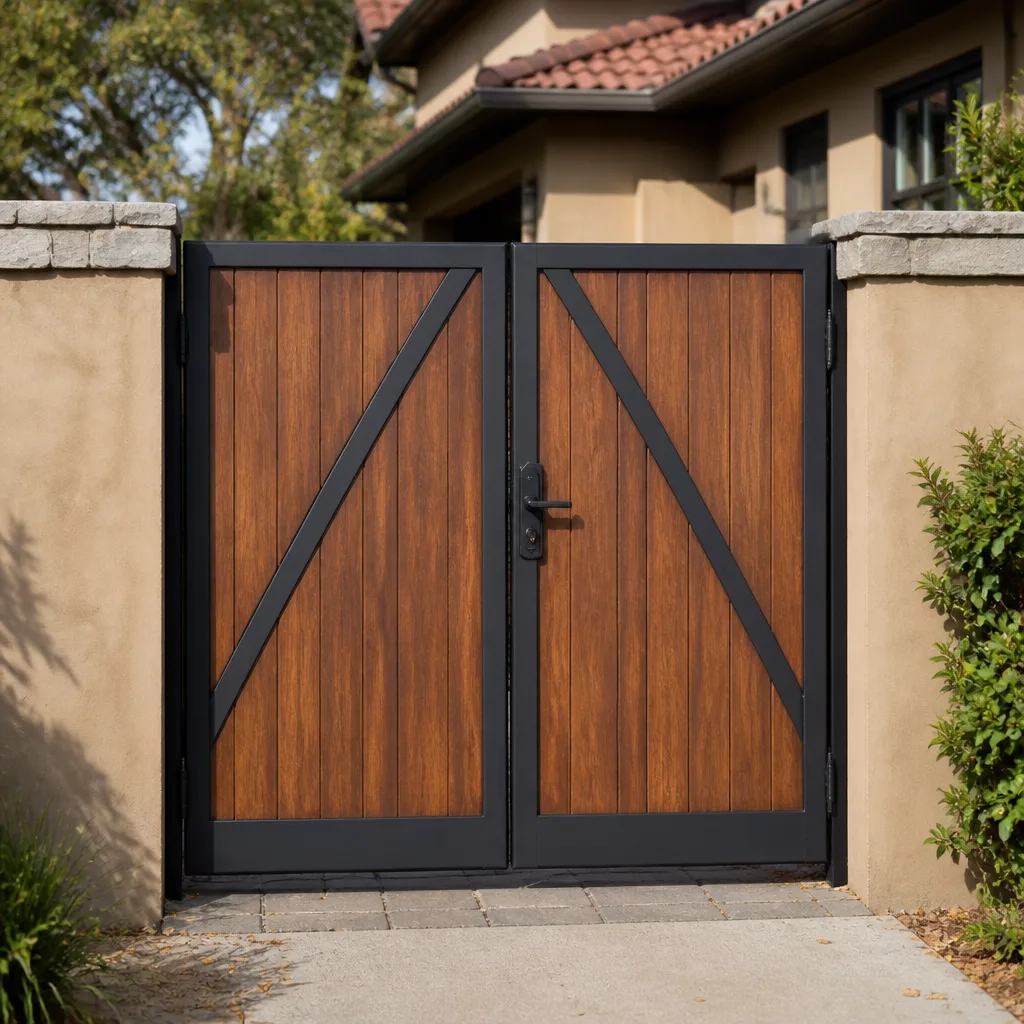 Wood & steel frame
 Farm & ranch
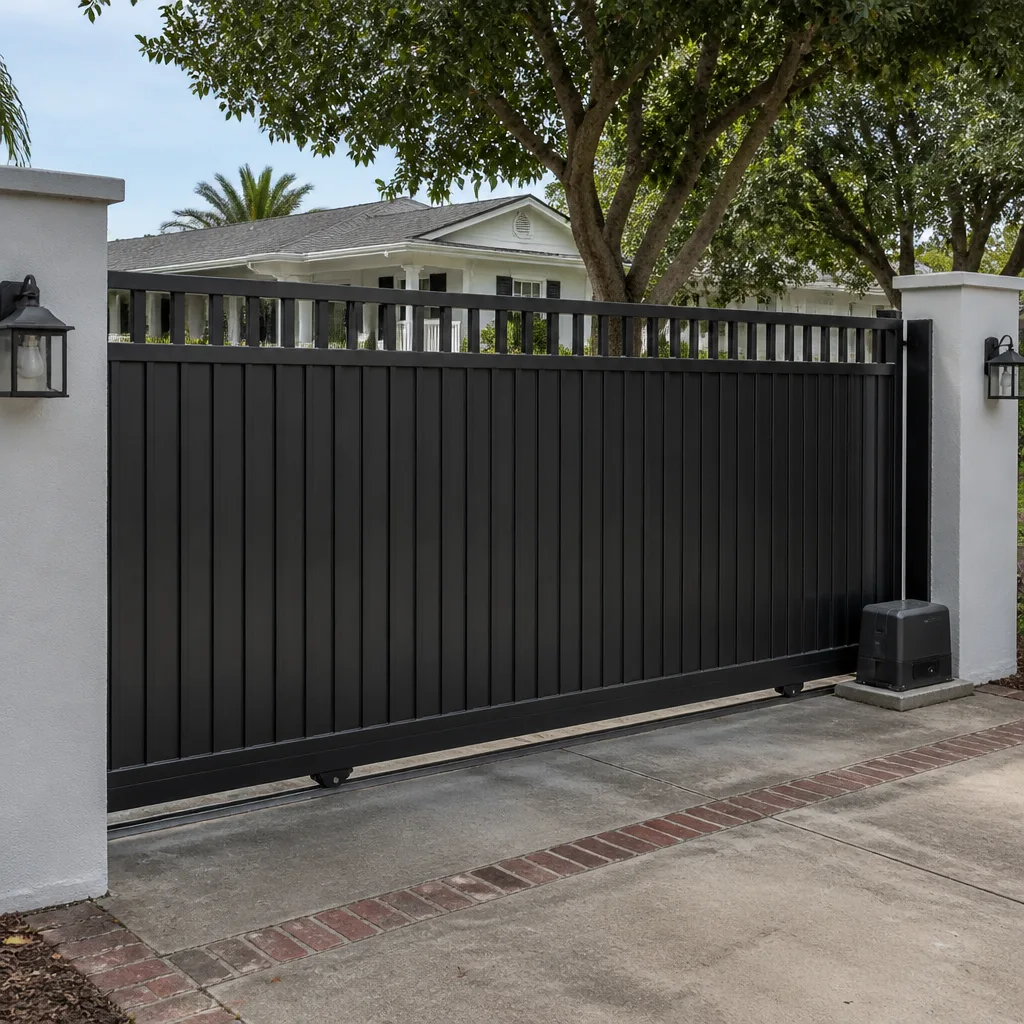 Sliding driveway gates
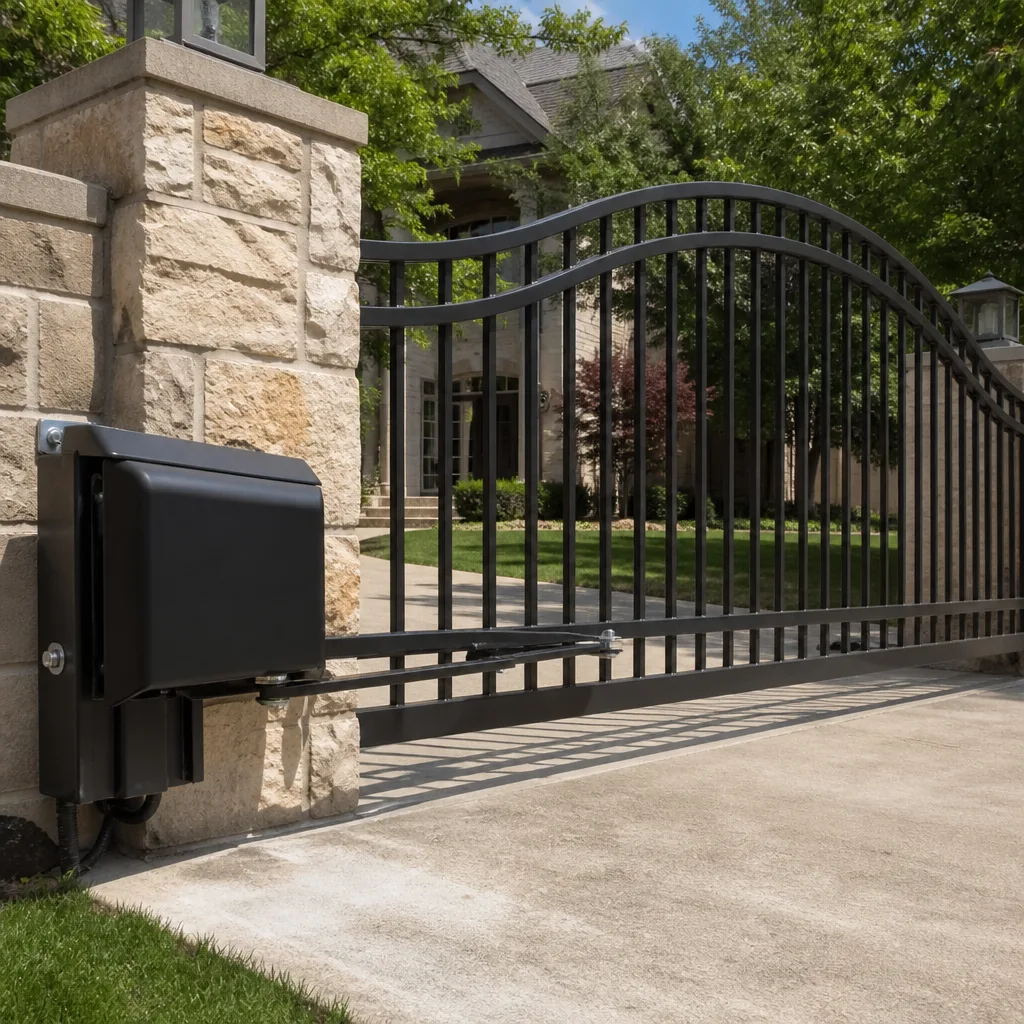 LiftMaster operators
Free on-site gate assessment - hinges, posts, and your LiftMaster or Nice gate operator checked before anything is quoted
The assessment is free and the quote is the invoice.
Get your free estimateGate Repair Maintenance Schedule: What to Do and When
Most maintenance guides tell you to lubricate hinges twice a year and call it done. That advice was written for a temperate climate with low dust, not for Kern County, where a single windstorm can pack abrasive grit into a chain drive and score the rail long before anyone thinks to look at it. Here in Bakersfield, dust doesn’t wait for spring cleaning, summer heat bakes lubricant into a sticky film that traps more grit, and a gate that ran fine in April can start tripping its safety sensors by July. This guide breaks maintenance down by what actually degrades and when, so you can build a schedule around your operator type, your cycle count, and the real conditions your gate lives in.
Quick Answer
A working gate maintenance schedule in Bakersfield is built on three tracks: monthly visual and safety checks, quarterly lubrication and tension adjustments tied to how many cycles your gate runs, and annual deep service of the motor, control board, battery backup, and underground wiring. Calendar dates matter less than cycle counts and dust exposure. High-traffic commercial gates often need quarterly chain tension checks regardless of season, while a lightly used residential driveway gate may only need semi-annual attention. When something sounds, sticks, reverses, or stops mid-travel, that’s a repair call, not a maintenance item.
Styles & brands we work with
- Wrought iron
- Wood & steel frame
- Farm & ranch
- Sliding driveway gates
- LiftMaster operators
Table of Contents
- Cycle-Count vs. Calendar Maintenance: Which Schedule Fits Your Gate?
- How Bakersfield Heat and Dust Reshape the Schedule
- Choosing the Right Lubricant for 90°F Summers
- The Monthly Walk-Around: What to Look and Listen For
- Quarterly Service: Chains, Tracks, and Hardware
- Battery Backup: How to Load-Test It Properly
- Loop Detectors and Underground Wiring Before Summer
- Building a Maintenance Log That Shortens Diagnosis Time
Cycle-Count vs. Calendar Maintenance: Which Schedule Fits Your Gate?
Every gate operator has a duty cycle rating, and that rating tells you more about when to service the gate than any calendar reminder ever will. A single-family driveway gate that opens and closes four times a day accumulates roughly 1,460 cycles a year. An HOA entry gate serving dozens of homes can rack up that many cycles in a month. Treat those two gates the same and you’ll either over-service the quiet residential gate or run the busy one into the ground.
In our experience across gate repair work in Bakersfield, the highest-wear components are always the same: chain and sprocket, roller bearings, hinge pivots on swing gates, and the track on slide gates. Each has a service interval that scales inversely with cycle count.
- Light residential use (under 10 cycles per day): inspect monthly, lubricate and tension every 6 months, deep service annually.
- Moderate residential or small commercial (10-40 cycles per day): inspect monthly, lubricate and tension quarterly, deep service annually.
- Heavy commercial or HOA entry (40+ cycles per day): inspect weekly, lubricate and tension quarterly at minimum, deep service twice a year, and expect chain stretch to be the first thing you chase.
If you don’t know your cycle count, most modern operators from LiftMaster and Linear log cycle data on the control board or through a keypad diagnostic mode. A technician can pull that number during a service visit. Knowing your actual cycles lets you build a schedule that matches reality instead of guessing at a calendar. It also tells you when a component is nearing the end of its rated life, so you can plan a replacement before a gate fails at a bad moment.
How Bakersfield Heat and Dust Reshape the Schedule
Bakersfield’s climate does two things to a gate that a coastal or temperate schedule never accounts for. First, the dust load. When the wind picks up across the valley, fine grit settles into every open gap on the gate: chain links, hinge pivots, track grooves, the gearbox breather, and the actuator arm joints. That grit is abrasive. A dry chain plus airborne grit is a grinding compound, not a lubricated surface.
Second, the summer heat. Lubricants that work fine in mild climates thin out above 90°F and start to migrate off the parts they’re supposed to protect. What’s left behind is a tacky residue that grabs more dust. By August, a chain that was properly oiled in May can be running dry and coated in grit simultaneously. That combination is what scores rails and wears sprocket teeth fast.
Our recommendation for Bakersfield gates is to shorten every lubrication interval by roughly a third compared with a manufacturer’s generic climate schedule, and to add a dust inspection after any significant wind event. For gates on the city’s west side and in neighborhoods like Seven Oaks and Stockdale, where open lots and development dust still blow through, the load is higher. On the east side and out toward the bluffs, wind-driven grit is less constant but can arrive in bursts. Either way, treat “we had a big windstorm” as a trigger for a walk-around, not just “it’s the first of the month.”
Automated gates on the valley floor also see wide daily temperature swings. Metal expands and contracts, and that works chains and tracks incrementally. Adjusting tension once a season isn’t enough in Bakersfield; quarterly checks keep the slack within tolerance before the chain starts slapping the rail.
Choosing the Right Lubricant for 90°F Summers
The lubricant on your gate is doing three jobs: reduce metal-on-metal friction, displace moisture, and stay where you put it. In Bakersfield, that third job is the hard one. Here’s how the main categories behave.
- Lithium grease: Holds well on hinge pivots, actuator arm joints, and gearbox fittings. Thick enough not to run off in heat, and it stays put on high-load points. Over-greasing attracts dust, so a thin film beats a heavy coat.
- Silicone spray: Good for tracks, rollers, and weather seals. Doesn’t attract dust the way grease does and works fine in heat, but it’s not a load-bearing lubricant, so don’t use it on chain or hinge pivots alone.
- Petroleum-based oil: Fine for chain lubrication, but thin oils migrate off the chain in summer heat and leave the metal dry by the time you check it again. If you use oil on the chain, plan to reapply more often, or switch to a dry-film chain lubricant.
- Dry-film or PTFE-based chain lube: Our pick for chains in Bakersfield. It goes on wet, the carrier evaporates, and what’s left is a waxy film that doesn’t grab grit. It lasts longer in heat and dust than anything wet.
- White lithium on the track: Skip it. Slide-gate tracks should stay clean and dry or get a light silicone film only. Grease in a track collects grit and turns into grinding paste.
Whatever you use, clean before you lubricate. Wiping a chain or hinge down with a dry rag before applying fresh product removes the grit that would otherwise get trapped underneath. A chain drive lubricated over a dirty surface is worse than a chain left dry, because the grit now sits in an oil film instead of falling away. Be careful with anything near the operator housing itself: don’t spray lubricant into the motor or control box. Those are sealed components and should be serviced by a technician, not sprayed down. If your operator’s wiring or control board has been acting up, that’s an electric gate repair issue, not a lubrication problem.
The Monthly Walk-Around: What to Look and Listen For
The monthly check takes ten minutes and catches small problems before they become repair calls. Do it with the gate closed first, then open, then watch a full cycle. This is a visual and auditory inspection only; leave anything involving wiring, motor internals, or spring tension to a trained technician.
- Walk the full travel path of the gate. Look for anything that has drifted into the swing or slide path: debris, vegetation, a gate sagging on its hinges, or a track that’s shifted. Clear obstructions before running the gate.
- Check the safety sensors. Electric gates use photoelectric beams or loop detectors to stop or reverse when something’s in the way. Block the beam or stand in the loop zone and confirm the gate reverses. If it doesn’t, stop using the gate until a technician can look at it.
- Listen to the motor. A healthy operator sounds steady. Grinding, a click-then-silence pattern, a growl, or a chain slapping the rail all point to problems: worn sprocket, loose chain, failing gearbox, or a strained motor drawing too much current.
- Watch for jerky movement. If the gate stutters mid-travel, decelerates unevenly, or reverses for no reason, that can be a sensor, a control board issue, or a dragging track. Motor and control board diagnostics aren’t a DIY item; note the symptom, don’t try to fix it.
- Inspect the track and rollers. On slide gates, check for grit, rust, or a worn spot. On swing gates, look at hinge pivots and the actuator arm joint.
- Spot-check the battery indicator. Many operators from LiftMaster and Linear display a battery status light on the control board or keypad. If it’s flashing or reading low, plan a load test (see below).
Log what you find on each walk-around. A symptom that shows up once is a data point; the same symptom three months running is a pattern worth a technician visit.
Quarterly Service: Chains, Tracks, and Hardware
Quarterly is the working interval for anything mechanical in Bakersfield. That’s where chain tension, track alignment, and hardware fasteners get attention.
Chain tension. With the operator disconnected or the gate in manual mode, check the chain’s sag over its longest run. Most manufacturers specify a small amount of slack; too tight strains the motor and bearings, too loose lets the chain jump the sprocket. In Bakersfield heat, chains stretch seasonally, and a chain that was in spec in spring can be slack by late summer. Adjust to the operator’s specification, not to feel.
Track and rail. Wipe the track clean and check for wear, craters, or alignment drift. A rail that’s shifted throws the rollers off line and grinds the gate wheels. If the tract housing on your street was built on shifting valley soil, expect a track that wants re-anchoring periodically; don’t shim it quietly, have it looked at properly.
Hardware and hinges. Bolts back out over months of vibration. Check the gate hinges, actuator mounting, and operator anchors. Tighten per manufacturer torque specs. Worn hinge bushings let a swing gate sag and then drag against the ground or the post, which throws the motor under load.
Gate hardware and access control. Check that keypads, remotes, and intercoms still respond, and that safety sensor alignment hasn’t drifted. If you run a DoorKing access control system at an HOA or commercial entry, the quarterly visit is also the right time to check the log for repeated failed entries or card reads.
If this sounds like a lot to do yourself, it is. Chain tension, track alignment, and motor load testing belong with a technician. What’s genuinely homeowner- or property-manager-friendly is the monthly walk-around. Everything else is best booked.
Battery Backup: How to Load-Test It Properly
Most maintenance guides say “check the battery.” That’s not a test; it’s a glance. A battery can read a healthy resting voltage and still fail to hold a load long enough to complete a single open/close cycle in a power outage. If your gate is a security gate or an entry gate for a business, that’s the difference between “holds a charge” and “works when it matters.”
A proper load test goes like this. Talk it through with a technician if you’re not comfortable handling the operator’s electrical side:
- Confirm the operator is on battery and charging normally. Check the control board indicator. Voltage at rest tells you the battery is connected, not that it’s healthy.
- Disconnect line power at the dedicated circuit. Only do this if your operator has a proper battery backup circuit and you know how to power it back on. If you’re not sure, leave it to a technician.
- Run a full open cycle on battery. Watch the gate complete its full travel without hesitation. Note the time it takes compared to normal operation.
- Run a full close cycle on battery. If the gate stalls, reverses, or only partially travels, the battery can’t carry the load and needs replacing.
- Restore line power and confirm the operator recharges. Some systems will warn or lock out if the battery doesn’t accept a charge from the board.
The catch with a load test is that the only way to prove a battery can carry a full cycle is to make it carry one. That’s why an annual load test at minimum, and a replacement cycle based on your battery type, keeps a gate usable during a power outage. Bakersfield summers shorten battery life; heat degrades the cells faster than a mild climate would, so expect replacement sooner than a manufacturer’s generic interval suggests.
Loop Detectors and Underground Wiring Before Summer
Loop detectors are the buried wire loops that tell an automated gate a vehicle is present. When a loop fails, the gate either stops opening for cars or fails to close. Both outcomes are dangerous in their own way, and both are usually traced back to a problem underground: a broken loop wire, a corroded splice, or a conduit seal that gave way.
In Bakersfield, the summer asphalt expansion cycle is what usually finds a marginal loop lead. Ground heat expands the pavement, which lifts and stresses conduit, and a seal that’s been ready to fail all year finally cracks. Water and grit get into the conduit, the splice corrodes, and the loop reads wrong or dies.
Before the hot season, do these checks on your loop and wiring:
- Look for visible damage at the loop lead-in point. The point where the loop wire comes up out of the pavement and into the conduit is where most failures start. Look for cracked sealant, exposed wire, or a pulled lead.
- Check the detector’s diagnostic indicator. Most detectors blink or display a status when the loop is degraded or the frequency has drifted.
- Watch for phantom triggers. A gate that opens when no vehicle is present is often a detector issue, not a motor issue.
- Inspect conduit and pull boxes. Check that covers seal and that water isn’t pooling near splices. If asphalt expansion has cracked a conduit or lifted a pull box, have a technician look before a wire fails.
- Confirm splice condition at the detector. Loose or corroded splices at the control board are worth a look during any service visit.
If your loop problem is electrical and you’re not comfortable testing wiring, don’t cut into a snow-melt or in-pavement loop yourself. Loop repair and detector wiring are the kinds of jobs where a technician with the right test gear finds the fault faster than a trial-and-error replacement. FAAC and BFT commercial operators often live behind these loop systems at parking garages, HOA entries, and commercial yards, so a proper detector test is worth the trip.
Building a Maintenance Log That Shortens Diagnosis Time
The point of a maintenance log isn’t record-keeping for its own sake; it’s that when something goes wrong, the technician who shows up starts with information instead of questions. A log that lists dates and “gate serviced” is nearly useless. A log that records specific measurements and symptoms turns a repair call into a faster diagnosis.
Keep these fields in every entry:
- Date and cycle count. If the operator logs cycles, write it down. If you’re maintaining more than one gate, this alone separates two seemingly identical problems.
- What was inspected and what was measured. Chain sag, hinge free-play, sensor alignment, battery load-test result, loop diagnostic status.
- What was lubricated and with what. “Chain, PTFE dry film” tells the next technician more than “lubricated.”
- What sounded or behaved differently. “Gate reversed twice on close on Tuesday morning, then stopped.” A symptom with a time and pattern is halfway to a diagnosis.
- Who serviced it and what was changed. Not the technician’s name, but the operator brand and the parts replaced. If a sprocket was replaced last year, that’s relevant context next time the operator grows noisy.
- Anything deferred. If a service visit found a worn hinge and the fix was postponed, log it. It’s the first thing to check when the gate starts dragging.
If you manage more than one property for an HOA or commercial site, build a separate log per gate. It sounds obvious, but a single combined log is one of the most common reasons a diagnosis drags. Our team works across operators like LiftMaster, FAAC, Linear, and DoorKing, and the fastest calls are always the ones with a real log behind them. If you don’t have one, start today. It will pay for itself the first time a gate misbehaves.
Common Mistakes to Avoid
- Greasing a dirty chain or track. Lubricant over grit packs the grit in place. Clean first, then apply, or skip the lubricant until you can clean. In dust-heavy Bakersfield areas this is the number-one cause of early chain wear.
- Applying the same lubricant to everything. Lithium grease on a track, or silicone on a chain, is worse than matching the product to the part. Match lubricant to load and dust exposure, not convenience.
- Assuming a healthy battery voltage means a healthy battery. Only a load test proves the battery can carry a full cycle. A gate that fails on the first power outage after a service is almost always a test that skipped the cycle.
- Skipping loop and sensor checks before summer. The asphalt expansion cycle is the season that finds marginal conduit seals and loop splices. A pre-summer check beats a gate that stops opening cars in August.
- Treating cycle count and calendar as interchangeable. A high-traffic HOA gate on a residential schedule wears out fast. Match the interval to the cycles, not to the month.
- Trying to adjust motor internals, control boards, or line wiring yourself. An electric gate carries mains voltage and a control board sensitive to wiring faults. Leave motor, control board, and line wiring to a technician.
- Ignoring a gate that reverses for no reason. A gate reversing on its own is a safety sensor or control board issue, and running it anyway risks hitting a car, a person, or a pet. Stop using it until it’s tested.
See the difference
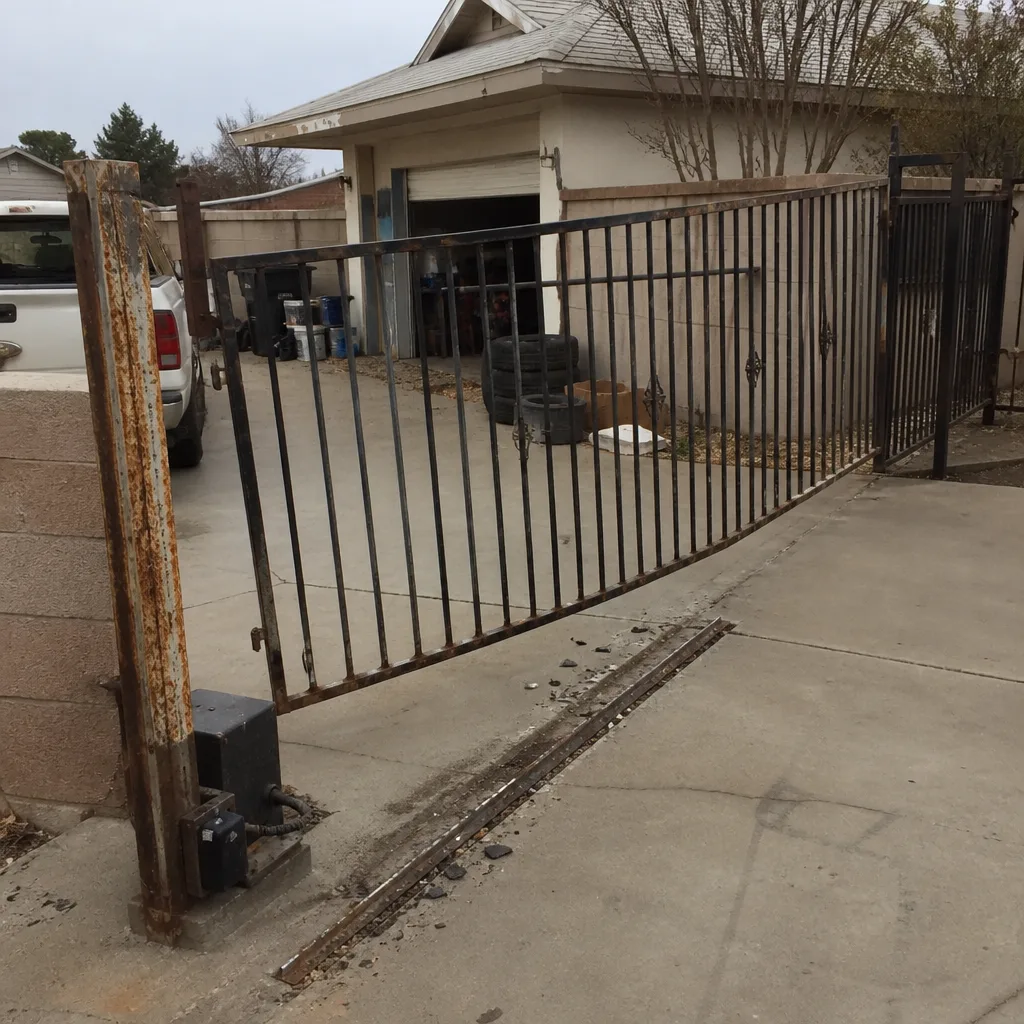 Before
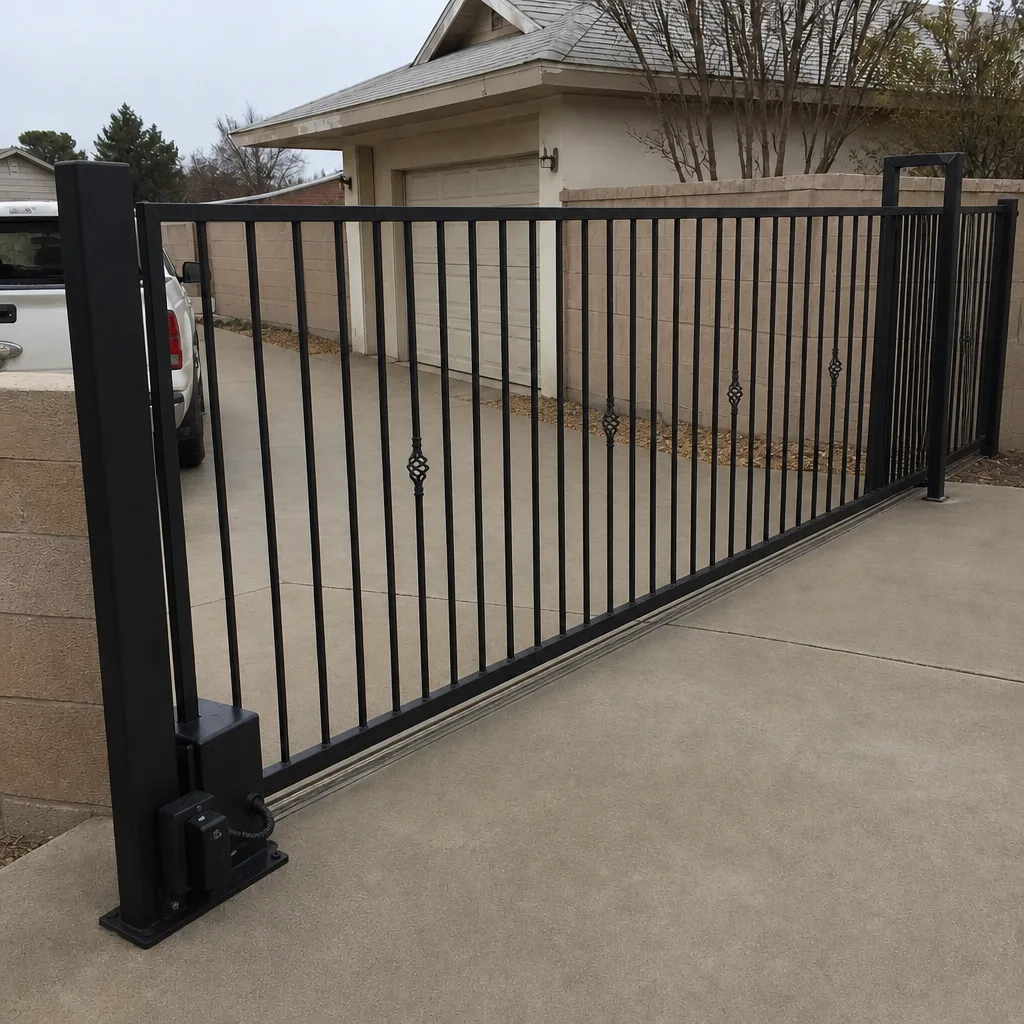 After
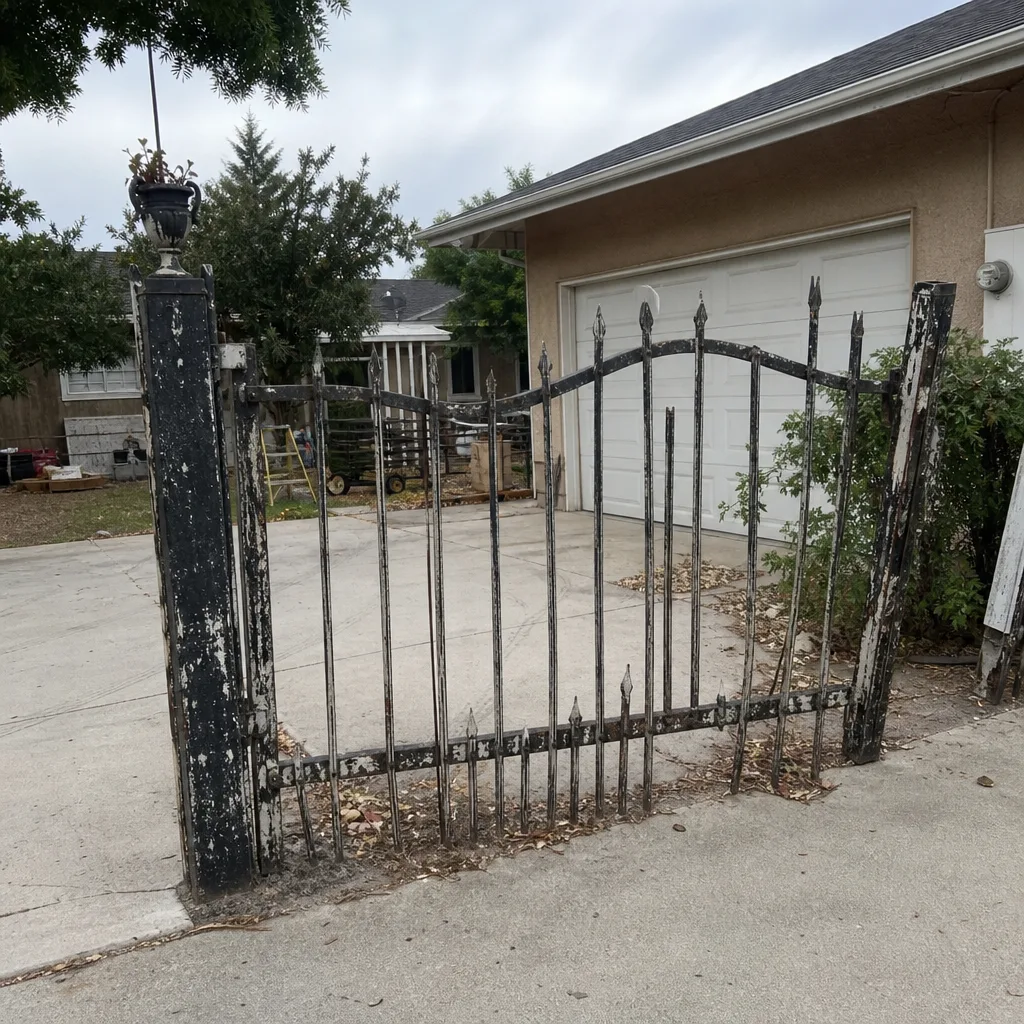 Before
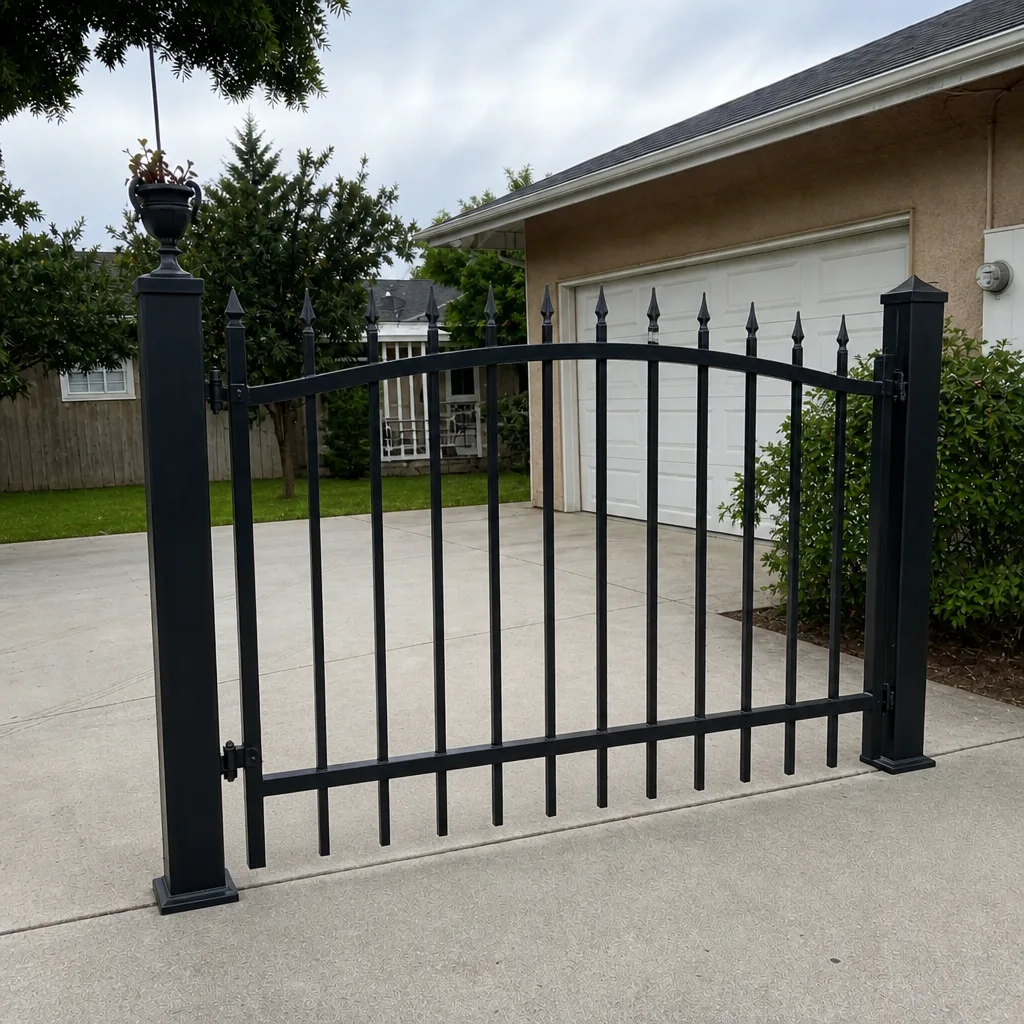 After
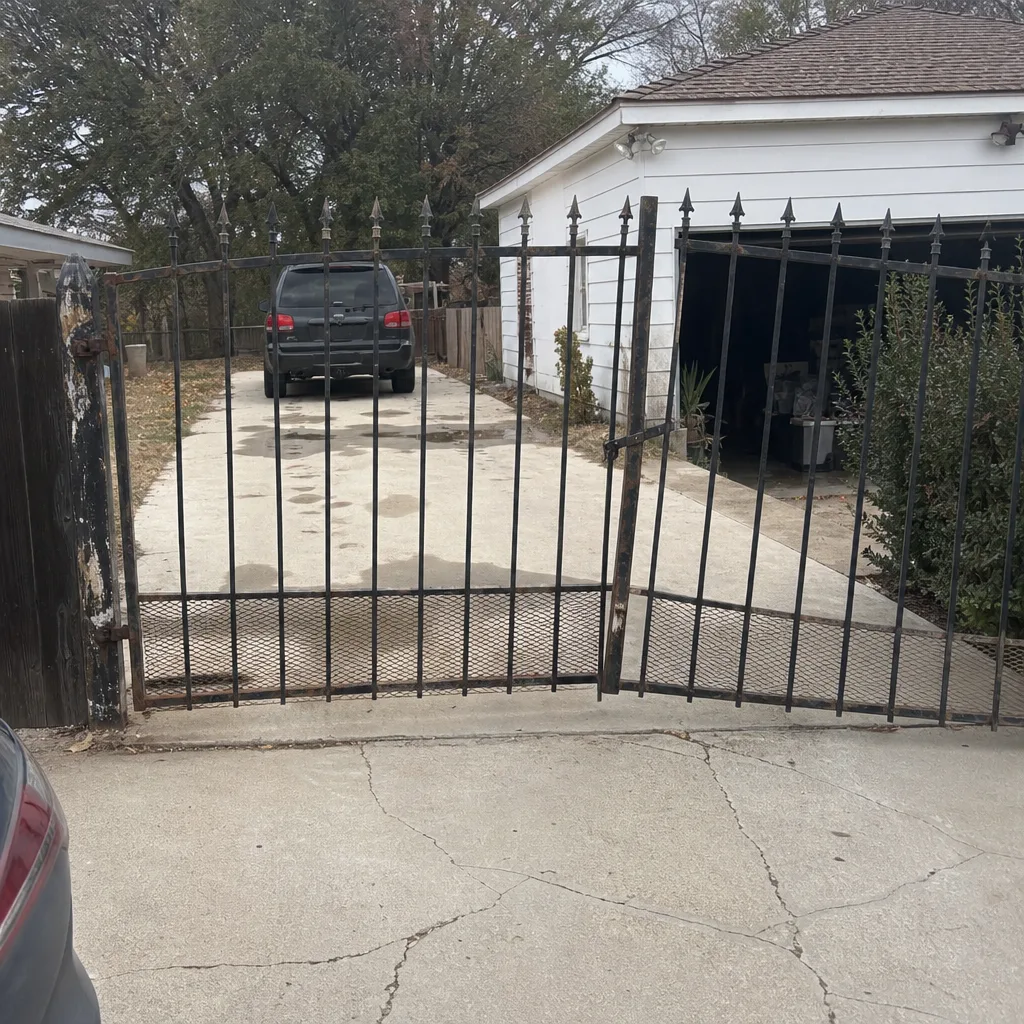 Before
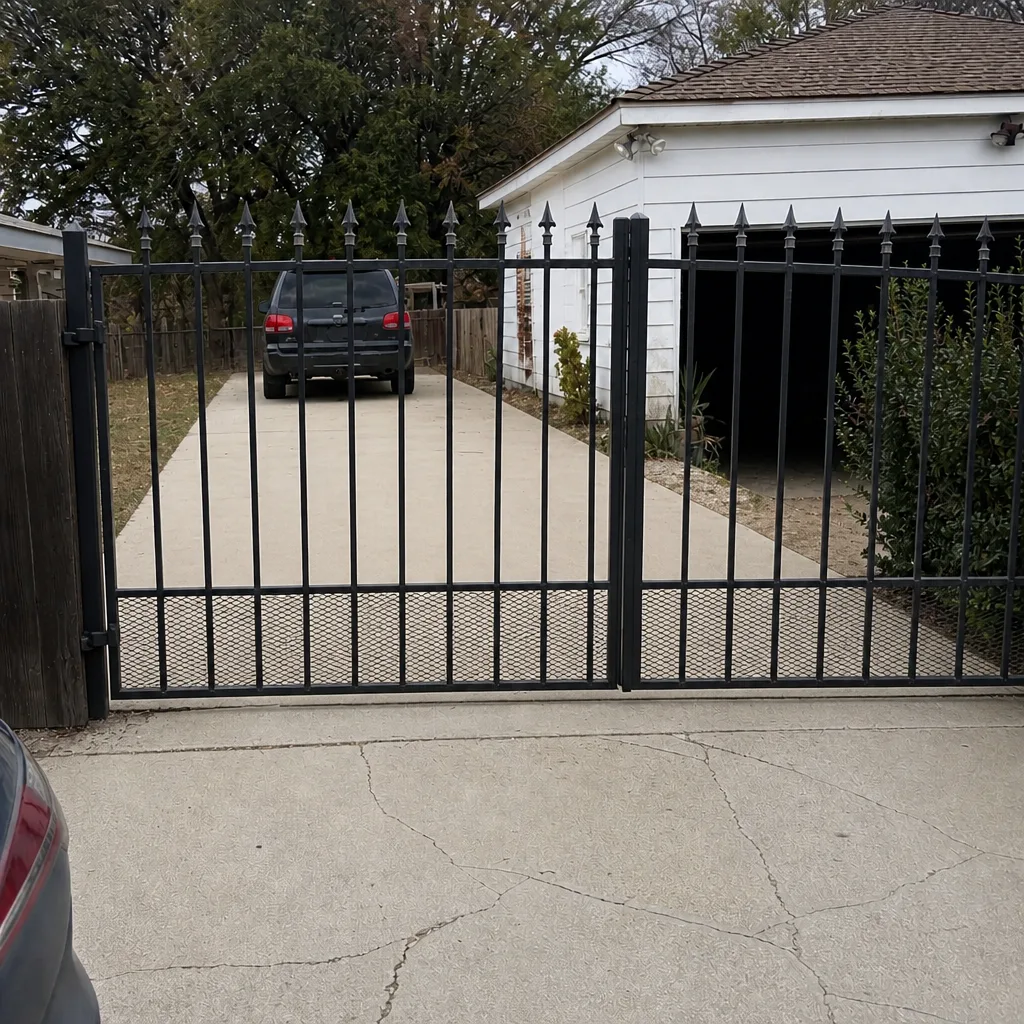 After
When to Call a Professional
Call a technician when the gate reverses on its own, grinds or growls during a cycle, stops mid-travel, stops responding to remotes or keypads, or shows a control-board error. Those are repair signals, not maintenance items. Call us when a load test fails, a loop detector shows no response, or a track or hinge has drifted past what you can safely adjust. If you’re not comfortable touching line voltage, control boards, or motor internals, that’s an automatic call, not a decision. Gate Repair Bakersfield offers free estimates in Bakersfield, and our technicians have up to 11 years of experience diagnosing motor, control board, loop, sensor, and wiring problems. Call (866) 389-4932 for a free estimate. We answer 24/7. Fast dispatch from 7am to 7pm, Sunday through Friday. For new or replacement gates, we schedule an on-site measure and a written price before anything is ordered. You’ll get a quoted price agreed before any work starts.
Frequently Asked Questions
For most residential gates, a monthly walk-around, quarterly lubrication and tension check, and annual deep service. Higher-traffic commercial and HOA gates need quarterly chain and track service at minimum and twice-yearly deep service, because Bakersfield dust and heat shorten every interval. The cycle count on your operator is the real guide, and a technician can pull it during a service visit.
In many cases, yes. Motor, control board, sensor, and wiring faults are often repaired the same day, and we carry the diagnosis process to the gate rather than guessing at a part. Call (866) 389-4932 for an exact quote; estimates are free.
Yes. A full installation includes the operator, the low-voltage safety sensor wiring, the loop detectors and access control if you have them, and the line power connection. We schedule a measure first and give you a written price before we order anything, so there are no surprises. For brand-specific work, we service LiftMaster, Linear, FAAC, and many others.
A dry-film or PTFE-based chain lubricant holds up best, because it doesn’t thin out and migrate in summer heat the way thin oils do. For hinge pivots and high-load joints, a light film of lithium grease works well. Clean the part first, don’t grease a dirty chain, and never spray lubricant into the operator housing.
A resting voltage check is not a test. A real test disconnects line power and runs a full open and full close cycle on battery. If the gate hesitates, reverses, or doesn’t complete travel, the battery needs replacement. If you’re not comfortable pulling the line power, have a technician do it during an annual service. Bakersfield heat shortens battery life, so test annually.
Yes. We work on single-family driveway gates, HOA entries, and commercial sites, across brands including LiftMaster, FAAC, Linear, and DoorKing. Commercial properties with loop detectors and access control get the same repair-first approach as a home gate. Call (866) 389-4932 for a free estimate.
The Bottom Line
Gate maintenance isn’t a calendar exercise; it’s a component-specific schedule tied to cycle count, dust, and heat. In Bakersfield, that means a monthly walk-around, quarterly lubrication and tension checks, spring pre-season checks on loops and conduit, annual deep service, and a log worth the ink. Match the interval to how much the gate runs and how much grit it lives with, and most gates will run years without a surprise failure. Skip it, and the first sign will be a gate that stops mid-cycle when you need it. When it does, call (866) 389-4932 for a free estimate. We answer 24/7. Fast dispatch from 7am to 7pm, Sunday through Friday. Every price is quoted in a written estimate and agreed before any work starts. Ready to schedule? Start at Gate Repair Bakersfield or browse by city at Bakersfield for the local office contact.
Written by the team at Gate Repair Bakersfield.