
Last updated November 15, 2026
 Wrought iron
 Wood & steel frame
 Farm & ranch
 Sliding driveway gates
 LiftMaster operators
Free on-site gate assessment - hinges, posts, and your LiftMaster or Nice gate operator checked before anything is quoted
The assessment is free and the quote is the invoice.
Get your free estimateDIY vs Professional Gate Repair: The Bakersfield Homeowner’s Decision Guide
Most gate repair advice treats the DIY question like a matter of courage. It isn’t. It’s a matter of voltage, safety code, and the cost of getting a diagnosis wrong. Replacing a remote battery is DIY. Adjusting photo-eye alignment is DIY. Replacing a limit switch on a live 120VAC operator is not, because one wrong probe in the wrong terminal can take out a control board and turn a small repair into a much bigger one. This guide draws the line precisely: which gate tasks in Bakersfield you can safely own, which need the right tools and a careful hand, and which belong to a trained technician. You’ll leave knowing exactly where your gate falls.
Quick Answer
Roughly 10 of the 15 common gate maintenance tasks are homeowner-safe, 3 are doable with proper tools and care, and 2 belong to a licensed professional every time. Anything on the 120VAC line side of an automated gate – the operator’s line voltage, control board wiring, and the final connection to the power source – should be handled by a professional, and California code requires that. Cosmetic, cleaning, and battery changes are yours to own. In between lies a wide middle where a multimeter and a manual decide the outcome. Gate Repair Bakersfield technicians have up to 11 years of experience reading that middle ground on Viking, Ghost Controls, and DoorKing systems, among others.
Styles & brands we work with
- Wrought iron
- Wood & steel frame
- Farm & ranch
- Sliding driveway gates
- LiftMaster operators
Table of Contents
- The Voltage Threshold Rule: Why 24VAC Is Not 120VAC
- The 15-Task Classification: Safe, Capable, or Professional Only
- Tools You Actually Need for Legitimate DIY Diagnostics
- The Five DIY Attempts That Usually Cost More Than the Repair
- How to Be a Smart Partial-Owner Between Service Visits
- Bakersfield Heat, Dust, and Your Gate’s Hardware
- California Electrical Code and Who Can Do What
- When to Call a Professional
The Voltage Threshold Rule: Why 24VAC Is Not 120VAC
Every automated gate operator has two electrical worlds living inside the same housing. The control side runs on low voltage – typically 24VAC or DC – powering the logic that reads commands from remotes, keypads, and safety sensors. The line side runs on 120VAC from the home or building’s circuit, feeding the transformer that creates the low-voltage control power. The two worlds are separated by a transformer and a fuse, and everything you can safely touch sits on the control side.
Why the distinction matters: a multimeter probe that slips across 120VAC terminals while the breaker is live can arc, damage the control board, and in a worst case expose you to a shock capable of serious injury. Some operators in Bakersfield run at 220VAC for heavy commercial swing gates and sliding gates on larger properties. That isn’t a task for a homeowner with a weekend multimeter.
California electrical code draws a clear line: any work on permanently wired 120VAC or 220VAC circuits inside an operator housing requires a licensed electrician or a licensed gate contractor, and typically a permit from the city. The transformer-to-control-board low-voltage side is not exempt from that reasoning, but it’s the side where careful diagnosis is genuinely possible with the right meter and the right manual. Our electric gate repair technicians work both sides – line and control – because the failure modes overlap. A popping motor and a burnt control board often trace to the same root cause, and the fix requires understanding both sides of the gate.
The rule to remember: if the wire is connected to a breaker panel anywhere upstream, treat it as line voltage until a meter proves otherwise, and do not work on it live.
The 15-Task Classification: Safe, Capable, or Professional Only
Here’s the exact list. Every task has a specific reason for its classification, and each classification holds regardless of brand – the physics works the same whether you own a Ghost Controls or a DoorKing system.
Homeowner-Safe: 10 Tasks
- Replacing a remote battery. No tools, no risk. Pop the case, swap the coin cell, done.
- Lubricating gate hinges and rollers. A drop of lithium grease or a spray of silicone lube every few months extends hinge life in Bakersfield’s heat and dust.
- Clearing debris from the gate’s travel path. Small rocks, leaves, and yard litter are the most common cause of “gate won’t open” behaviors. Two minutes of clearing solves many calls.
- Wiping the photo-eye lens. Dust accumulates on the eye like it does on a windshield. A clean cloth and a minute every few months is enough.
- Testing the safety sensors by hand. Wave a hand in front of each eye and watch the operator’s reaction. If the gate doesn’t reverse or halt, stop using it as an automatic gate until a technician looks at it.
- Resetting a tripped breaker. Once you’ve figured out which circuit feeds the operator, flipping a breaker back on is fair game. If it trips twice, stop and call.
- Programming an extra remote. Every residential operator manual walks you through the pairing sequence from the keypad or the operator’s learn button. This is safe as long as you’re not opening the motor housing.
- Adjusting the gate’s open/close stop position via the operator keypad. Many modern operators expose this in the user menu. Safe if the manufacturer’s instructions cover it.
- Tightening visible bolts on the gate panel and frame. Loose hardware is normal wear. A socket set and 10 minutes is all this needs.
- Cleaning and painting the gate frame. Cosmetic work with a brush or a sprayer – prep, coat, done. Watch for signs of deeper rust at the base where hardware attaches.
Homeowner-Capable With the Right Tools: 3 Tasks
- Photo-eye alignment. Sliding or shifting of the photo-eye bracket is common after hot Bakersfield summers expand the mounting. Realigning requires a screwdriver, patience, and the operator’s LED diagnostic pattern. If the eye won’t hold after adjustment, the bracket needs to be replaced.
- Battery replacement on the backup battery. Most operators use a sealed lead-acid battery for a standby power feature. Swapping it requires the correct replacement type and a careful hand to avoid reversing polarity – which will damage the control board.
- Clearing an obstruction fault through the operator’s reset sequence. Some fault codes clear from the keypad. Some don’t. If the code returns within a cycle or two, the fault is real and it’s a professional task.
Professional Only: 2 Tasks
- Any work inside the operator’s line-voltage section. Replacing a transformer, rewiring the 120VAC feed, replacing a fuse on the line side – all require a licensed electrician or a licensed gate contractor, plus usually a permit from the city.
- Control board repair or replacement. Control boards carry the operator’s safety logic and UL 325 reverse-function requirements. Replacing one requires knowing the correct board revision, correct DIP switch settings, correct safety sensor wiring, and correct testing after install. A wrong control board selection can fail a safety test – which means the gate is not actually safe even if it moves.
Our gate repair team treats this classification seriously. Not every call needs a technician, and we’d rather walk a homeowner through a remote pairing than take a service call for one.
Tools You Actually Need for Legitimate DIY Diagnostics
Diagnostic work is different from maintenance. If you want to actually diagnose a gate fault – not just clear debris and hope – you need tools that let you read voltage and see the operator’s own diagnostic output. Here’s the minimum kit that makes DIY diagnostics legitimate and safe.
- Digital multimeter. A $30 to $80 meter is enough for control-side voltage readings. You need DC voltage, AC voltage, and continuity. Auto-ranging is nicer. Never use a cheap analog meter for board-level work.
- Operator manual and wiring diagram. Every gate operator manual has a diagnostic section listing LED blink codes and terminal voltages. If you don’t have the manual, it’s usually a free download from the manufacturer – Viking, Elite, DoorKing, and most others publish theirs.
- Insulated screwdrivers and a plastic pry tool. Standard Phillips and flathead, plus a non-conductive prying tool so you don’t short a terminal while opening a housing.
- Wire labels or masking tape and a pen. Photograph the terminal layout before removing anything. This is the single most common DIY failure – reverse wiring on reassembly.
- Flashlight and mirror. Sounds trivial; it isn’t. Many board diagnostics happen in tight enclosures.
- Contact cleaner. A spray can of electronics-safe contact cleaner clears corrosion off low-voltage terminals without damage.
Multimeter Use on Control Boards
Safe practices that make readings meaningful:
- Set the meter to the correct range before probing. A meter left on continuity when you’re measuring 24VAC will produce confusing readings and may blow the meter’s internal fuse.
- Clip the ground lead to a known chassis ground before probing hot terminals. This lets you use one hand instead of two – safer with any live voltage present.
- Compare readings to the manual’s reference voltages. A common 24VAC control bus reads about 24 to 27VAC; if you see 12VAC, the transformer is failing or a load is dragging it down.
- Never probe anything you cannot trace to a labeled terminal. If the terminal isn’t on the manual’s wiring diagram, do not probe it.
Loop Detector Sensitivity Adjustment
Loop detectors, common on commercial gates and many residential properties around Bakersfield with heavy vehicle traffic, sometimes false-detect or fail to detect vehicles. Sensitivity adjustment through the detector’s DIP switches or dial is homeowner-capable – but only if the manufacturer’s manual documents the steps. If the detector has no sensitivity adjustment or you can’t find its manual, that’s a professional task. Improperly set sensitivity can leave a vehicle trapped on the loop, which is a safety issue.
Limit Switch Calibration
Limit switches tell the operator when the gate has reached a fully open or fully closed position. On most residential operators, this is a homeowner-capable adjustment through the operator’s programming menu. On commercial-grade operators – DoorKing and FAAC swing operators common in HOA installations – the limit switches are physical cams inside the actuator housing, and calibration requires opening the actuator. That’s a professional task because it exposes electrical components.
The Five DIY Attempts That Usually Cost More Than the Repair
We’ve seen all five of these at our Bakersfield workbench. Each starts as a reasonable attempt to save a service call and ends with a bigger repair than the original problem. The failure mechanism is the key to understanding why.
- Probing the line-voltage side with the breaker live. The failure: an arc across two adjacent terminals vaporizes the control board’s low-voltage fuse holder and can damage the board itself. What started as a $150 to $250 fuse or transformer repair becomes a control board replacement. In our experience, this is the single most expensive DIY mistake on a gate system.
- Replacing a control board without matching the manufacturer’s board revision. Not all boards for the same operator model are interchangeable, especially across production years. A wrong board can power up but fail reverse-function tests – meaning the gate moves but does not reliably stop for a person or vehicle. The correct fix for a failed reverse test is not to disable the sensors; it’s to install the correct board and test.
- Using a generic replacement board instead of the OEM part. Generic boards sometimes work; often they don’t. The failure mode is usually intermittent – random reverse-limits, phantom open commands, or dead remote pairing. Chasing an intermittent fault costs more in diagnostic time than the original repair.
- Adjusting sensitivity or force settings to “fix” a sluggish gate. More force is not a repair. If the gate is sluggish, something in the mechanical path – worn hinges, alignment, or a failing motor – needs to be identified. Raising the force limit hides the symptom and stresses the operator. The under-torque or over-torque condition eventually fails a different component.
- Reversing polarity on a backup battery install. Lead-acid batteries don’t care about being installed backward – they’ll happily dump current into the wrong terminals. That usually takes out the operator’s charging circuit, which requires board-level repair. The correct approach is to check polarity markings twice before connecting.
The pattern: DIY that damages the control board turns a repair into a replacement, and replacement parts are always pricier than repairs. When the diagnosis isn’t clear, calling before you start is usually the cheaper move. Our Gate Repair Bakersfield team runs a repair-first shop, so the recommendation is often a fix rather than a replacement.
How to Be a Smart Partial-Owner Between Service Visits
You don’t have to choose between full DIY and full professional. There’s a middle path where you own the routine care and a technician owns the diagnostics – and it extends the life of the hardware without creating safety hazards. Here’s the between-visit list we’d hand to any homeowner in Bakersfield.
- Monthly: walk the gate’s travel path and clear debris. Spray hinges with lubricant. Wipe the photo-eye lenses. Test the safety sensors by walking through the gate’s path with the operator running.
- Seasonally: check the gate frame for rust at attachment points and touch up paint if needed. Tighten visible bolts with a socket. Inspect the operator’s external wiring for sun damage or rodent chewing.
- Before summer heat: lubricate all moving parts. Bakersfield summers expand metal and stress hardware; a well-lubricated gate handles the heat better than a dry one.
- Before winter rains: clear any dust buildup that has hardened into dirt crusts on the photo-eye lens. Rain turns dust into mud that blocks the eye – a seasonal service call we see on repeat.
- After any storm: check that gate panels haven’t shifted and that hardware hasn’t loosened. Wind moving a gate can shift hinges incrementally; catching this early prevents bigger alignment problems.
- Every time you use the gate: listen. A new noise – grinding, ticking, or a motor whine that wasn’t there before – is the cheapest diagnostic signal you’ll get. Note the conditions and describe them when you call.
None of these void manufacturer warranties. All of them extend hardware life. And each one makes a professional service call more productive because you’re reporting specifics rather than “it stopped working.”
Bakersfield Heat, Dust, and Your Gate’s Hardware
The local conditions do more gate damage than most homeowners realize. Bakersfield summers push gate panels, hinges, and plastic sensor housings through significant thermal expansion – metal that was tight in March can be loose by August. Dust accumulates inside photo-eye housings, in operator vents, and in the small gaps around photo-eye brackets. The combination produces a specific failure pattern: photo-eye faults and hinge alignment issues dominate our summer calls, and electrical faults from overworked power supplies peak alongside them.
Wind is the other piece. Bakersfield wind doesn’t usually damage gates directly, but a swinging gate takes repeated wind load on its hinges. If a hinge is 5 degrees out of true, a season of wind pushes it further. Annual visual inspection – no climb, no tools – is enough to catch this before it turns into a realignment job.
What you can do about it: keep photo-eye lenses clean monthly, lubricate hinges seasonally, and pay attention to new noises. What you can’t fix on your own: an operator that keeps tripping its internal breaker in the heat (usually a control board or transformer issue) and a hinge that’s visibly out of alignment (usually requires removing the gate panel). For those, call a specialist.
California Electrical Code and Who Can Do What
The legal boundary matters, and it’s the single fact most DIY advice gets wrong. In California, work on permanently wired electrical circuits – including the 120VAC line that feeds your gate operator – requires a licensed contractor. Most cities require a permit for new electrical circuits and often for replacing an existing circuit hardwired to a gate operator. That’s the general rule; the specifics vary by jurisdiction, so ask your city’s building department before committing to a wiring repair.
What this means in practice:
- You can safely replace any part that does not require opening the operator housing or touching line voltage.
- You can legitimately diagnose control-side faults with a multimeter using the operator’s wiring diagram.
- You should not replace a transformer, run a new circuit to the operator, or hardwire a new operator to the home’s electrical system. Those are for a licensed contractor.
- A safety test after any repair is not optional. UL 325 reverse-function requirements mean the gate must reliably halt or reverse when it contacts an obstruction. If you can’t verify that test with the operator’s own diagnostic routine, the repair is not done – regardless of whether the gate moves.
For those tasks, our electric gate repair specialists work the electrical side within the license requirements and pull permits when they’re needed. For on-site estimates, we’ll walk the property and quote the work before anything is touched.
Common Mistakes to Avoid
- Working on a live 120VAC circuit without confirming the breaker is off. Even a homeowner with electrical experience should treat a live operator’s line side as fatal. Test with a meter after flipping the breaker; don’t trust the switch.
- Disabling the safety sensors to “stop the gate from reversing.” The reverse function is a UL 325 requirement and a real safety measure for people and vehicles. Disable it and the gate becomes a legal and physical hazard – a serious liability if anyone is injured on the property.
- Raising the force adjustment to cover a sluggish gate. Force settings are not a repair. If the operator needs more force to move the gate, something in the mechanical path is failing and will fail harder later. The right move is to identify and fix the mechanical issue.
- Buying a generic replacement control board to save time. Chasing an intermittent fault on a mismatched board usually costs more in diagnostic time than the OEM board would have cost initially.
- Assuming a “won’t open” gate is an electrical problem. In Bakersfield dust, aligning hinges get the blame roughly as often as the operator does. Clean the hinges and the travel path before assuming the operator is dead.
- Ignoring a repeated fault reset. If the fault clears and returns within a cycle or two, the fault is real. Repeated reset sweeps can cycle the operator into a mode that requires a technician to un-set – adding a second call.
- Not testing reverse function after any repair. A gate that moves is not the same as a gate that’s safe. Run the reverse test as the final check before assuming work is done.
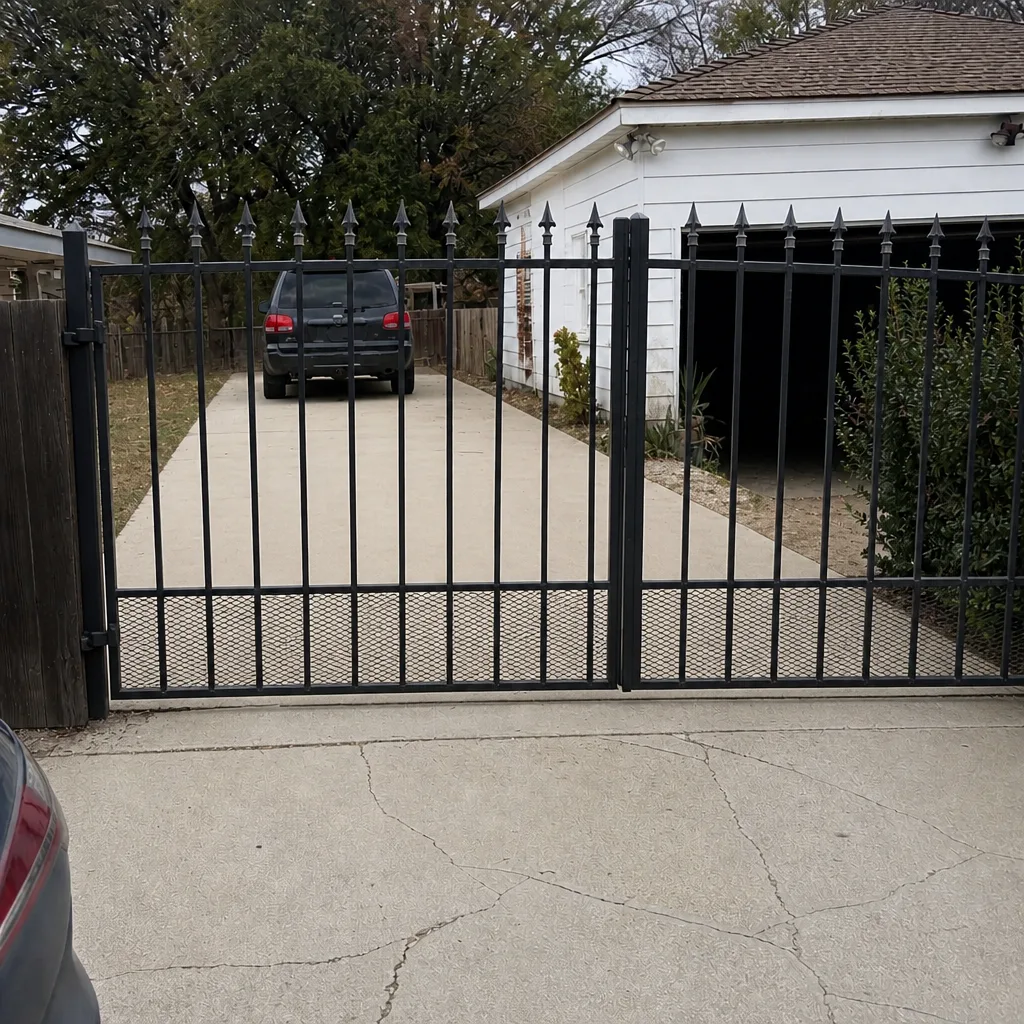
See the difference
 Before
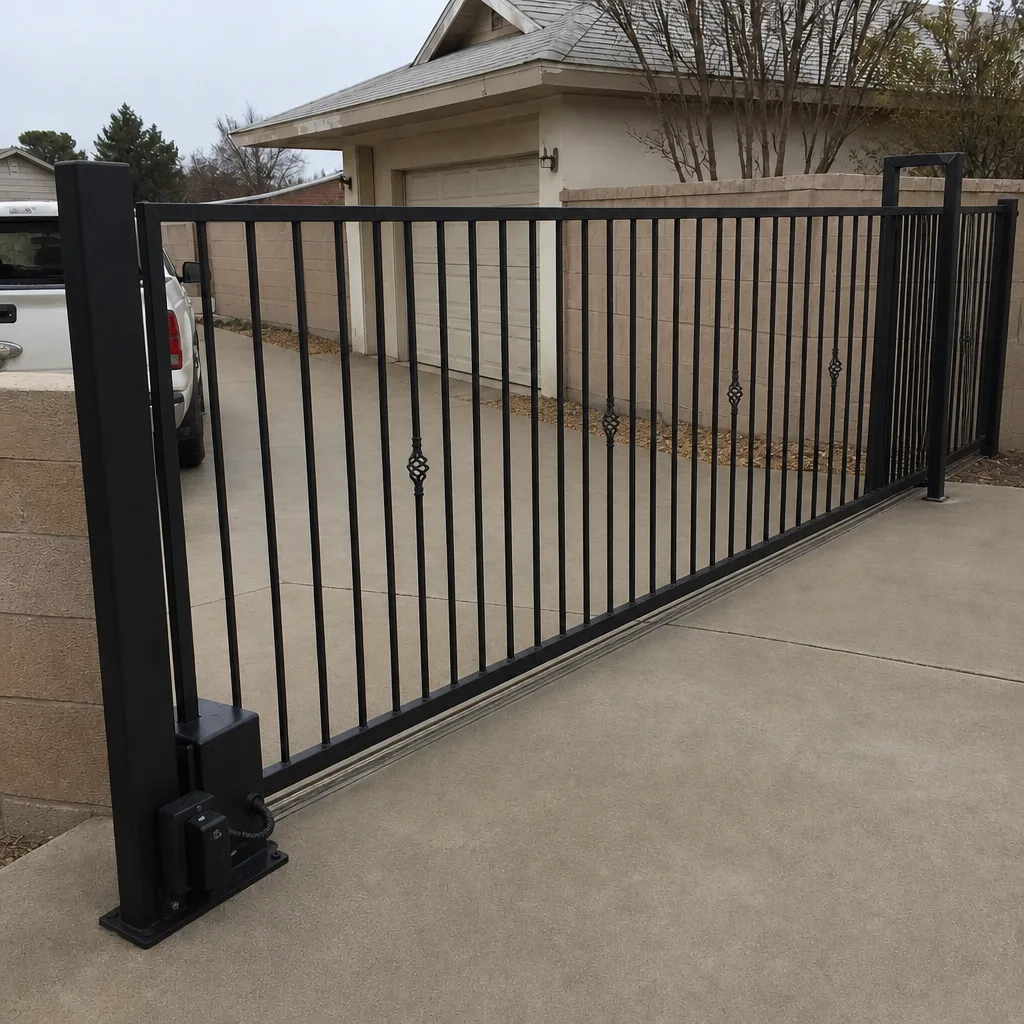 After
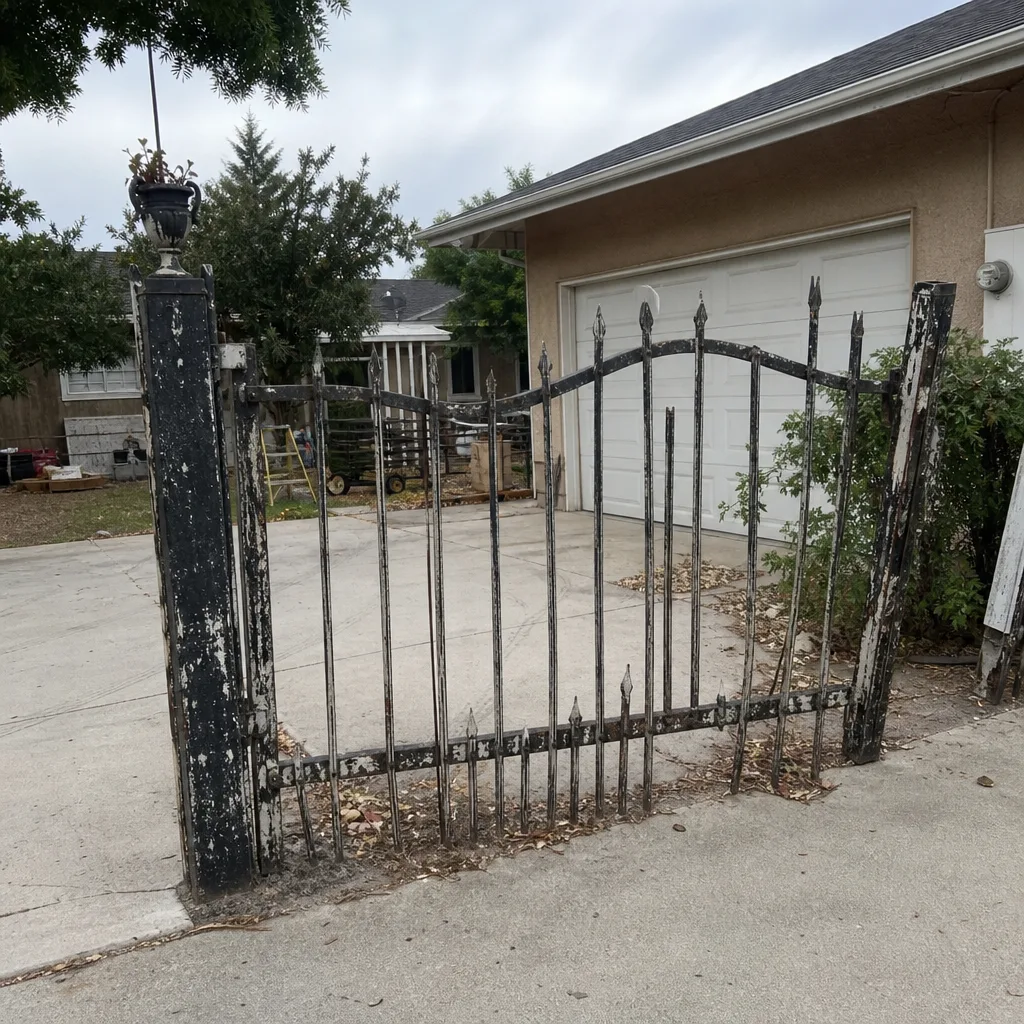 Before
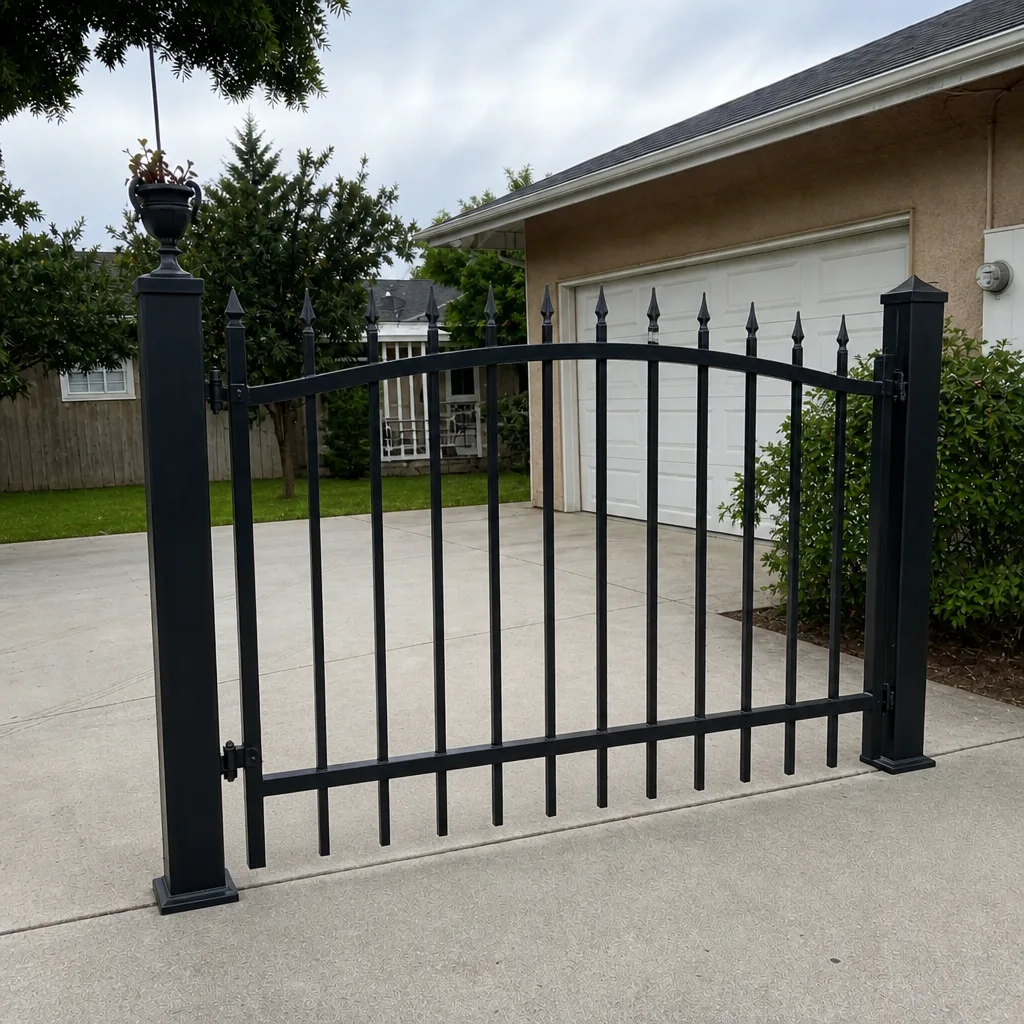 After
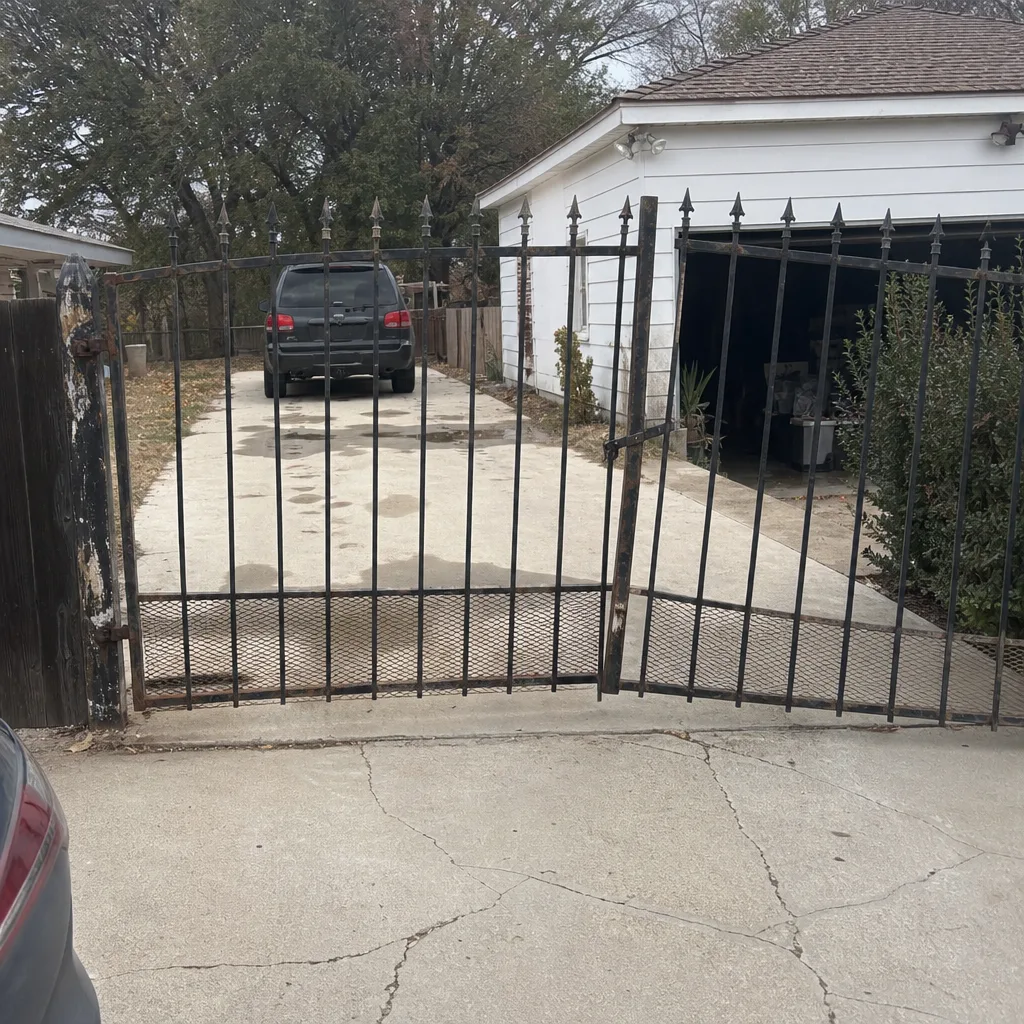 Before
 After
When to Call a Professional
Call a professional for any of these: work on the operator’s line-voltage side, control board replacement, safety sensor behavior that doesn’t respond to photo-eye cleaning, a gate that trips its internal breaker on cycle, a motor that’s overheating in summer heat, or any reverse-function test that doesn’t pass. Call also when you can’t identify the fault after cleaning, lubricating, and reading the operator’s diagnostic codes. Gate Repair Bakersfield offers free estimates in Bakersfield – call (866) 389-4932. We answer 24/7. Fast dispatch from 7am to 7pm, Sunday through Friday. Our technicians have up to 11 years of experience with Name-brand operators, and our repair-first approach means we recommend the smaller fix whenever it will actually solve the problem. If a technician comes out, you’ll have a quoted price before any work starts – the written estimate sets the final price.
Frequently Asked Questions
It depends entirely on which part of the gate you’re working on. Remote batteries, hinge lubrication, photo-eye cleaning, and visible hardware tightening are all homeowner-safe. Anything on the operator’s 120VAC line side, or a control board replacement, requires a licensed professional – California code requires that, and the wrong move on the line side can be genuinely dangerous. Use a multimeter on the control side to your heart’s content; leave the line side alone.
120VAC and 220VAC are the dangerous voltages inside an operator, and both are capable of serious injury or death. Almost all residential operators run 120VAC line voltage; commercial swing gates and large sliding gates in Bakersfield often run 220VAC. Both are above the threshold for a licensed electrician’s or gate contractor’s work. The 24VAC control side is safe to probe with a multimeter.
Often, yes. Most California jurisdictions require a permit for new electrical circuits and frequently for replacement circuits hardwired to a gate operator. The specifics vary by city and by job, so ask Bakersfield’s building department directly before committing to the wiring repair. For anything on the line side, a licensed technician handles the permit as part of the job.
Pricing is per job and set by a written estimate after the technician has looked at the gate, so we don’t quote general ranges. A quick note to help you decide: the cost of a professional diagnosis is almost always less than the cost of a DIY attempt that damages a control board. Call (866) 389-4932 for a free estimate – the price is quoted and agreed before any work starts.
Often, yes, for gate repair calls. Electric gate repair and diagnostic work can frequently be scheduled same-day given the dispatch window, and mechanical gate repairs usually fall into the same timeline. New gate installation and operator replacement are different – those are measured, ordered, and scheduled. Call (866) 389-4932. We answer 24/7. Fast dispatch from 7am to 7pm, Sunday through Friday.
The top three we see are photo-eye faults (dust on the lens or a shifted bracket after summer heat), hinge alignment issues from repeated wind load, and control board damage from an electrical fault or a mismatched replacement board. The first two are homeowner-treatable. The third isn’t – bring it to a technician before the damage compounds.
We work on 9 name-brand systems including LiftMaster, FAAC, BFT, Linear, Viking, Ghost Controls, DoorKing, Elite, and Mighty Mule – covering both residential-grade operators and commercial-grade equipment. Our technicians have up to 11 years of experience across that range, so we know the model-level differences rather than working from a generic playbook.
A full installation covers the gate panel and hardware, the operator and its mounting, safety sensors and UL 325 reverse-function testing, the electrical run (handled within the licensing rules for the work), remote and keypad programming, and final walkthrough. New installation is measured on site, then ordered and scheduled; a written estimate sets the price before any work begins.
The Bottom Line
The DIY question on a gate isn’t about whether you’re handy – it’s about the voltage and the safety code behind it. Own the maintenance: lubricate hinges, clear travel paths, replace remote batteries, clean photo-eye lenses, tighten visible hardware. Learn the diagnostic tools and the operator’s manual. But treat the 120VAC line side, control board replacement, and any repair that fails the reverse-function test as professional work. The cost of a control board replacement is always higher than the cost of a diagnosis, and in Bakersfield heat and dust the failures that hide behind symptom masking are exactly the ones that get expensive.
If your gate needs a professional look, call (866) 389-4932 for a free estimate. We answer 24/7. Fast dispatch from 7am to 7pm, Sunday through Friday. Whether you’re in a residential driveway or managing a commercial gate on a Bakersfield property, we’ll quote the work before starting it and put the price in writing.
Written by the team at Gate Repair Bakersfield.