
Last updated November 15, 2026
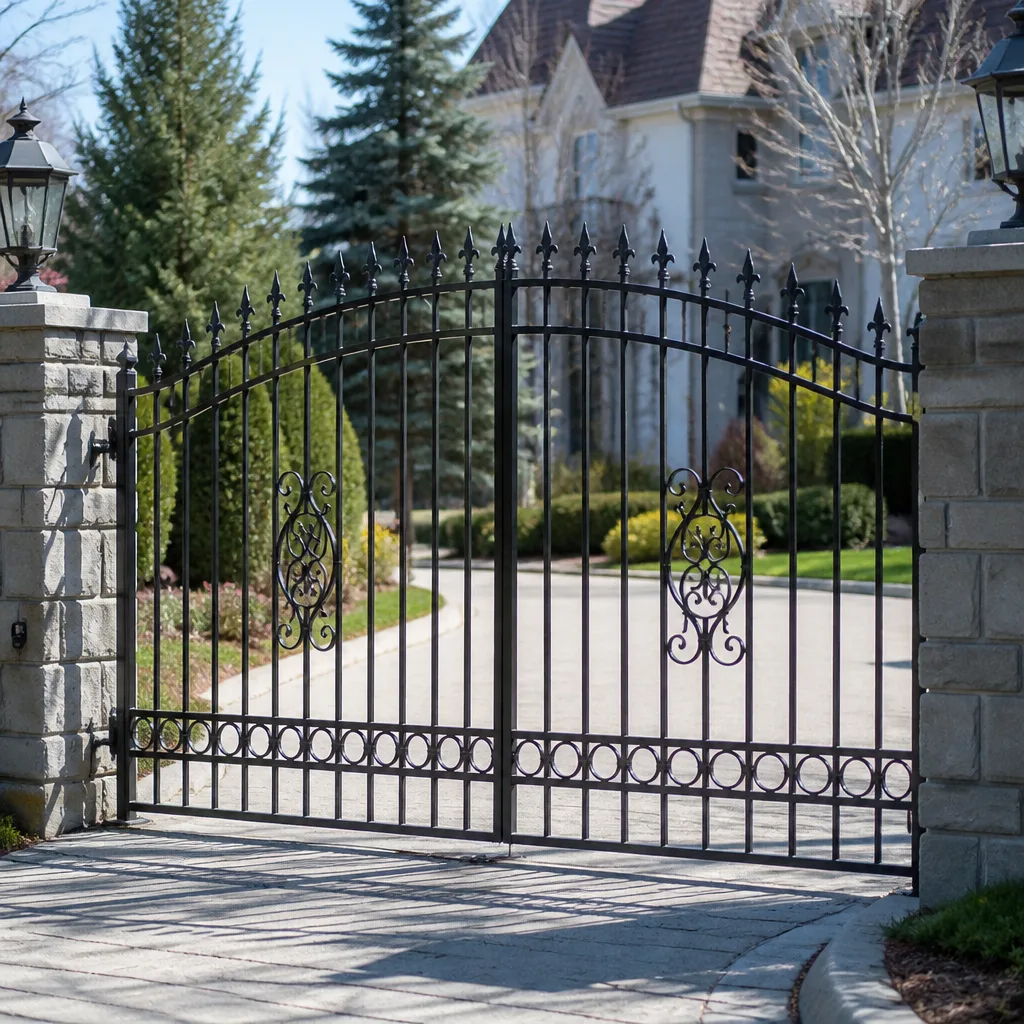 Wrought iron
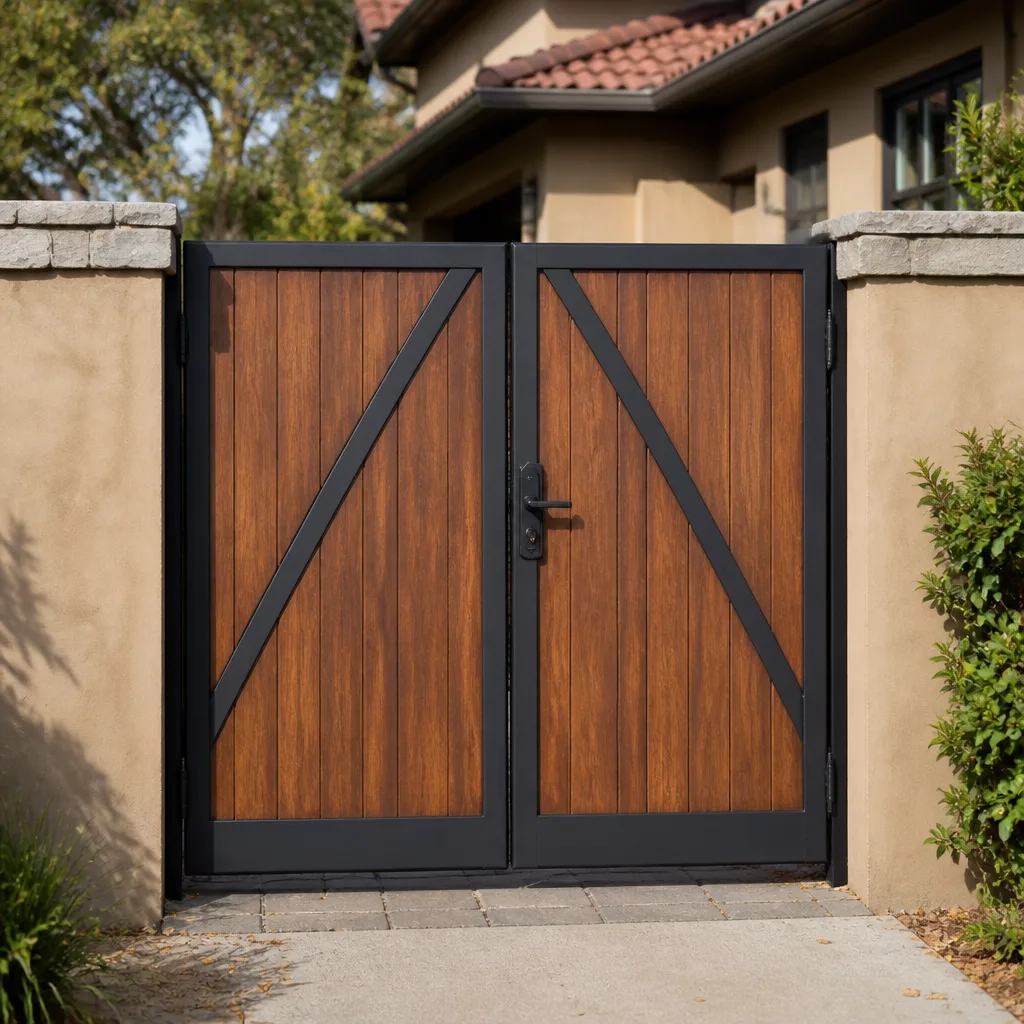 Wood & steel frame
 Farm & ranch
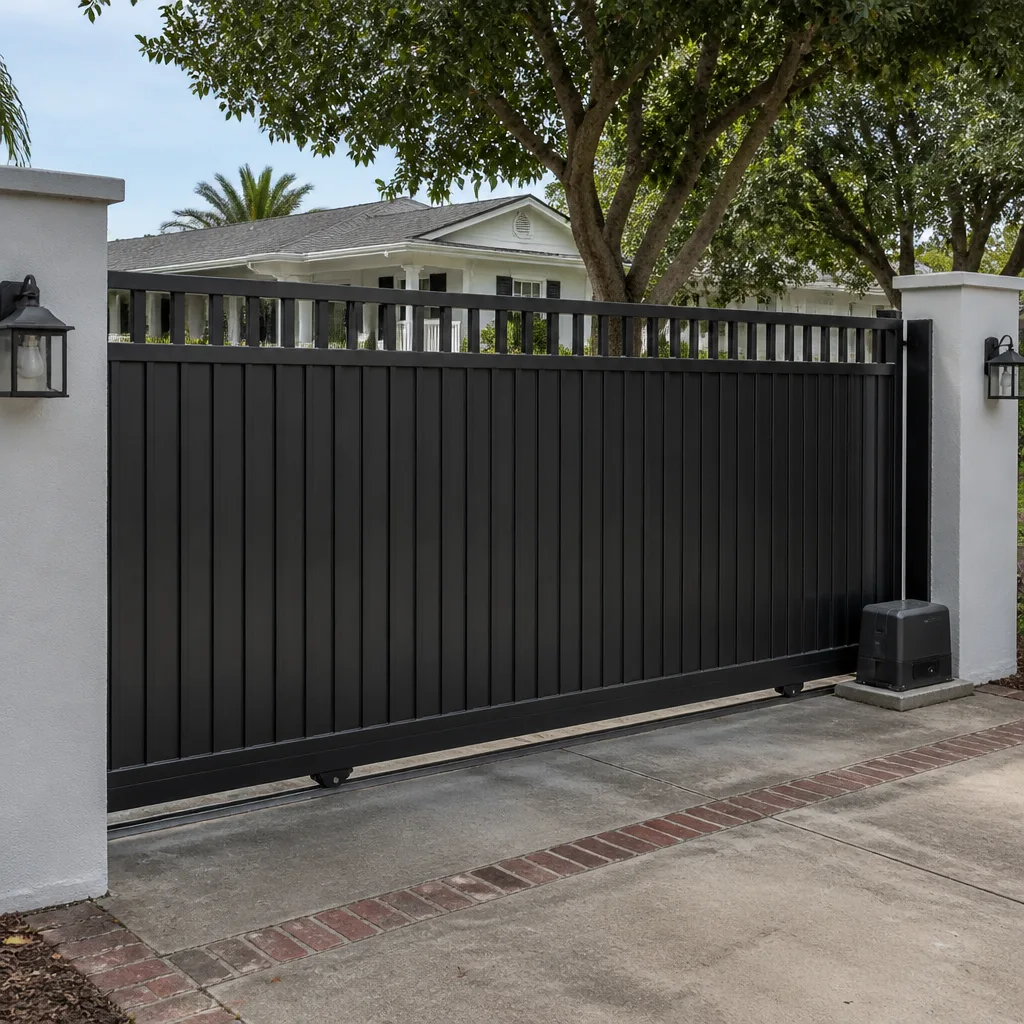 Sliding driveway gates
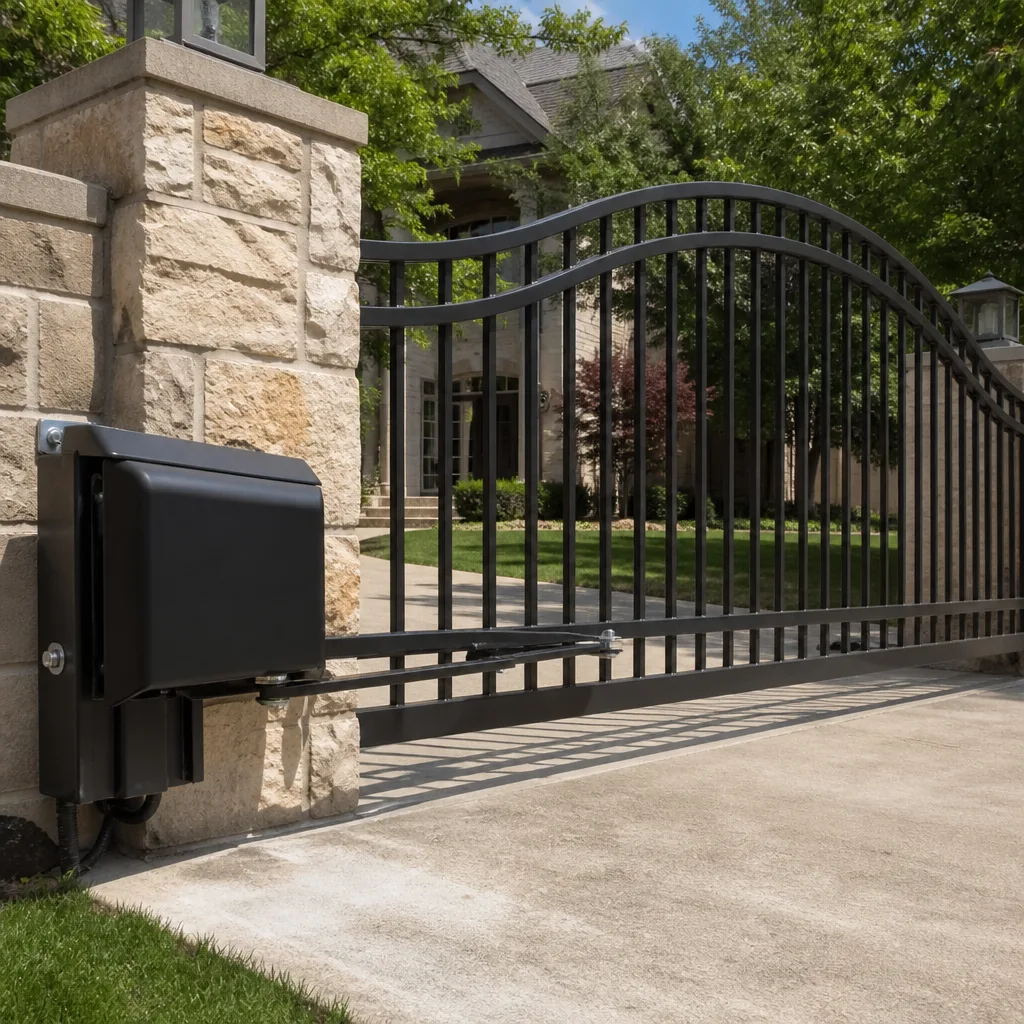 LiftMaster operators
Free on-site gate assessment - hinges, posts, and your LiftMaster or Nice gate operator checked before anything is quoted
The assessment is free and the quote is the invoice.
Get your free estimateGate Repair Warning Signs: A Bakersfield Homeowner’s Reference Guide
A gate that hesitates for two seconds before it starts moving isn’t “breaking in.” It’s a motor pulling excess current against mechanical resistance, and that pattern usually ends the same way: a burned motor winding or a tripped thermal overload that leaves the gate frozen in place. The frustrating part is that almost every gate failure announces itself first, and the signals get written off as quirks until the gate fails closed during a family emergency or stands open in front of a stranger’s car. This guide maps each observable symptom in Bakersfield to its likely cause and its real urgency, so you can act on what the gate is telling you instead of guessing.
Quick Answer
Gate repair warning signs fall into three groups: sounds (grinding, clicking, humming without movement), behavior (reversing mid-travel, failing to finish a close, opening slower than it closes), and visible condition (sagging panels, rust streaking, sensor LEDs that don’t change state). Stop using the gate immediately if it moves under hand force when it should be locked, if the safety sensor lights don’t respond, or if you can see a crack in a hinge weld. Everything else can be triaged into monitor, schedule this week, or call today.
Styles & brands we work with
- Wrought iron
- Wood & steel frame
- Farm & ranch
- Sliding driveway gates
- LiftMaster operators
Table of Contents
- The Symptom-to-Cause Matrix
- Audio Warning Signs: What Your Gate Is Telling You
- Behavioral Warning Signs: When the Pattern Breaks
- Visual Warning Signs You Can Spot From the Driveway
- Reading the Onboard Diagnostic LEDs Without Tools
- The Three Signs That Mean Stop Using the Gate Now
- Urgency Triage: Monitor, Schedule, or Call Today
- Bakersfield-Specific Patterns: Heat Warp vs. Loop Detector Failure
The Symptom-to-Cause Matrix
Most gate faults follow a predictable path from symptom to cause. Below is the matrix we work from when a gate comes in for gate repair in Bakersfield, organized by what you can observe and what it most often points to. Use it as a starting reference, not a diagnosis. The same symptom can have two or three causes depending on the operator brand, and a technician confirming the real fault is what separates a repair from a guess.
- Grinding during travel: Worn hinge bearings, a dry roller track, or debris in the guide. Usually mechanical, addressable within the week unless the noise is accompanied by panel wobble.
- Clicking at rest: Control board relay cycling, a bad capacitor, or a failing limit switch reading. Mild on its own; escalates quickly if the gate stops responding to the remote.
- Humming without movement: Motor receiving voltage but unable to turn. Could be a seized gearbox, a failed start capacitor, or the gate binding against its own weight. Stop cycling it.
- Reverses mid-travel: Safety sensor obstruction, misaligned photo-eye, or a loop detector false trigger. Common in summer heat.
- Slower opening than closing: Failing motor under load, or a gate that’s out of plumb and binding on the open stroke.
- Fails to complete close: Limit switch drift, sensor flagging an obstruction, or, on slide gates, a roller that’s dropped off the track.
- Sag visible at the latch side: Hinge wear, post settling, or a panel that’s absorbed water and lost rigidity.
- Rust streaking down the support post: Weld failure starting underneath the paint, not cosmetic surface rust. Needs eyes on it.
- Sensor LED stays dark or stays lit: Power issue to the sensor, or a blocked or dirty lens. Read the LED section below before assuming the worst.
We see this matrix hold across BFT, Linear, Viking, Ghost Controls, and the other operators we work on. The wiring and logic differ, but the physics of a gate doesn’t. If two symptoms appear together, treat the more urgent one as the real fault and the other as collateral. A gate that grinds and then reverses isn’t two problems. It’s one binding problem that’s also tripping the sensor.
Audio Warning Signs: What Your Gate Is Telling You
The ear is the fastest diagnostic tool a homeowner has. A healthy gate makes a consistent, low-level sound on every cycle. When that sound changes, something in the mechanism has changed too. Here’s how to classify what you’re hearing in Bakersfield, where the morning cool and afternoon heat can make the same gate sound different on either side of noon.
Grinding
Grinding is metal on metal or dry bearing on shaft. It almost always starts at the hinges on a swing gate or the rollers on a slide gate. Left alone, the friction transfers load onto the operator, which is where the failure becomes expensive. If you hear grinding on every cycle, schedule a repair this week. If you hear it only at the start or end of travel, the wear is localized and easier to address.
Clicking
A single click when the gate starts or stops is often normal relay actuation. A rapid series of clicks, or clicking with no movement at all, points to the control board trying to engage a motor that’s not responding. On a Linear or Viking operator, this pattern is sometimes a bad capacitor. On a newer Ghost Controls unit, it’s more likely a limit switch that’s drifted or a loose terminal at the board. Either way, one or two cycles to confirm the pattern is enough. Don’t keep cycling.
Humming Without Movement
This is the one to take seriously. The motor is getting power but can’t turn, which is either mechanical binding or a failed electrical component inside the motor housing. Every second you leave it energized in this state, the winding heats further. Cut power at the operator and call.
Silence
A gate that used to make noise and now makes none usually means the control board isn’t getting voltage, the breaker has tripped, or the operator has gone into a thermal or fault lockout. Silence is not “the gate is off.” It’s “the gate is waiting.” Treat it as a call-today symptom.
Behavioral Warning Signs: When the Pattern Breaks
Gates are repetitive machines. When they stop repeating themselves, that change is the diagnostic. Three behavioral patterns matter most on automated gates in Bakersfield, and each one points to a different part of the system.
Reverses Mid-Travel
A mid-travel reverse is the safety system doing its job. The gate thinks something is in the path. On most residential operators, the safety photo-eye between the panels is the first suspect. On commercial setups, and on any property using an exit loop, a failed loop detector is the more likely cause. The distinguishing test: if the reverse happens consistently at the exact same point in travel, it’s usually a sensor or a programming issue. If it happens at random points, it’s more often a loose wire or a marginal sensor alignment.
Won’t Complete the Close Cycle
This is the reverse problem in slow motion. The gate starts closing, hesitates, then either reverses or stops just short of the closed position. Common causes we’ve seen in Bakersfield include limit switches that have drifted out of range in the summer heat, sensors that are dirty enough to be marginal, and on slide gates, a roller that’s dropped slightly out of the track. If the gate stops in the same spot every time, suspect the limit switch. If the stopping point moves, suspect the sensor.
Opens Slower Than It Closes
The asymmetry matters. Most gates close slower by design, but a gate that has clearly started opening more slowly than it used to is telling you the open stroke has more resistance than it should. Two causes dominate: failing motor under load (the winding is weakening) or a gate that’s sagged out of plumb and is binding against the hinge on the open side. The simple check is to disconnect the operator and push the gate by hand. If it moves freely, the mechanical side is fine and the operator is the issue. If it binds, the hardware needs attention first.
One note on what you’re seeing: erratic behavior that comes and goes is the hardest to diagnose because the gate performs fine at the moment a technician arrives. Our approach is to ask when the behavior shows up, and to log the pattern. On an electric gate repair call in Bakersfield, the timing pattern is often more useful than the symptom itself. A gate that reverses only between 2 and 4 p.m. in August is telling us something a gate that reverses all day is not.
Visual Warning Signs You Can Spot From the Driveway
You don’t need tools to spot most of the visual signs. Walk the gate line once a month, look at a few specific places, and you’ll catch most of what’s coming before it becomes a repair.
- Look at the gate at rest. Stand at the latch side and see whether the top edge is parallel to the ground. A gate that’s sagged a quarter inch isn’t urgent. A gate that’s visibly dropped is.
- Check the hinge pins. On a swing gate, look for rust-colored streaks or a bright metal ring where the hinge rotates. Both are wear indicators.
- Inspect the welds. Run a hand along the hinge welds and the corner welds. A visible crack, a flaking paint line at a weld seam, or a hairline that catches a fingernail is a stop-and-call sign.
- Look at the post base. Rust at the footing, a lean, or sediment washed away from the base all indicate the gate has moved. In Bakersfield, where we get a hard dry season and then winter rains, the soil under a post can shift enough to change gate alignment over time.
- Check the sensor housings. Look at the photo-eye on each side of the opening. If the LED on either unit is dark, or if the two are no longer aimed at each other, the safety system is compromised.
- Examine the track on a slide gate. Debris, sand collected at the end of a run, or a leaf trapped under a roller is a common cause of erratic closing behavior.
- Walk the fence line. Loose fence panels that lean into a gate can contact the panel mid-travel and cause a sensor trip or a bend in the gate itself.
The visual signs that matter most are the ones that change between inspections. If you look at the gate in January and again in July and the sag has increased, that’s the signal. If the same gate has been slightly off for years and hasn’t changed, it’s cosmetic.
Reading the Onboard Diagnostic LEDs Without Tools
Every automated operator we work on – LiftMaster, FAAC, BFT, DoorKing, Elite, and the rest – has at least one diagnostic LED on the control board or the operator housing. Reading those lights is the single most useful thing a homeowner can do before calling, because it separates a programming issue from a hardware failure in about thirty seconds, with no tools.
How to find the diagnostic lights
- Locate the operator housing. On a swing gate, it’s usually on the post at the hinge side. On a slide gate, it’s at one end of the track.
- Look for a small translucent window, a panel screw, or – on some brands – a status light visible through a cutout on the cover. If the operator has a cover that opens, usually a couple of screws, you’ll find the board inside.
- On most boards, one LED shows power, one shows a safety-input status, one shows limit or travel status. Some also have a fault LED that flashes a code.
- Note which lights are steady, which are flashing, and which are dark. That combination is the message.
Separating a programming fault from a hardware fault
The rule of thumb: if the LEDs are lit and behaving consistently but the gate does the wrong thing, it’s a programming or setting issue. If the LEDs are dark when they should be lit, if they flash in a pattern the manual doesn’t recognize, or if they respond inconsistently on identical cycles, it’s hardware or wiring. Programming issues are usually fixable in a single visit. Hardware issues require parts.
What each light typically means
- Power LED dark: The board isn’t getting voltage. Check the breaker, then the low-voltage wiring at the transformer.
- Safety LED steady: The photo-eye circuit is clear. This is what you want.
- Safety LED flashing or dark: The sensor is blocked, misaligned, or not receiving power. This is the most common cause of a gate that won’t close.
- Limit LED changing state as the gate moves: Normal. A limit LED that stays in one state as the gate travels is a drifted or failed limit switch.
- Fault LED flashing: The board has logged an error. The flash pattern is the code – usually documented in the operator manual, and most manuals are online.
If two LEDs are behaving oddly at once, don’t try to interpret each separately. That’s a board-level problem, and it’s a call-today classification. Our technicians have up to 11 years of experience reading these boards across brands, but the honest answer is that most homeowners can get 80% of the way to a diagnosis with nothing more than a flashlight and a manual.
The Three Signs That Mean Stop Using the Gate Now
Most gate symptoms can wait for a scheduled visit. Three cannot. If you see any of the following, stop cycling the gate and call before you operate it again.
1. The gate moves under manual force when it should be locked
An automated gate at rest should resist hand pressure. If you can push the gate open or closed by hand while the operator is engaged and powered, the drive coupling or the lock is not holding. That means the gate is not actually securing the property, and it also means if the gate is on a slope, it can move under its own weight. Do not force it further to “test” it. Cut power and call.
2. Sensor LEDs fail to respond
On the safety photo-eye between the panels, both units should have a lit LED under normal conditions. If the receiver end is dark, if the LEDs don’t change when you pass a hand through the beam, or if the two units don’t respond to alignment, the safety system is not operating. A gate that can close without a working sensor is a gate that can close on a person, an animal, or a vehicle. This is a stop-today sign, not a schedule-this-week sign. The U.S. Consumer Product Safety Commission publishes guidance on gate and door safety for a reason – entrapment is the failure mode that matters most.
3. A visible crack in a hinge weld
A crack in a hinge weld is structural. It doesn’t “settle.” It propagates. A gate with a hinge weld crack can fail catastrophically mid-travel, dropping a panel onto whatever is beneath it. It might be nothing for a week. It might fail on the next cycle. There is no way to know which, and that’s the reason this one is on the list. Stop using the gate and get it looked at.
The uncomfortable truth about gate failures is that the dangerous ones are usually quiet. A grinding hinge gets noticed. A hinge weld starting to crack doesn’t. That’s why the visual inspection in the previous section matters as much as the sound check – it’s the only way to catch the failures that don’t speak up.
Urgency Triage: Monitor, Schedule, or Call Today
Every symptom in this guide lands in one of three buckets. The buckets are not about how bad the symptom feels – they’re about what the failure mode does if it stays unaddressed. Here’s how we classify, and the reasoning behind each.
Monitor and schedule (no urgency)
- Cosmetic rust on a support post with no flaking at the weld.
- Hinge squeak that responds to lubrication and doesn’t recur within a week.
- Slight sag of the latch side at the quarter-inch level, stable across monthly inspections.
- A single click at the start or end of travel that’s consistent across cycles.
These symptoms are early-stage. They need a scheduled visit, but a week of delay doesn’t change the outcome. The point of monitoring is to catch the pattern before it escalates.
Schedule this week
- Grinding on every cycle.
- Rapid clicking, or clicking without consistent movement.
- Opens slower than it closes, or slower than it used to.
- Reverses at the same point in travel, consistently.
- Rust streaking down a support post.
These are active wear indicators. Left for a month, they tend to escalate into one of the stop-today symptoms. Left for a week, they usually don’t.
Call today
- Humming without movement.
- Failure to complete the close cycle, especially if the gate then stays open.
- Sensor LEDs dark or non-responsive.
- A gate that moves under hand force when it should be locked.
- Any visible crack in a hinge weld.
- Any failure that leaves the gate blocking a driveway, a fire lane, or a public right-of-way.
The classification isn’t about how expensive the repair is. It’s about what a delay does. A grinding hinge might be a $0 fix if you catch it early and a hinge replacement if you don’t. A gate that won’t close is a property left open. And a hinge weld crack is a panel dropping on whatever is below it.
If you’re not sure which bucket you’re in, call and describe the symptom. That’s what our phone line is for. Call (866) 389-4932. We answer 24/7. Fast dispatch from 7am to 7pm, Sunday through Friday.
Bakersfield-Specific Patterns: Heat Warp vs. Loop Detector Failure
Two of the hardest symptoms to tell apart in Bakersfield look identical from the driver’s seat: a gate that opens and closes erratically, sometimes reversing, sometimes not fully closing, sometimes taking an extra cycle to respond. One is a mechanical heat response. The other is an electronic sensor issue. The treatment is completely different for each.
What heat warp looks like in operation
Bakersfield summers put a lot of thermal load on a gate, especially a gate with a long panel span. Metal expands during the day and contracts at night, and if the gate has any built-in binding point – a hinge with a worn bearing, a slide roller that isn’t fully seated – the heat turns that binding into a symptom. The pattern is:
- Symptoms appear in the afternoon and disappear in the morning.
- The gate is more likely to bind on the open stroke, because heat expansion pushes in the direction that increases panel span.
- The gate sounds different in the afternoon (higher mechanical noise) than in the morning.
- The behavior is not consistent day to day – cooler days are calmer.
What a failing loop detector looks like
A loop detector is an underground sensor, usually used on commercial gates or automated exit lanes, that senses a vehicle’s presence. When it fails, the operator thinks a vehicle is in the path and either holds the gate open or reverses a close cycle. The pattern is different from heat warp:
- Symptoms appear when a vehicle is near the loop, not when the ambient temperature is high.
- The gate responds correctly when nothing is near the loop; the failure is tied to a specific vehicle position, not time of day.
- The failure doesn’t correlate with mechanical noise – the gate travels normally when the loop is clear.
- The problem exists in the morning and the evening, not just the afternoon.
How to tell the difference in two minutes
- Note the time of day the symptom occurs. If it’s clustered in the afternoon, suspect heat warp first.
- Listen to the gate. If the mechanical noise is higher when the symptom occurs, that’s another heat-warp signal.
- Watch the pattern. If it always involves a vehicle near a specific spot on the driveway, suspect the loop.
- Cycle the gate by hand, if safe to do so. A heat-warp binding will be felt. A loop glitch won’t.
- If both patterns show up, treat the loop first. A false loop trigger is the more urgent of the two, and it’s often cheaper to diagnose.
The reason this distinction matters in Bakersfield specifically is that loop failures and heat warp both show up at commercial properties along Truxtun and on gates installed during the housing build-out of the 2000s, and a homeowner or property manager who reads the pattern wrong wastes a diagnostic visit. We see this pattern out on the Bakersfield side all the time.
Common Mistakes to Avoid
- Treating a slow cycle as “normal aging.” A gate that takes three seconds longer than it used to isn’t aging gracefully. It’s telling you the motor is working harder than it should.
- Lubricating a gate that has a structural problem. Grease on a hinge masks the symptom without addressing the wear. It’s fine as maintenance. It’s not a fix, and if you do it once a year and the squeak comes back in a month, the hinge is done.
- Pushing a gate open by hand to “test” the operator. On a swing gate with a partial weld crack, hand force is exactly the load that turns a warning into a failure. Push only on a gate you already know is structurally sound.
- Assuming the sensor is broken when it’s just dirty. Bakersfield dust settles on photo-eye lenses quickly, especially on gates along exposed driveways. Wipe the lenses before calling about a non-closing gate. Half the time, that’s the whole problem.
- Repeating a failing cycle “to see if it does it again.” On a humming motor or a hinge-weld gate, every cycle is a chance to fail. Once you’ve confirmed the symptom, stop cycling.
- Calling a general handyman for an automation problem. A generalist can replace a hinge. A control board that’s not seeing the safety sensor, or a loop that’s misfiring, needs someone who diagnoses operators across brands. That’s a different trade.
- Ignoring the pattern because the gate “works most of the time.” Most gate failures are intermittent before they’re total. The pattern is the warning. The failure is the consequence.
See the difference
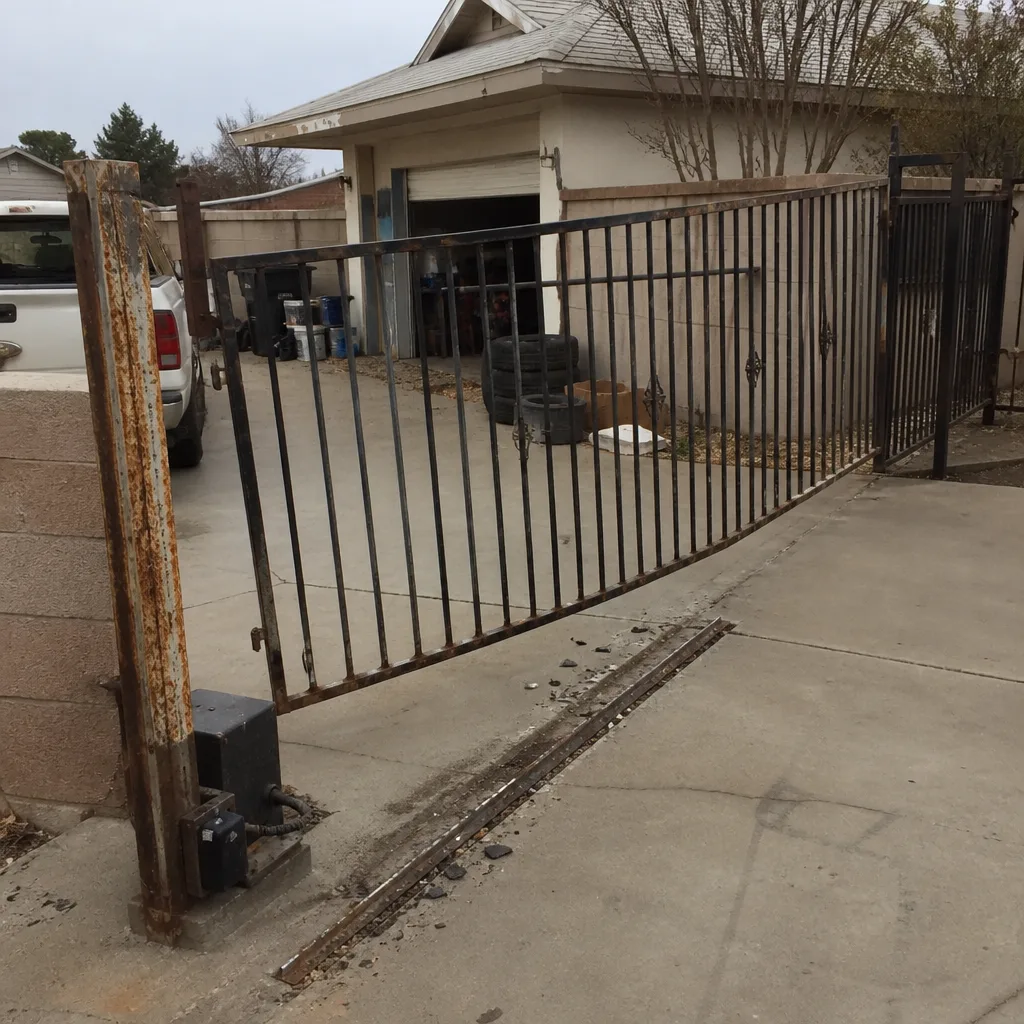 Before
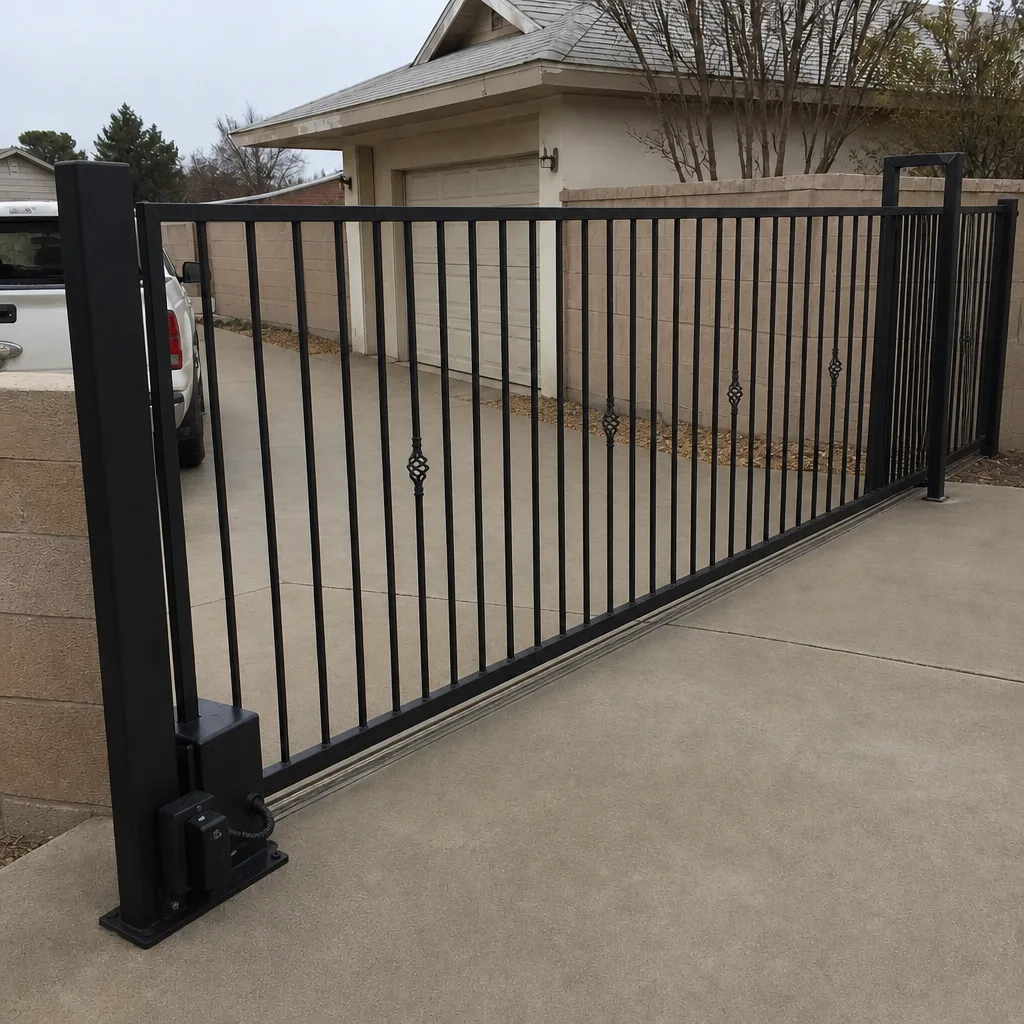 After
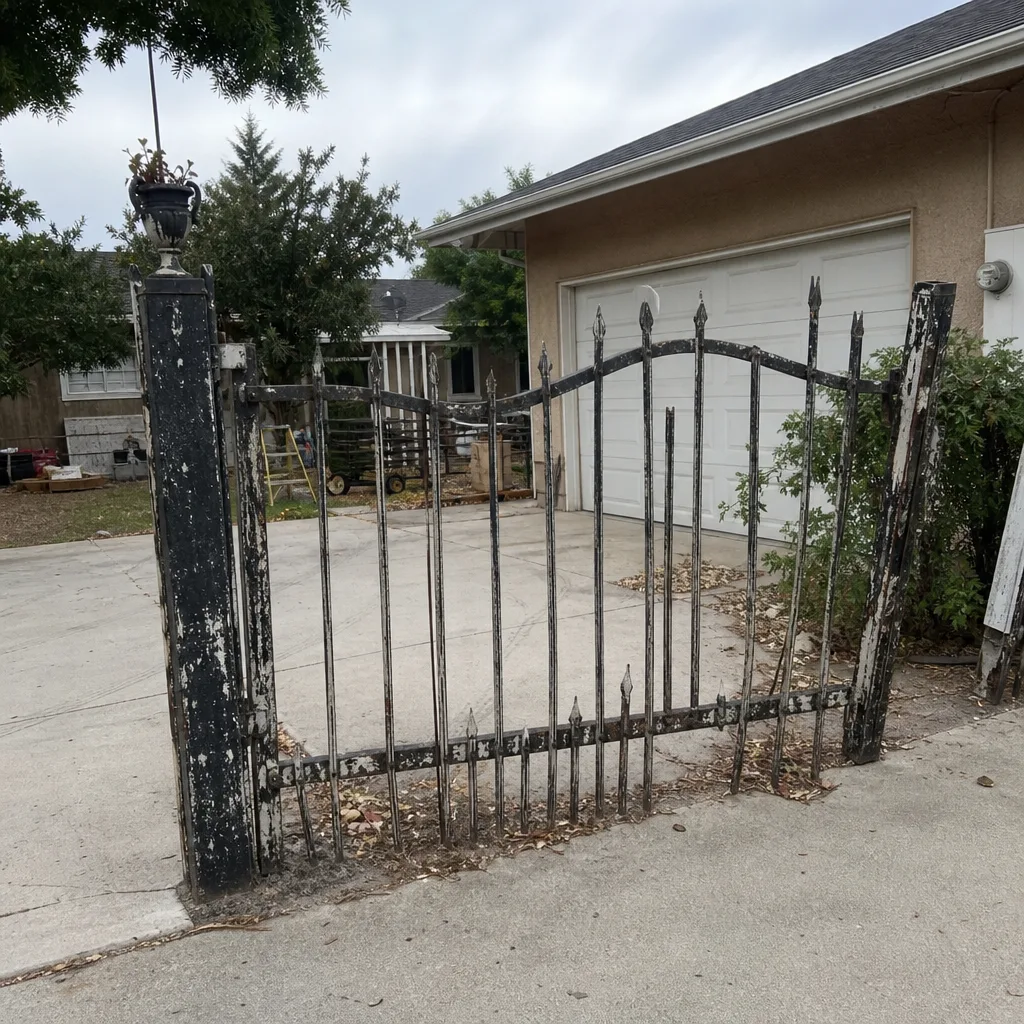 Before
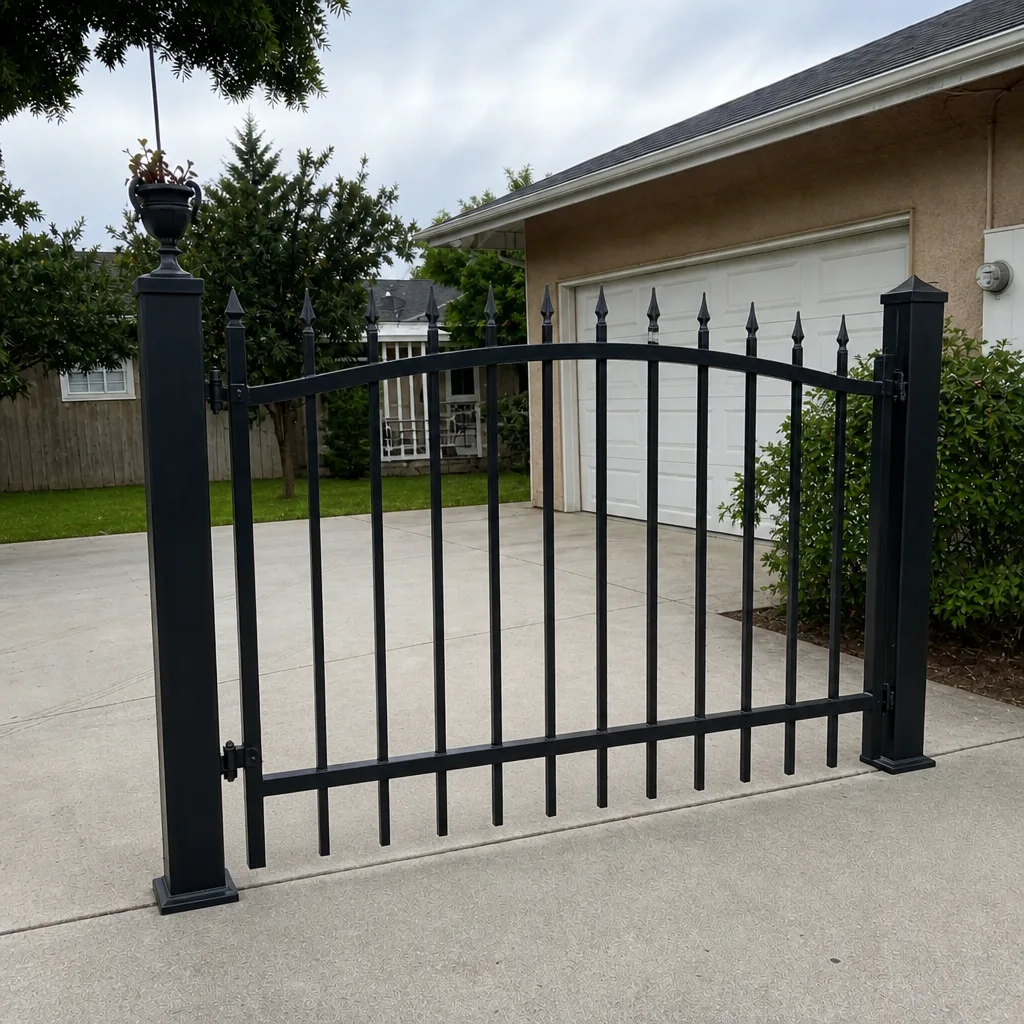 After
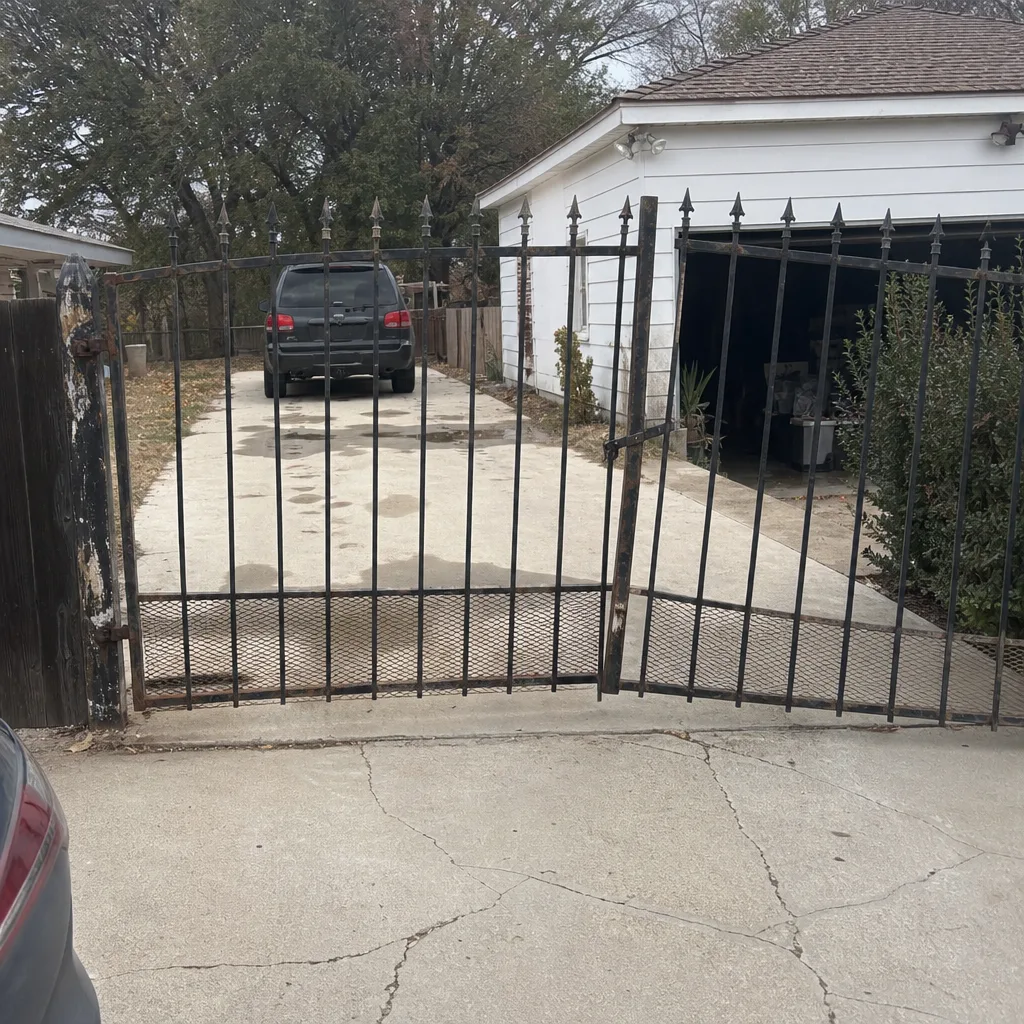 Before
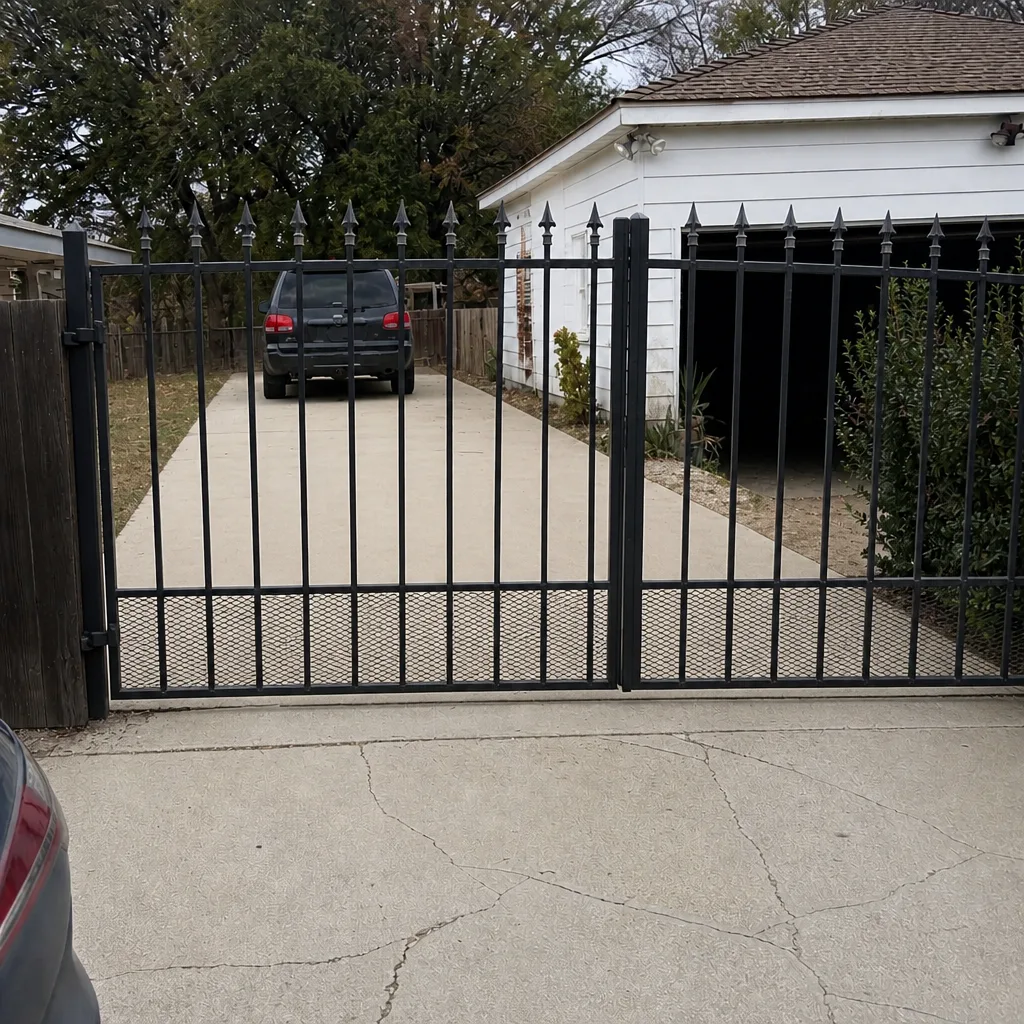 After
When to Call a Professional
Some symptoms are homeowner-friendly: a dirty sensor lens, a squeaky hinge, a leaf caught under a slide track. Others aren’t safe or useful to tackle under your own steam. If the gate hums without moving, if it fails to close or refuses to open, if the sensor LEDs are dark, if the gate moves under hand force when it should be locked, if a hinge weld has cracked, or if you can’t tell a heat-warp binding from an operator fault, call. Gate Repair Bakersfield offers free estimates in Bakersfield. Call (866) 389-4932. We answer 24/7. Fast dispatch from 7am to 7pm, Sunday through Friday. Our technicians have up to 11 years of experience working on LiftMaster, FAAC, BFT, Linear, Viking, Ghost Controls, DoorKing, Elite, and Mighty Mule systems, and we work the same diagnostic path on a residential swing gate as we do on a commercial slide gate.
Frequently Asked Questions
Most of the time, yes. On a residential operator, a mid-travel or mid-close reverse is the safety photo-eye doing its job because it thinks the path is blocked. Wipe the lenses first. If that doesn’t resolve it, the sensor alignment is off, or the safety circuit wiring is the problem. If the reverse happens at the same point in travel regardless of the sensors, suspect a limit switch or programming fault instead. Call (866) 389-4932 for an exact diagnosis – estimates are free.
Most of the time, yes – and you can usually read them yourself. The power LED, safety LED, limit LED, and fault LED each tell you a specific thing about the operator’s state. If the LEDs are lit and behaving consistently but the gate does the wrong thing, it’s programming. If they’re dark, flashing unexpectedly, or behaving inconsistently, it’s hardware or wiring. A trained technician can confirm the exact fault in a few minutes on the board. Our technicians have up to 11 years of experience reading these across brands, and we walk the same diagnostic path on a BFT or Ghost Controls operator as we do on a Linear or Viking unit.
Either the operator is failing under load, or the gate’s own weight has started binding on the open stroke, usually because the panel has sagged out of plumb or the hinge bearings have worn. The quick test is to disconnect the operator and push the gate open by hand. If it moves freely, the operator is the issue. If it binds, the mechanical problem needs addressing first. On a swing gate in Bakersfield, summer heat and post settling both contribute to this pattern. Call (866) 389-4932 if the pattern is getting worse week by week.
It depends on the fault and the operator, so we price every job from a written estimate after we’ve confirmed what’s actually wrong. We don’t quote over the phone. The price you agree to before work begins is the price you pay, and the estimate itself is free. For a symptom you’re not sure about, call (866) 389-4932 and describe it – we’ll tell you whether it needs a same-day visit or a scheduled one.
Look at the weld seam where the hinge bracket meets the gate frame. A crack shows as a hairline in the paint or metal, often with a small line of rust following it. You may also notice a flake of paint lifting at the seam. Run a fingernail along the join – if it catches, treat it as a crack until a technician confirms otherwise. Don’t cycle the gate until it’s inspected. A cracked hinge weld can fail catastrophically mid-travel.
A heat-warp issue is time-of-day dependent: symptoms show up in the hot afternoon and disappear in the cool morning. A loop detector failure is position dependent: symptoms show up when a vehicle is near the loop regardless of the time of day, and the gate travels normally when the loop is clear. If the gate is erratic only on hot afternoons and quiet in the mornings, it’s more likely a heat-related binding. If it’s erratic whenever a car is near a specific spot, it’s the loop. Call (866) 389-4932 for an exact diagnosis – estimates are free.
The Bottom Line
Gates are honest machines. They almost always signal a failure before it becomes a crisis, and the signals are learnable. Listen for grinding, clicking, and humming. Watch for mid-travel reverses, incomplete close cycles, and any asymmetry between the open and close strokes. Inspect the hinge welds, the post base, and the sensor LEDs once a month. Learn to read your operator’s diagnostic lights so you can tell programming issues from hardware issues before you call. And take the three stop-using signs seriously: a gate that moves under hand force, sensor LEDs that don’t respond, and a crack in a hinge weld. Act on what the gate tells you and most failures are small. Ignore it and the same warning becomes a bigger bill. From Gate Repair Bakersfield, the answer to “is it urgent?” is usually in the symptom itself. We work on residential and commercial gates across Bakersfield, and we’re glad to walk through your signal with you. Call (866) 389-4932 for a free estimate. We answer 24/7. Fast dispatch from 7am to 7pm, Sunday through Friday.
Written by the team at Gate Repair Bakersfield.