
Last updated November 15, 2026
 Wrought iron
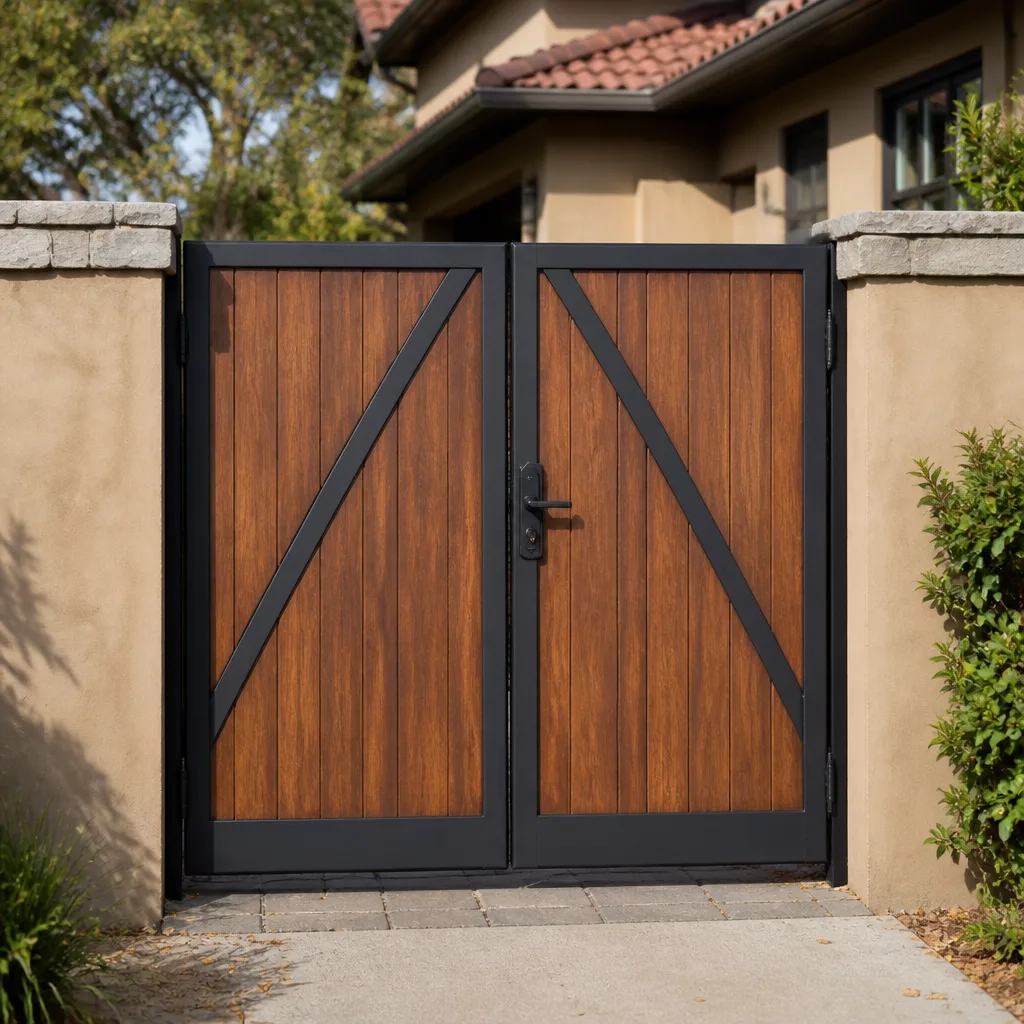 Wood & steel frame
 Farm & ranch
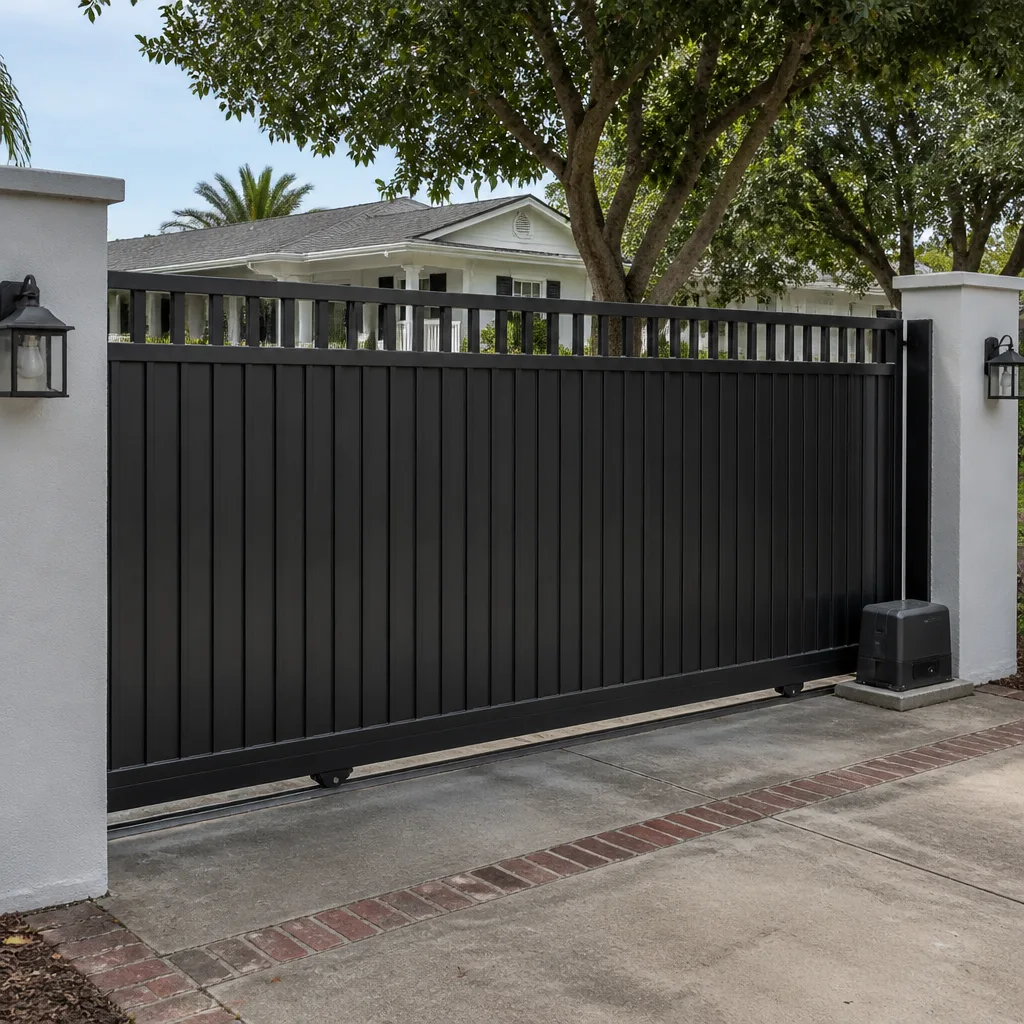 Sliding driveway gates
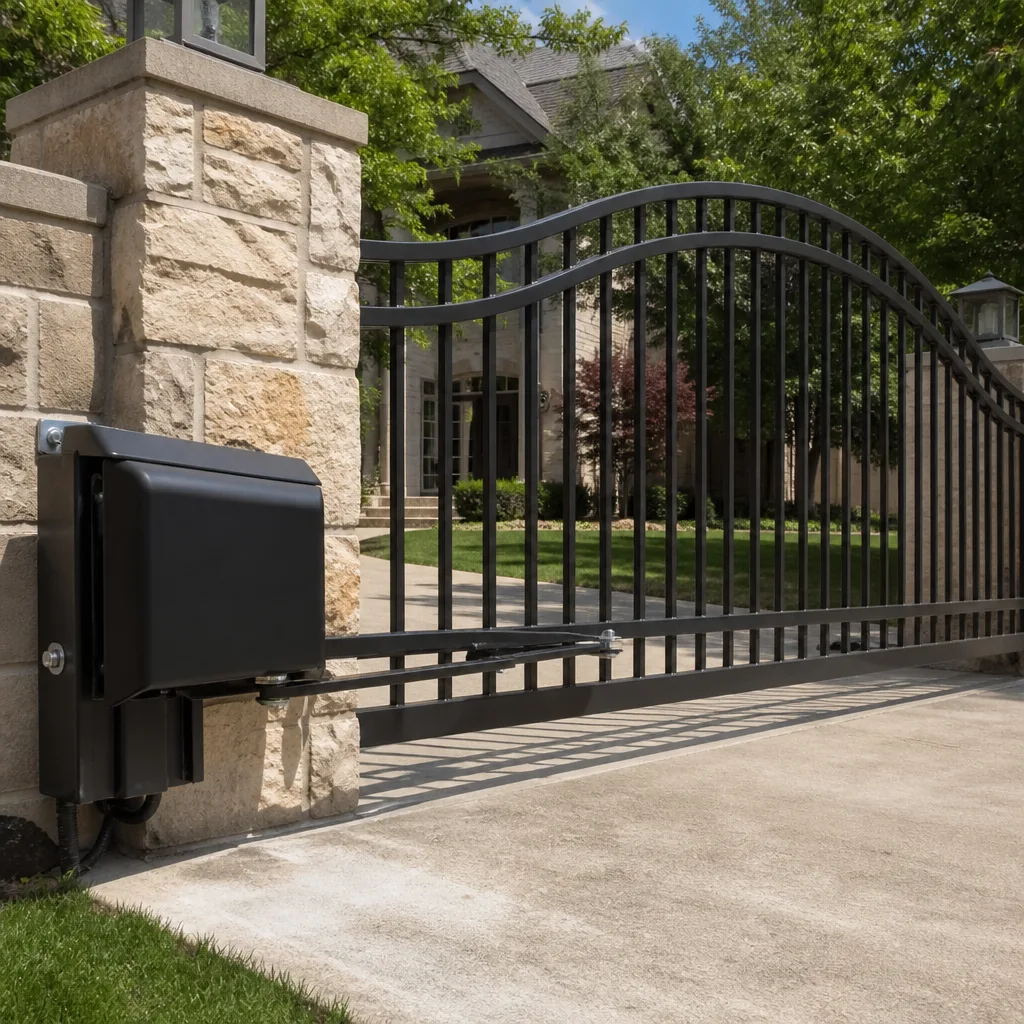 LiftMaster operators
Free on-site gate assessment - hinges, posts, and your LiftMaster or Nice gate operator checked before anything is quoted
The assessment is free and the quote is the invoice.
Get your free estimateSeasonal Gate Repair Care for Bakersfield: Year-Round Homeowner’s Guide
Most gate care advice you’ll find online was written for a climate that doesn’t exist here. It talks about freeze-thaw cycles, snow load, and ice jamming a track – none of which happen in Bakersfield. That mismatch matters, because the stresses that actually destroy gate hardware in the southern San Joaquin Valley are almost the opposite of the national template: heat that bakes motor housings and solar panels, dust that blinds photo-eyes, and weeks of tule fog that push moisture into places the summer sun never touched. A wide annual temperature swing does more cumulative damage to an automated gate than any single season. This guide gives you a care calendar mapped to what Bakersfield actually throws at a gate, month by month, so you catch problems before they become service calls.
Quick Answer
Seasonal gate care in Bakersfield works best as a four-phase cycle: pre-summer prep in April (heat-rated lubrication, solar output check, track expansion gaps), a summer dust and heat protocol from June through September, a moisture-and-power prep pass in October and November before fog season, and a winter tule fog response from December through February focused on corrosion and condensation. Owners who follow this sequence prevent the majority of reactive repair calls, because each phase addresses the specific stress the next one will create. When something does fail, a specialist diagnoses the actual cause rather than guessing.
Styles & brands we work with
- Wrought iron
- Wood & steel frame
- Farm & ranch
- Sliding driveway gates
- LiftMaster operators
Table of Contents
- Why Bakersfield’s Climate Breaks Gates Differently
- Pre-Summer Prep: What to Do in April
- Summer Protocol: June Through September
- Fall Transition: October and November
- Winter Tule Fog Response: December Through February
- Your 12-Month Task Calendar, Mapped to Bakersfield
- A Month-by-Month Task List
- Common Mistakes to Avoid
- When to Call a Professional
Why Bakersfield’s Climate Breaks Gates Differently
The San Joaquin Valley here swings across a wide annual temperature range – from winter mornings near freezing to July afternoons well past the century mark. That swing is the single biggest driver of gate wear, more than any one extreme. Metal expands and contracts with the temperature, hardware loosens itself over thousands of cycles, and seals that survive heat often crack in the wet-cool months that follow. When we look at a gate that’s failing early, the cause usually traces back to pressure the owner never noticed building across seasons.
Add three local factors and the picture gets clearer:
- Tule fog. For stretches of winter, the valley floor sits under dense fog that keeps surfaces damp for days or weeks. That’s condensation inside motor housings and on exposed steel hinges – corrosion that summer alone would never cause.
- Summer dust. Fine valley dust coats photo-eye lenses, clogs vent screens, and turns into a grit that wears slides and rollers.
- Solar load. A solar-powered operator has to produce its own power, and output drops in heat and dust. During peak summer, a marginal panel or a tired battery shows up as a gate that won’t cycle.
The pattern is a sequence, not a list of random worries. Summer heat loosens things and dries seals; fall is when those dried seals meet wet-cool air; winter fog then reaches every place the seals failed. If you care for the gate in Bakersfield by expecting this order, you’re always one step ahead of the failure.
Pre-Summer Prep: What to Do in April
April is the gatekeeper month. Once the heat settles in for good, you’re reacting, not preventing. This prep pass is where a few hours of attention saves the entire summer of trouble.
Swap to a heat-rated lubricant
A light winter-grade grease is fine for a cool gate. It is not fine for a slide track that will hit well over 100°F in the afternoon sun. In April, clean the old film off the track and apply a lubricant rated for high-heat operation, so it stays put instead of thinning out and dripping away by June. Use it on rollers, hinges, and the track surface – the three places that do most of the moving.
Check solar panel output
If your operator runs on a solar panel, April is the time to check it – before the first heat wave tests the whole system. Clear off the panel face, confirm the mount is tight, and watch the operator’s battery/status indicator over a few cycles. A panel that’s marginal in spring will be a dead gate in July, when a hot battery sags and the panel has to carry the load.
Verify expansion gaps on the slide track
Metal tracks grow in heat. A slide track installed tight, with no allowance for expansion, can bind or develop a hop as the rail lengthens. In April, run the gate through a full open-and-close cycle and listen for a scrape or a stutter – a sign the track is already too tight. This check costs nothing and prevents the classic “my gate worked all winter and now it’s grinding” call in June.
Run the full system test before the season
- Cycle the gate open and closed a few times and watch for a change in speed or a stall.
- Test the safety sensors by blocking the beam and confirming the gate reverses or stops.
- Check the control board enclosure for a tight cover and clean interior.
- Look for loose bolts on the hinge plates and operator mount – heat will finish loosening them.
- Note anything that hesitates, and get it looked at before the long summer run.
Summer Protocol: June Through September
Summer in Bakersfield is a four-month stress test. The goal here is routine, not repair: short frequent checks that keep the gate running while the heat tries to stop it.
Dust-purge the photo-eye lenses weekly
Valley dust is relentless, and a photo-eye with a dusty lens is a gate that randomly reverses or refuses to close. Once a week, wipe both lenses on the safety pair. If your gate runs a lot – a busy driveway or a commercial entrance – dust it more often. A soft cloth and thirty seconds is all it takes.
Inspect the motor housing vent screens
Most operators vent heat through screens or louvers. Once dusty, they trap heat inside the housing, and the operator runs hotter than it should. Check the screens monthly and clear them off. A clogged screen in August is a recipe for a motor that overheats and goes into thermal shutdown right when you need it.
Monitor battery voltage during peak heat
A battery that’s marginal behaves fine in spring but sags in sustained high heat, and a solar or battery-backup operator then fails to cycle. Watch the operator’s indicator or battery status through the worst weeks. If the gate gets sluggish or the operator chirps a low-battery signal, deal with it before it strands you.
Keep an eye on the operators under load
Brands like Linear and Viking put in daily work on residential driveways across Bakersfield, and they’re built for it – but under sustained heat, a worn gear or a loose mount shows up as a slower stroke or a strain sound. A quick monthly listen can catch a failing operator well before it quits.
Fall Transition: October and November
Fall is the bridge between the dry season and fog season, and it’s the most overlooked phase in gate care. This is when you get a gate ready for weeks of moisture – and for the outages that come with storm weather.
Apply a pre-fog moisture barrier to exposed hinges
The exposed steel hinges and latches that spent all summer dry will be the first to rust when the fog arrives. In October, apply a moisture-barrier coating or a corrosion-resistant film to those surfaces. It’s the cheapest insurance you can buy against winter corrosion, and it takes an afternoon, not a season.
Inspect the control board enclosure seal
The control board is the brain of the gate, and moisture is its enemy. Walk around the enclosure and look for a split gasket, a loose cover, or a gap where water can enter. A dry control board all winter is the difference between a gate that works and a mystery fault that takes a specialist to trace. Do it now, before the first storms.
Test backup power before storm season
Fall is the time to confirm your backup power actually carries the gate. For a battery-backed operator, cycle the gate on battery power alone and see how it performs. For any operator, confirm the charging circuit is doing its job. If the power goes out in a storm and the gate has to work on backup, you want to find the weakness before the storm, not during it.
Clear the drainage and the track
Remove the summer grit from the track and clear any leaves or debris around the gate base. A clean track in the fall means no mud or grit getting ground in when winter rain arrives.
Winter Tule Fog Response: December Through February
Tule fog is the hidden gate killer. It doesn’t just reduce visibility – it lays down condensation inside motor housings and on exposed steel for weeks at a stretch. Components that survived a decade of summer heat can corrode through a single fog season. Winter care is about keeping moisture out and keeping the electronics clean.
Run weekly receiver-terminal corrosion checks
The receiver and its terminals are where condensation does the most quiet damage. Once a week, open the enclosure and look for a green or white film on the terminals – the first sign of corrosion. Clean it off early and the gate keeps working. Let it go and the radio link between your remote and the gate starts to fail, and a gate that won’t open from the car is a gate you can’t trust.
Verify condensation drain holes in the operator housing
Many motor housings have small drain or breather holes designed to let moisture escape. If they’re clogged, condensation pools inside and works on the motor and control board. In winter, confirm those holes are open and clear. It sounds trivial until a foggy February has water sitting where it doesn’t belong.
Adjust loop detector sensitivity for wet pavement
If your gate runs off an underground loop detector, wet pavement changes how the loop reads – and a detector set too sensitive can false-trigger all winter. In fog season, it’s worth checking the sensitivity setting so the gate doesn’t open itself every time the ground is damp. This is one adjustment that saves a lot of confusion.
Watch out for the cold-side culprits
The fog may be the main event, but the cooler months also tighten hardware and stiffen seals. The combination of damp and cold means bolts that were snug in summer can loosen, and seals that dried in the heat can crack. A monthly walkaround that checks the moving parts and the seals keeps the gate ready for when the sun comes back.
Your 12-Month Task Calendar, Mapped to Bakersfield
A generic seasonal template tells you to “winterize” in the fall and “summerize” in the spring. Bakersfield’s gate stress doesn’t map to that. Here’s the real annual sequence – the order that matters here.
- April – pre-summer: heat-rated lubricant swap, solar output check, expansion-gap verification on tracks, full system test before the hot stretch.
- June – early summer: first dust-purge of the photo-eyes, vent-screen check, battery status baseline for the summer.
- July – peak heat: weekly photo-eye cleaning, monthly vent-screen clear, battery-load watch, listen for strain under the motor.
- August – heat bottoming out: same weekly dust purge, confirm the operator isn’t overheating, deal with any sluggish cycle before fall.
- September – late summer: last full dust and vent pass before the season turns, note anything that hesitated over the summer.
- October – fall transition: moisture barrier on exposed hinges, control board seal inspection, backup power test.
- November – pre-fog: clear the track and drainage, final seal pass, ready the enclosure for wet weather.
- December through February – fog response: weekly receiver-terminal checks, condensation drain-hole verification, loop detector sensitivity adjustment, monthly hardware walkaround.
- March – reset: clean up after fog season, check for corrosion from winter, prep for the pre-summer pass in April.
How you handle the big questions is a choice too. If something does fail in the middle of the worst of the fog, the move is to fix the specific cause, not tear out the whole system. We work across LiftMaster, FAAC, Linear, and Ghost Controls, which means a diagnosis follows the actual fault rather than whatever part is easiest to sell. That repair-first approach is exactly what our electric gate repair team applies when a winter fault shows up.
A Month-by-Month Task List
If you want a short version to keep on the fridge, start here. The calendar above is the full picture; this is the errand list.
- April: Swap lubricant; check solar panel; add track expansion room; test the whole system.
- June: First photo-eye dust purge; clear vent screens.
- July: Weekly photo-eye cleaning; battery voltage watch.
- August: Weekly photo-eye cleaning; listen for a strained motor.
- September: Last full dust pass; note summer wear.
- October: Hinge moisture barrier; control board seal check; backup power test.
- November: Clear the track and drainage; final seal inspection.
- December-February: Weekly terminal checks; drain-hole and loop checks; monthly walkaround.
- March: Post-fog corrosion check; reset for the next April.
You don’t have to be a technician to do most of this. But a couple of the steps are genuinely not DIY work, and we get to that below. When you need help on the technical side across the year, our gate repair work is built around exactly this seasonal pattern.
Common Mistakes to Avoid
- Following a national seasonal template. Advice that says to “winterize for frost” doesn’t fit a valley where winter means fog and 90-degree-free summer. Build your calendar on Bakersfield weather, not a generic checklist.
- Ignoring the photo-eyes until the gate misbehaves. A dusty lens is the most common cause of a “randomly acting” gate, and a weekly wipe prevents the call. Skipping it through a dusty Bakersfield summer just sets up the reversal.
- Letting a summer-lubricated track run through winter untouched. The lubricant you put on for the heat will collect grit and fog moisture if you don’t clean it. Spring and fall are the reset points.
- Waiting for fog season to think about moisture. By December the conditions have arrived. Moisture barriers, seal checks, and backup power tests all belong in the fall.
- Forgetting the loop detector when the pavement gets wet. A loop set too sensitive false-triggers all winter, and most owners never connect the wet-season behaviour to the detector.
- Burying a failing battery in a hot enclosure. Heat and dust work on a battery all summer. Monitor it in July and August, not after the gate stops opening.
- Replacing a whole system when one part failed. A failed control board, receiver, or motor is often the only problem. A technician who works the brand will fix the fault; a generalist may just quote you a new gate.
When to Call a Professional
Some of this guide is a homeowner’s work and some of it isn’t. The line matters, because a few gate components can cause serious injury if handled wrong. Call a professional if the gate stops mid-cycle or reverses on its own after a cleaning; if the motor runs over, smokes, or shuts down in heat; if the control board or enclosure has visible moisture inside; if a battery or backup system won’t hold a charge; or if the loop detector acts up no matter how you set it. Automated operators run on line power, and the motors and control boards inside them are not something to open up casually. A trained technician is the right call for anything that involves the electronics or the powered hardware.
Gate Repair Bakersfield offers free estimates in Bakersfield – call (866) 389-4932. We answer 24/7. Fast dispatch from 7am to 7pm, Sunday through Friday. Our technicians have up to 11 years of experience, and we work with both residential and commercial gates across the brands that show up in this city.
See the difference
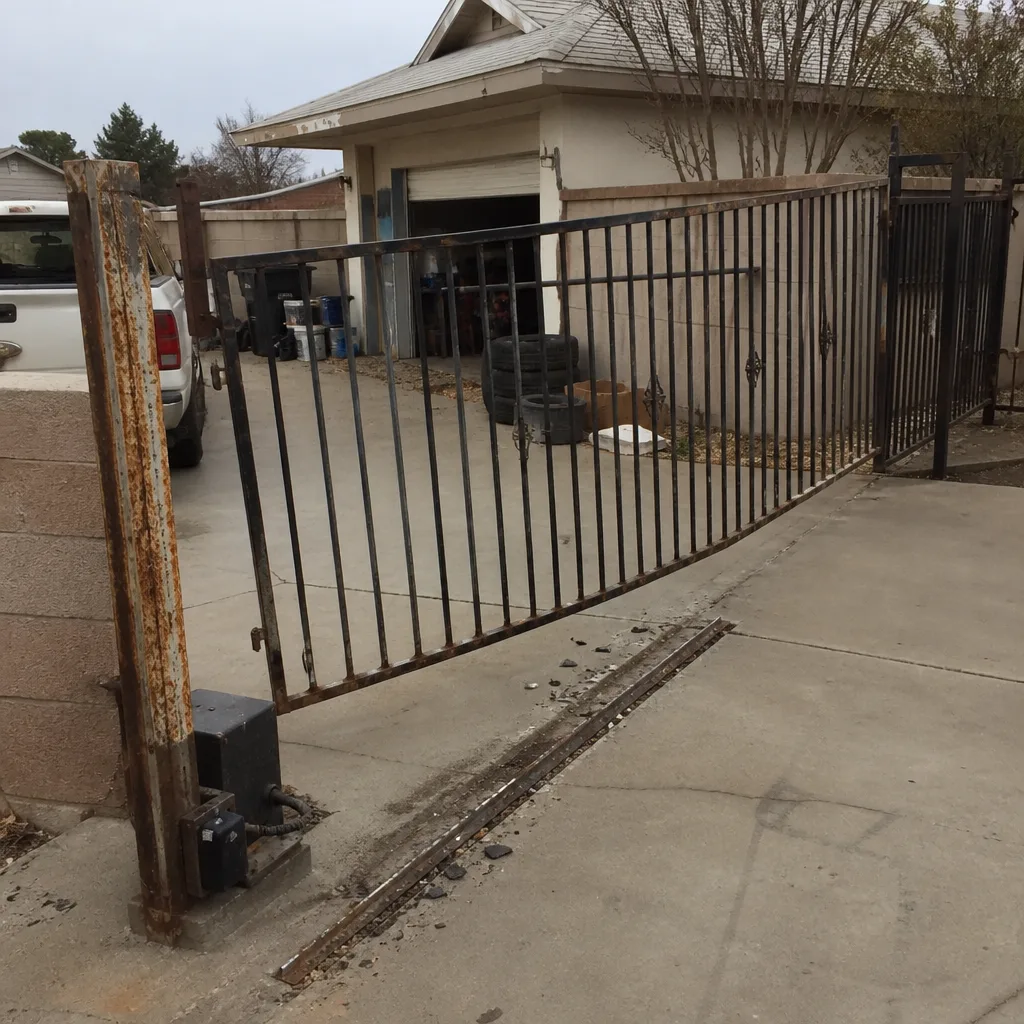 Before
 After
 Before
 After
 Before
 After
Frequently Asked Questions
The pre-summer pass in April matters most, because it sets up the whole year. Getting heat-rated lubricant on the moving parts, checking the solar output, and confirming track expansion room before the hot stretch prevents the failures that otherwise show up in June and July. If you do one thing this year, do that one.
It’s real, and it’s the reason this guide exists. Tule fog in the San Joaquin Valley keeps surfaces damp for weeks, and that condensation settles inside motor housings and on receiver terminals. The corrosion that builds during a wet winter is often worse than what a whole summer of heat does. Weekly terminal checks and open drain holes are the defense.
Once a week during the dusty months, and more often if the gate cycles frequently. Fine valley dust obscures the lenses and causes random reversals and refusals to close. A quick wipe is the cheapest preventive step in this whole guide. If cleaning doesn’t fix a misbehaving gate, that’s when to bring in a specialist.
Most of them, yes – cleaning, lubricating, visual inspection, and clearing the track are homeowner work. Anything involving the control board, the powered electronics, the motor, or backup wiring should go to a trained technician. Line power and gate operators are not a casual DIY project. We’re happy to handle the technical half of the calendar for you.
Sustained heat and dust do the most cumulative damage. The operator runs hotter, batteries sag, photo-eyes fog over with grit, and metal expands enough to bind a tight track. It’s cumulative, which is exactly why the April prep matters – it lowers the summer load before it builds up. If a gate does fail in the heat, a specialist can work the brand and trace the actual fault.
Yes, and more of it. A manual gate is hinges and a latch. An automated gate adds a motor, a control board, safety sensors, and often a backup or solar power system, and each of those has its own seasonal stress. Our Gate Repair Bakersfield work covers both kinds, but the care calendar above is weighted toward the electronics because that’s where most failures happen. If you’re deciding whether your gate needs a repair or a new installation, that’s a different call – but the seasonal framework holds either way.
The Bottom Line
The care calendar that works for a Bakersfield gate is built on the city’s own weather, not a national template. Summer heat and dust stress the moving parts and the electronics, fall is when you get ready for moisture, and winter tule fog is the corrosion season that catches owners off guard. Do the four phases in order – April prep, summer protocol, October and November transition, December through February fog response – and you prevent most of the reactive repair calls. The technical steps belong with a specialist, and that’s where we come in.
Contact
If your gate is acting up, or you want the technical half of this calendar handled by someone who knows the equipment, call Gate Repair Bakersfield at (866) 389-4932 for a free estimate. We answer 24/7, with fast dispatch from 7am to 7pm, Sunday through Friday. We serve homeowners, property managers, and commercial customers throughout Bakersfield with gate repair, electric gate repair, and new gate installation, and we work the major brands directly. The written estimate sets the price per job, and we quote it before any work starts.
Written by the team at Gate Repair Bakersfield.