
Last updated November 15, 2026
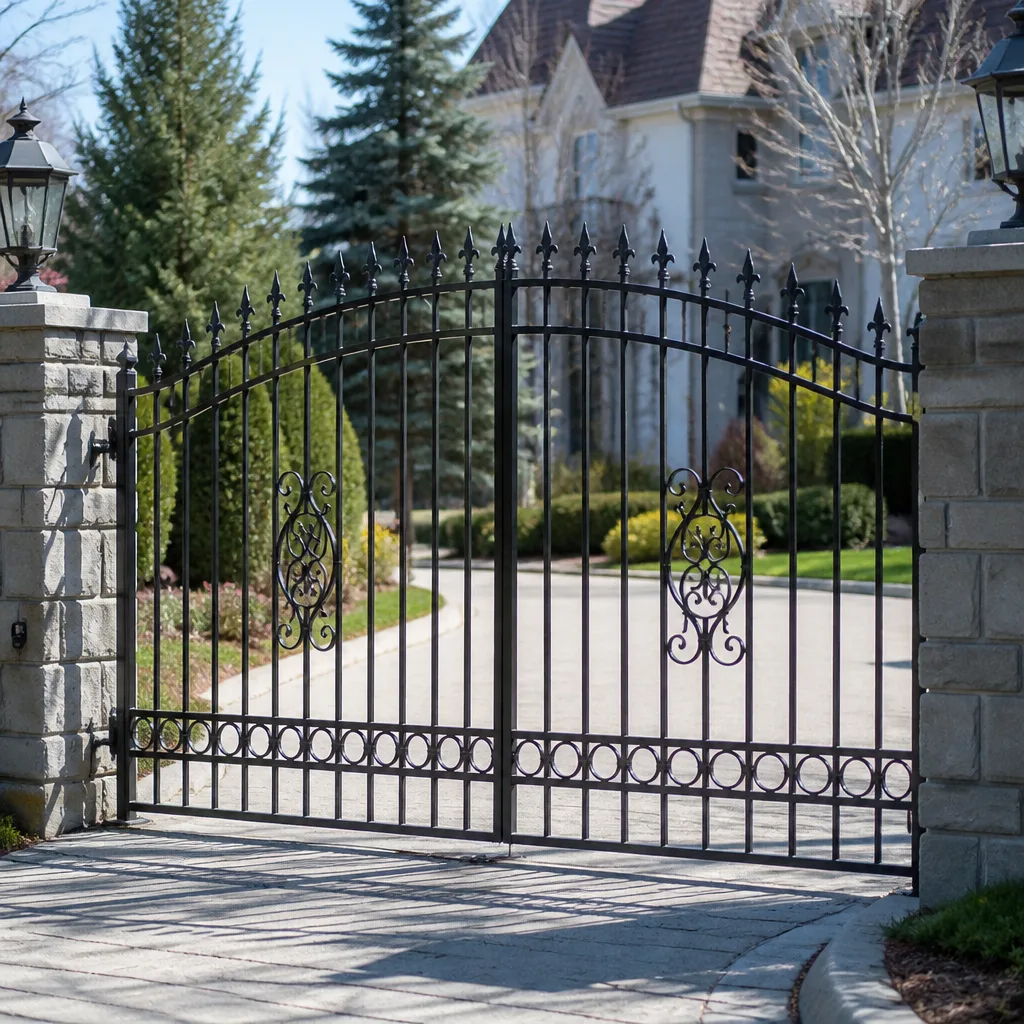 Wrought iron
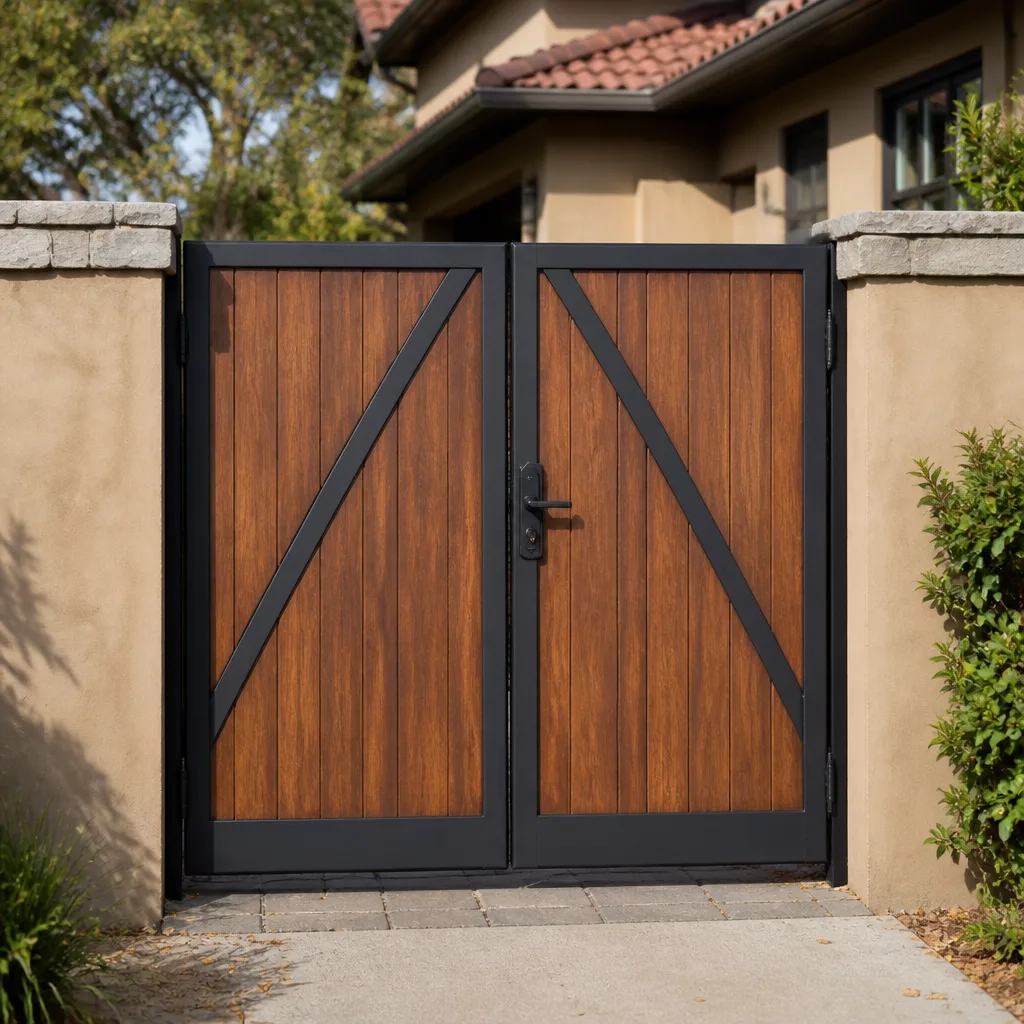 Wood & steel frame
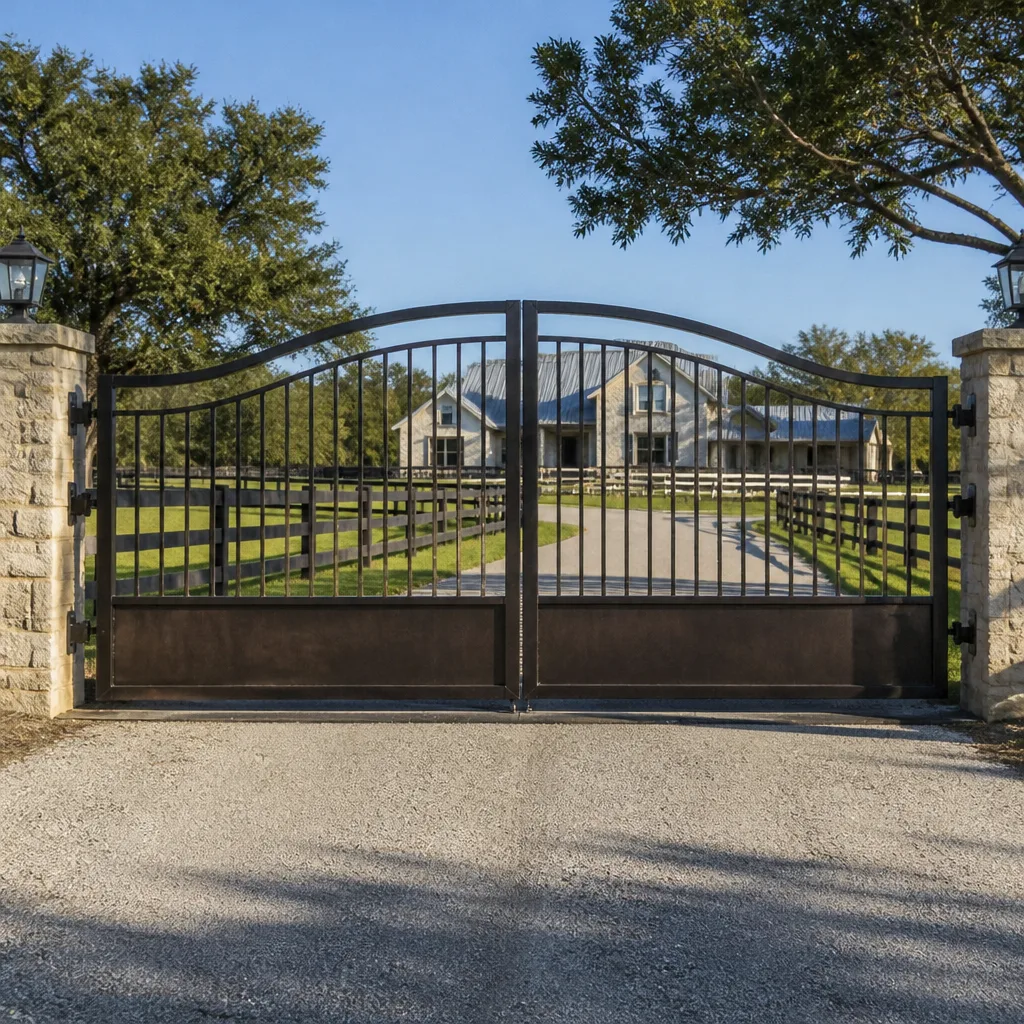 Farm & ranch
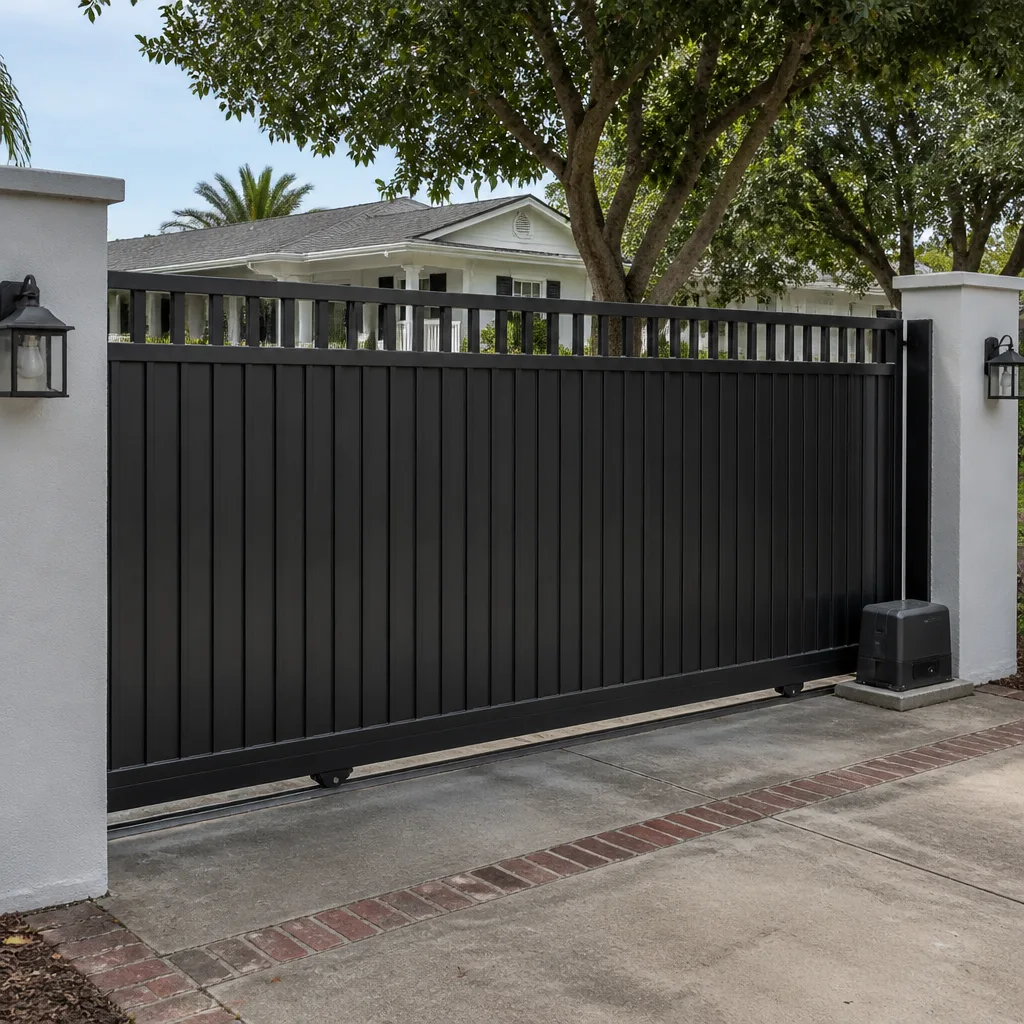 Sliding driveway gates
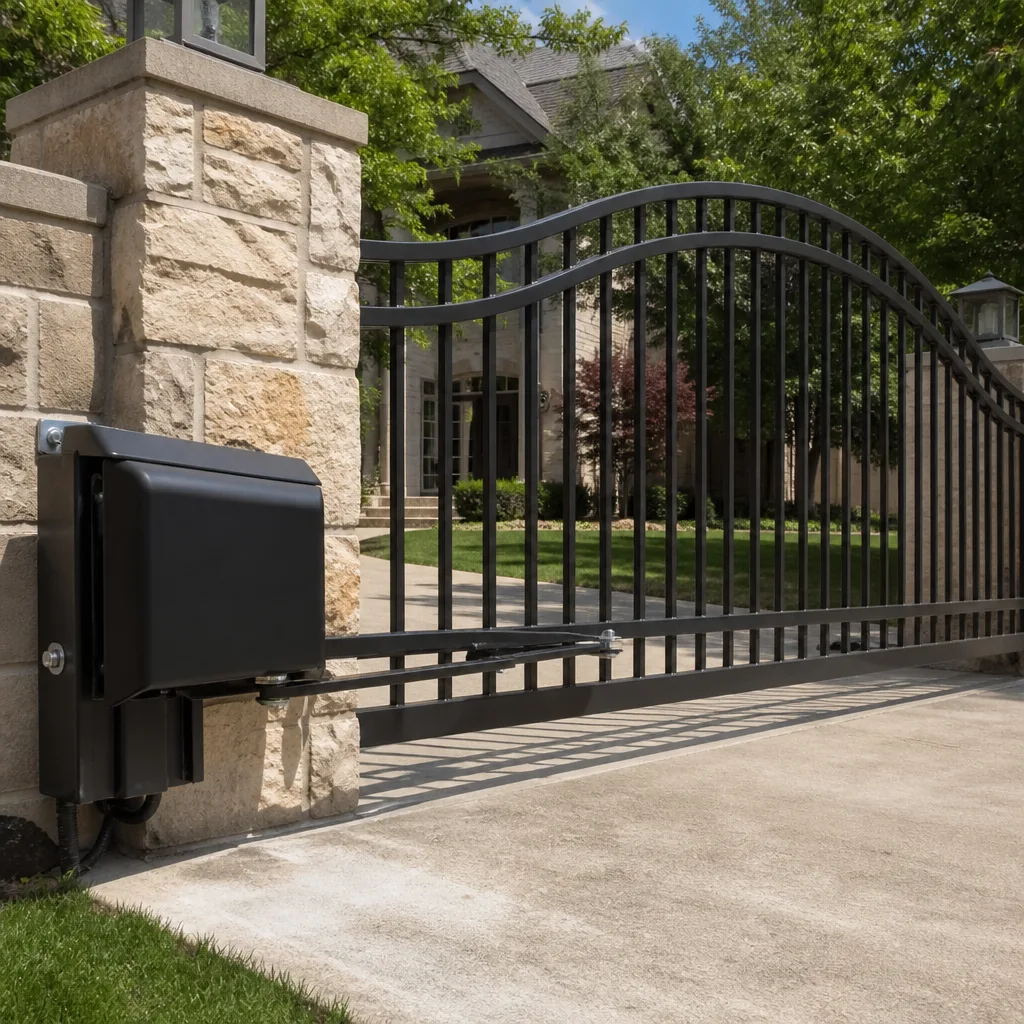 LiftMaster operators
Free on-site gate assessment - hinges, posts, and your LiftMaster or Nice gate operator checked before anything is quoted
The assessment is free and the quote is the invoice.
Get your free estimateThe Complete Guide to Gate Repair in Bakersfield
Most gate failures start somewhere other than the part that stopped working. A gate that reverses at dusk, grinds on opening, and drifts out of alignment by the end of summer may look like three separate problems. In Bakersfield, they often trace back to the same root cause: a post-and-hinge assembly being pushed and pulled by wide daily temperature swings, year after year. That chain of stress is what separates a fix that holds from a repair that comes back in six months. This guide maps every major gate type to what breaks first, why control board errors get misdiagnosed as motor failures, how local soil and heat change the picture, and which repairs actually need a permit.
Quick Answer
Gate repair in Bakersfield means diagnosing the full failure chain, not just swapping the visible broken part. The gate type (single swing, dual swing, slide or vertical pivot), the age of the hardware, the local heat cycle and the soil under the posts all work together to cause the symptoms you see. A proper repair starts with the alignment and footing, then works up through hinges, hardware, and electrical components only after the mechanical base is sound.
Styles & brands we work with
- Wrought iron
- Wood & steel frame
- Farm & ranch
- Sliding driveway gates
- LiftMaster operators
Table of Contents
- Why Bakersfield Gates Fail Differently
- Failure Mode Map: The Four Gate Types
- Control Board or Motor? The Diagnostic Sequence
- San Joaquin Valley Soil and Post Settling
- Heat Cycles and Thermal Stress on Gate Systems
- Which Repairs Need a Permit in Kern County
- Repair or Replace? A Decision Framework
- What Routine Gate Care Actually Prevents
Why Bakersfield Gates Fail Differently
Bakersfield runs one of the widest annual temperature swings in California’s populated areas. Summer days regularly push past 100°F, and winter nights in the valley bottom drop below 40°F. That is a 60-plus degree swing between seasons, and on many days the difference between morning and afternoon alone can exceed 30 degrees. Metal gates, hinges, and motor mounts expand and contract with every one of those swings.
What that does over time is cumulative. A hinge bracket that flexes a fraction of an inch in August and contracts again in December isn’t doing that in isolation. The bolts holding it slowly loosen. A post set in soil that shifts with irrigation and dry spells leans a touch further each season. A slide gate track accumulates a little more misalignment. None of it is dramatic on its own, but the sum is a gate that has drifted out of its original geometry without any obvious impact or event to blame.
That drift then shows up as electrical symptoms. A gate that reverses unexpectedly is often the control board correctly reading a load sensor that registered extra resistance because the gate is dragging on a roller. A gate that won’t close at dusk is often a photo eye misalignment that only becomes a fault once the thermal expansion of the day has shifted the frame. A gate that grinds is usually a hinge that needed tightening two seasons ago.
How this differs from coastal California
Coastal installations deal with moisture and salt exposure as their main stress source. Bakersfield gates deal with heat, dry air, dust, and soil movement. That changes which components fail first. On the coast, steel rusts and electronics corrode. In Bakersfield, hinges seize from heat and grit, mounting points loosen from thermal cycling, and the mechanical base drifts long before electrical components fail outright. A technician who treats a Bakersfield gate like a coastal one will spend too much time on electrical diagnosis and not enough on alignment.
Failure Mode Map: The Four Gate Types
Every gate type has a characteristic weak point. Knowing yours helps you describe the problem accurately and understand what the repair involves before anyone arrives.
Single swing gates
Single swing gates fail at the top hinge first in almost every case. The top hinge handles the leverage of the entire gate leaf every time the gate opens and swings out. In Bakersfield heat, the hinge pin loosens inside its bracket and the gate begins to sag toward the latch side within a couple of seasons. The visible symptom is a gate that needs to be lifted to latch. The right fix is hinge replacement and re-hanging, not bending the latch to compensate.
Dual swing gates
Dual swing gates fail at the hinge side and at the alignment between the two leaves. When one operator arms the gate, the closing force applied to one leaf stresses the hinge at the post, and the second leaf starts to gap or overlap depending on which side loosens first. The most common misdiagnosis here is treating a misalignment as a control board fault because the two leaves stop matching. In our experience, a physical check of both hinge arms and the closing gap resolves the question quickly.
Slide and cantilever gates
Slide gates fail along the track, and the failure is almost always gradual. The track accumulates grit, the rollers wear, and the gate begins to drag by a fraction of an inch. The operator motor compensates by drawing more current, which is when you see intermittent stops or reversing. Cantilever gates have no bottom track to clog but rely entirely on the counterbalance and the carriage rollers, which wear even more quietly. Track and roller inspection comes before any electrical diagnostic.
Vertical pivot gates
Vertical pivot gates fail at the pivot anchor and the hydraulic or operator arm. The pivot point carries the full weight of the gate leaf on a single axis, and any settling of the anchor footing shows up as a gate that tilts or binds mid-travel. Bakersfield’s soil movement is a factor here. The first thing to check on a vertical pivot gate is the anchor, not the motor.
Control Board or Motor? The Diagnostic Sequence
Control board errors get misdiagnosed as motor failures more often than any other single problem in gate repair. The reason is simple: a control board on a FAAC or BFT operator that reads a load fault will cut power to the motor as a safety response. The gate stops moving. The symptom looks like a dead motor, and the easy conclusion is that the motor needs replacing. Replacing a healthy motor while the control board continues to read a fault is a common outcome when the diagnosis skips a step.
The correct diagnostic sequence isolates the mechanical from the electrical before touching either.
- Disconnect the operator and test the gate by hand. If the gate resists, drags, or binds when pushed manually, the problem is mechanical, not electrical.
- Check the power supply at the operator terminal. Low voltage from a failing transformer or a corroded connection will present as an intermittent motor fault.
- Inspect the safety sensors and photo eyes. A misaligned or dirty photo eye triggers a fault code that mimics a motor stop.
- Read the control board error codes. Most boards store diagnostic codes even after a reset. Reading these first is faster than testing components individually.
- Test the motor windings and capacitor only after the above steps. If the gate moves freely and the board has power, then the motor becomes a candidate.
That sequence is routine for a specialist who handles multiple brands because the failure patterns repeat across LiftMaster, Linear and Viking equipment. A generalist who works in one or two systems may default to whichever part seems easiest to replace.
San Joaquin Valley Soil and Post Settling
Bakersfield sits on the southern end of the San Joaquin Valley, and the soil here is typically a mix of sandy loam and clay-heavy pockets. Both behave differently under a gate post than a uniform soil would. Clay expands when wet and contracts when dry. Sandy loam shifts more horizontally. When a post is set in a clay-heavy pocket and the homeowner irrigates a lawn on a regular schedule, the post footing sees a wet-dry cycle every season. Over several years, that cycle can reduce the bearing capacity of the soil around the footing, and the post begins to lean.
A leaning post shows up as a gate symptom long before the post is visibly out of plumb. The gate will start to bind at the hinge, then latch poorly, then generate alignment faults on a slide gate or closing faults on a swing gate. When the alignment gets bad enough, the operator motor strains and begins to trip the control board. Replacing the hinges or the motor without addressing the footing means the same cycle starts again next year.
The fix for a settling post depends on how far it has moved. Minor settling can be corrected by re-setting the hinge brackets or shimming the carriage rollers. More significant settling needs the post pulled and reset to proper footing depth. A proper footing depth for a driveway gate post is deeper than most homeowners expect, and we check the existing depth before recommending a reset. Backfilling with the right aggregate and tamping in layers is what makes a reset post stay put.
Heat Cycles and Thermal Stress on Gate Systems
The thermal stress in Bakersfield is what makes the gate failure chain compound faster here than in most of the state. A steel gate in direct summer sun can reach surface temperatures well above the ambient air temperature, and a metal gate that is 110 feet from shade to shade across a driveway will expand measurably between morning and afternoon. That expansion pushes against the hinge brackets and the latch hardware.
Two things happen as a result. The hardware loosens because expansion and contraction loosens bolts that are never re-torqued. And the gate’s geometry drifts because the frame flexes under the daily cycle and doesn’t return to its original position perfectly. The cumulative effect over several seasons is a gate that is technically still functional but has drifted far enough out of alignment that the operator struggles to move it.
Motor mounts get the same treatment. A motor mounted on a bracket that has loosened a quarter inch from thermal cycling will vibrate slightly more, which accelerates wear on the drive gears, which causes the motor to draw more current. The control board reads that extra current as resistance and cuts power. You might see an intermittent stop at 2pm on a hot day that doesn’t reproduce in the morning. That is a heat-driven symptom, not a control board failure.
What a heat-stress repair actually involves
- Re-torquing hinge bolts and mounting brackets after the gate has cooled to ambient temperature in the morning.
- Inspecting the drive gear on operators with visible wear, because heat-driven vibration accelerates gear wear on FAAC and BFT units in particular.
- Rechecking sensor alignment at both morning and afternoon temperatures, since a photo eye aligned in the cool morning may drift out of alignment by 3pm.
- Checking the post footing, since thermal expansion plus soil movement is the combination that produces the worst alignment drift.
Which Repairs Need a Permit in Kern County
Most gate repair work in Bakersfield is maintenance and does not require a permit. Replacing a hinge, repairing a motor, replacing a control board, replacing a photo eye sensor, or resetting a leaning post are all maintenance-type work. Repairs that restore an existing gate to its original condition generally fall outside permit territory, and homeowners can authorize those without a permit question.
New installations and certain structural changes are a different matter. The safe rule is to ask before you authorize anything that changes the structure or the electrical circuit.
Repairs that usually don’t need a permit
- Hinge replacement, re-hanging, and alignment correction on an existing gate.
- Motor and control board replacement on an existing operator.
- Photo eye, keypad, and remote receiver replacement.
- Re-setting an existing post to its original footing depth.
- Track and roller replacement on a slide gate.
Work that may need a permit or inspection
- Installing a new gate and operator system where none existed.
- Relocating a gate to a different opening or changing its size.
- Running a new dedicated electrical circuit to the gate operator location.
- Structural changes to the post or the gate frame beyond repair.
Which permit applies depends on the city and the scope of the work. We always recommend confirming with the Bakersfield Building Department or Kern County before authorizing structural or electrical changes. We can tell you what the work involves so you can ask the right question, but the permit itself is between the homeowner and the jurisdiction. Our Bakersfield service page covers the local area we work in.
Repair or Replace? A Decision Framework
The honest answer for most Bakersfield gates is repair. Replacement is the right call in fewer cases than the industry usually suggests, and the decision should follow the hardware, not the invoice size. These are the questions we walk through before recommending either path.
- Is the gate frame still structurally sound? Surface rust on a steel frame is a repair. Structural cracking at a welded joint, or a frame that flexes when you push it, is a replacement candidate.
- Is the operator within its service life? A Driveway operator that has been eating control board faults for years is a replacement candidate. A motor that tests healthy and is failing only because of alignment is a repair.
- Is the post footing still sound? A post that can be re-set to proper depth and held is a repair. A footing failure that has also compromised the gate frame is usually a replacement.
- Does the gate type still suit the driveway? If the property has changed – a wider vehicle, a new access requirement – the existing gate may never perform well. That is a replacement decision based on use, not on condition.
- Is the current gate system repairable with available parts? Brand matters here. LiftMaster, Linear, and Mighty Mule parts are broadly available. Obscure or discontinued operators may force replacement even when the frame is fine.
Most of the time we end up repairing, and the repair lasts longer than the customer expected because the actual fault gets addressed. Read more about our gate repair approach for how that diagnosis typically goes.
What Routine Gate Care Actually Prevents
“Maintenance” is a word that gets used vaguely, so here is what gate maintenance actually does in a Bakersfield climate. It is not a separate service plan or a contract. It is the set of checks that stop the failure chain from compounding, done as a one-time visit or as part of a repair.
- Re-torquing hinge and bracket bolts. This is the single highest-value action on a metal gate in Bakersfield. Thermal cycling loosens hardware constantly, and tightening it once per season prevents most alignment drift.
- Track and roller cleaning on slide gates. Grit buildup accelerates roller wear and is the leading cause of slide gate strain in the valley.
- Photo eye alignment check. Test sensor alignment at both morning and afternoon temperatures so a heat-driven drift gets caught before it becomes a control board fault.
- Post plumb check. A visual check of the post from two angles catches soil settling before it reaches the point of affecting hinge alignment.
- Motor mount inspection. Look for vibration, loosened mounting bolts, and visible gear wear on the operator drive.
- Lubrication of hinges and moving parts. Dry heat and dust make hinges seize faster than on the coast. A light lubrication on hinges and rollers prevents binding.
What maintenance prevents, in concrete terms, is the compounding failure that gets misdiagnosed. A gate that gets its bolts tightened every season doesn’t drift out of alignment. A gate that doesn’t drift doesn’t strain the operator. A gate that doesn’t strain the operator doesn’t throw control board faults. The whole chain gets interrupted by a fifteen-minute check.
Common Mistakes to Avoid
- Replacing the control board before checking alignment. If the gate is dragging, a new control board will read the same fault that killed the old one. Check the mechanical base first.
- Bending the latch to fix a sagging gate. A gate that needs to be lifted to latch has a hinge problem. Bending the latch masks the symptom and damages the gate frame over time.
- Assuming a reversing gate means a bad sensor. In Bakersfield, a gate that reverses mid-travel can be a heat-driven control board fault reading a partially-dragging roller. Test sensors and drag both before ordering parts.
- Ignoring a leaning post because the gate “still works.” Post settling is the slowest-moving part of the failure chain, and the most expensive to fix later. Catch it while it’s still shimmable.
- Running a new operator on the original electrical circuit without checking the load. An older gate circuit may not carry the draw of a modern operator. Get the circuit checked before install.
- Assuming a permit isn’t needed for a new install. Repair work usually doesn’t require a permit, but a new installation often does. Ask the city before authorizing the work.
- Buying an inexpensive replacement operator to fix an electrical symptom. When the real problem is a motor mount that’s vibrating loose, a new operator will fail the same way. Diagnose the mount first.
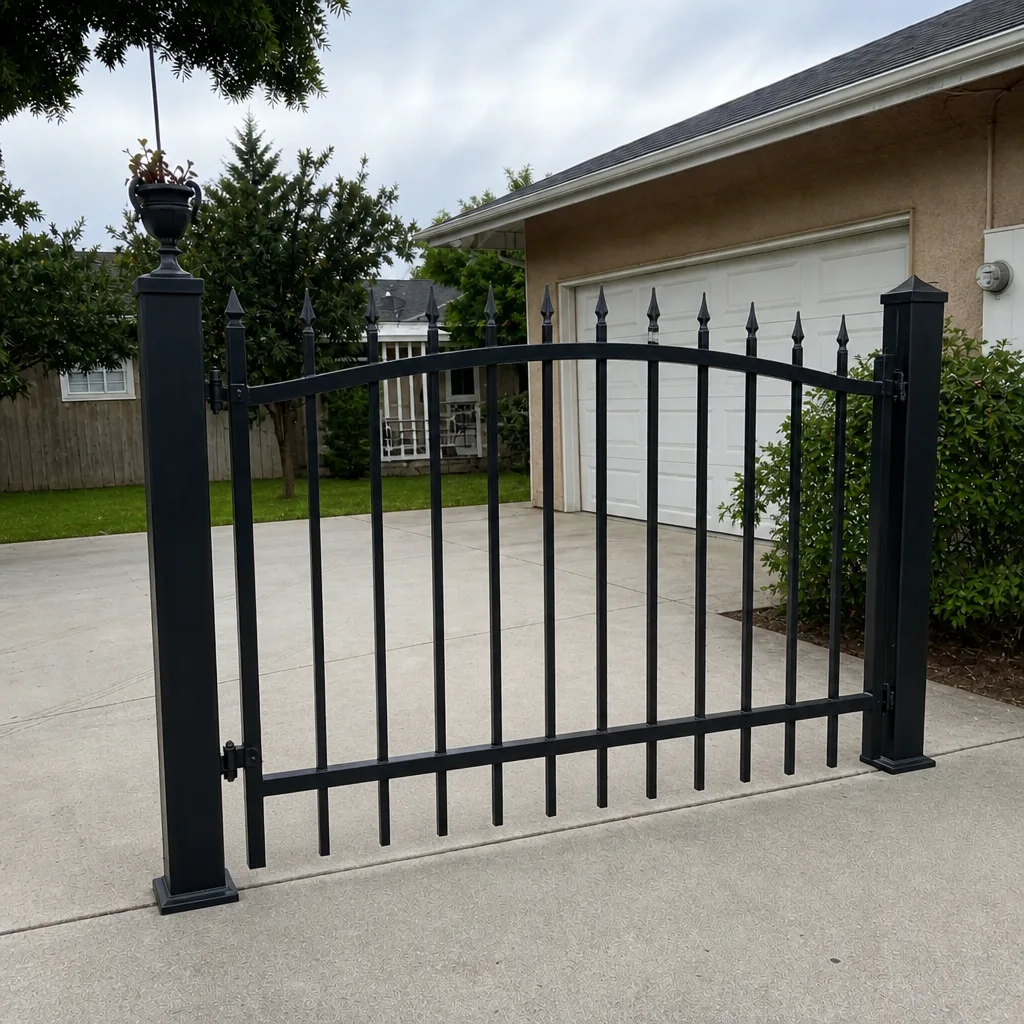
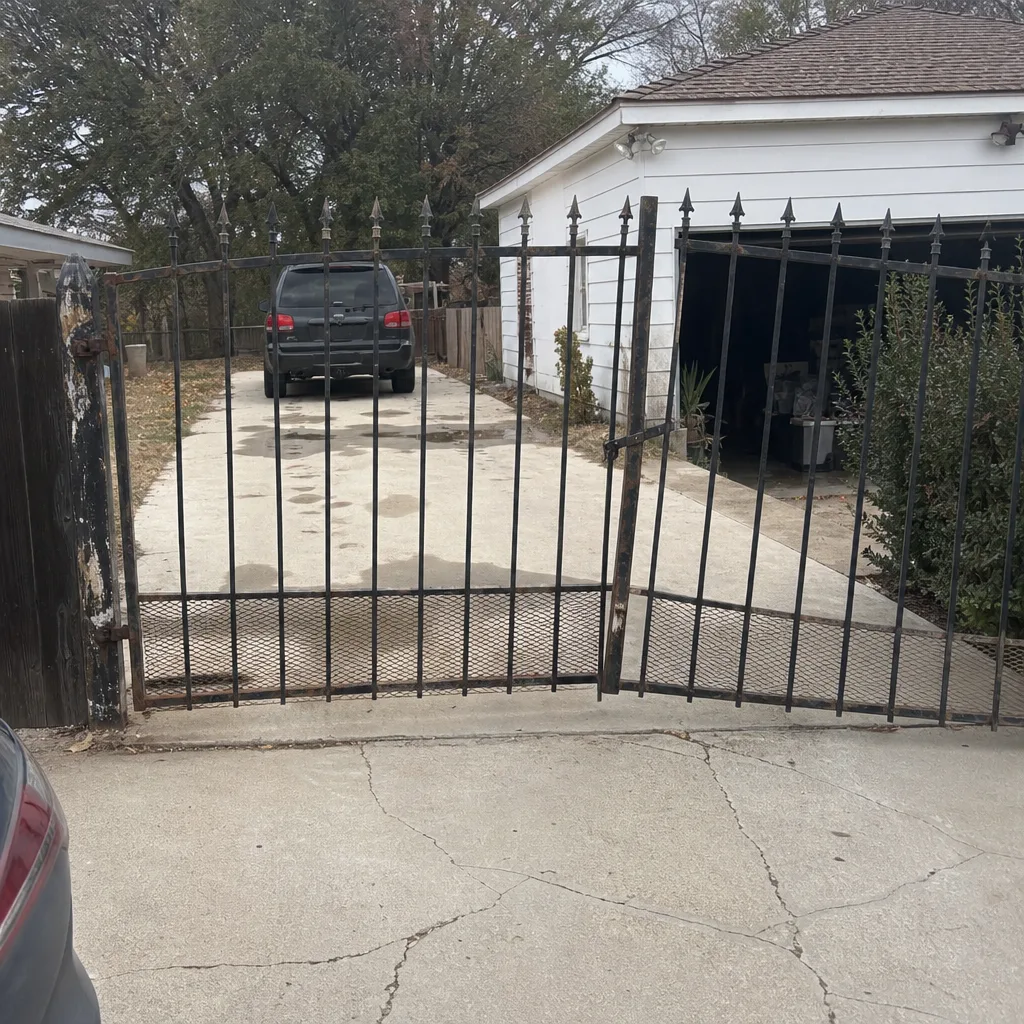
See the difference
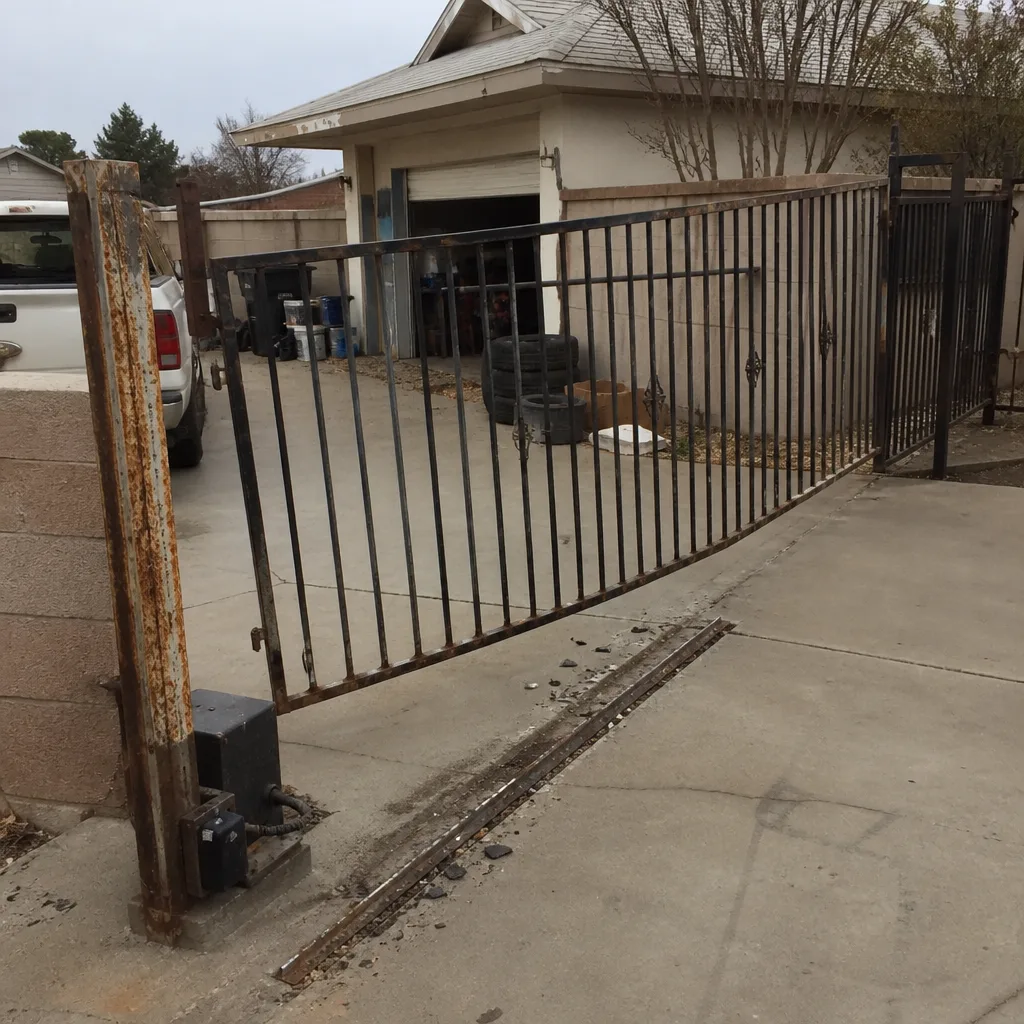 Before
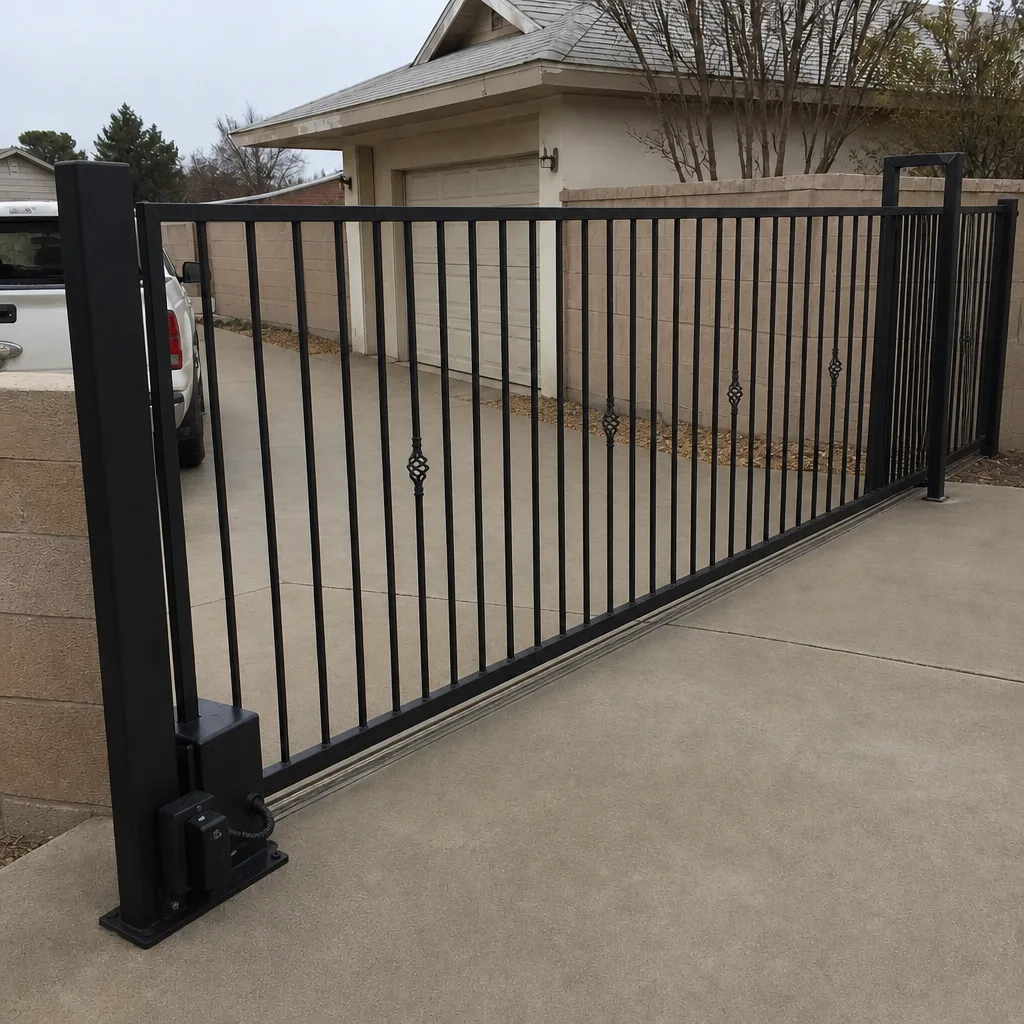 After
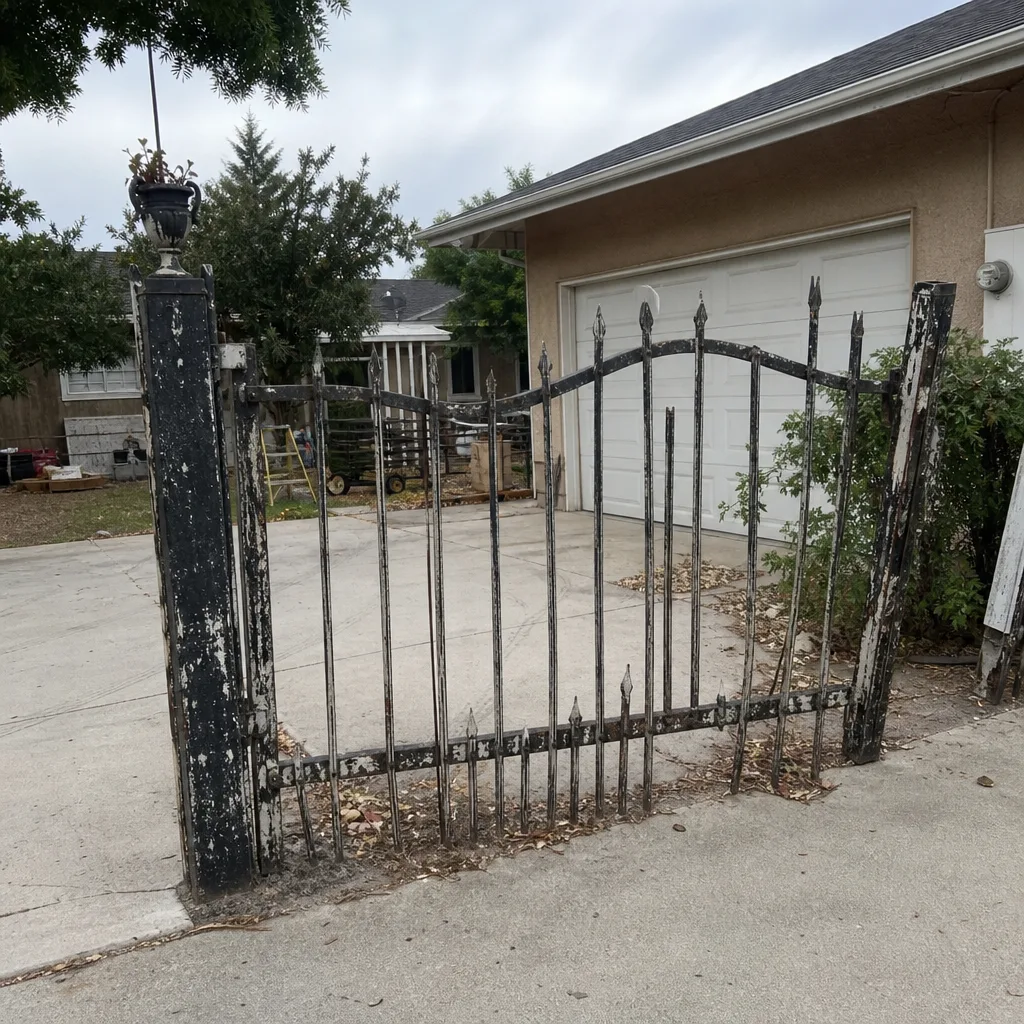 Before
 After
 Before
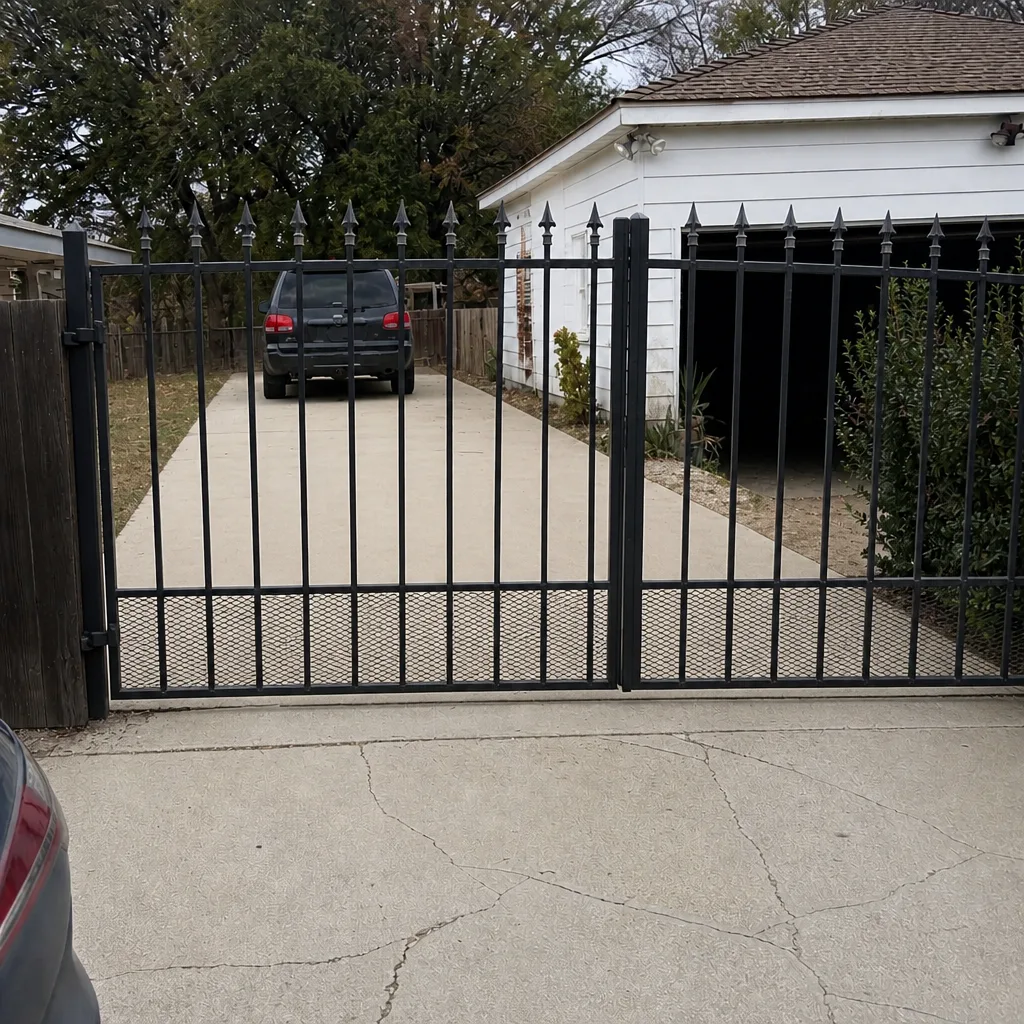 After
When to Call a Professional
Some gate problems are safely handled by the homeowner, and some are not. Anything that involves the electrical components of an automated gate – the operator motor, control board wiring, the power supply circuit, or the safety sensor connections – is genuinely dangerous to work on without the right training, and we recommend a trained professional for any electrical diagnostic or repair. High operating amps, stored energy in capacitors, and 120-volt wiring at the operator location are not places to troubleshoot by trial and error.
Specific scenarios that call for a professional:
- Anything electrical: motor, control board, wiring, sensors, keypads, or remotes.
- A gate that reverses, stops, or behaves erratically without an obvious physical cause.
- A gate that has drifted out of alignment and won’t latch, close, or open fully.
- A leaning gate post that has moved beyond a shim correction.
- A new gate installation, or a replacement of an existing gate system.
- Any gate repair on a commercial or multi-unit access system, including DoorKing and other entry systems.
Gate Repair Bakersfield offers free estimates in Bakersfield – call (866) 389-4932. We work on LiftMaster, FAAC, BFT, Linear, Viking, Ghost Controls, DoorKing, Elite, and Mighty Mule equipment, for residential and commercial properties. Our technicians have up to 11 years of experience with these systems.
For automated gate problems specifically, our electric gate repair service covers motor, control board, sensor, and wiring diagnostics. We answer 24/7. Fast dispatch from 7am to 7pm, Sunday through Friday.
Frequently Asked Questions
Gate repair in Bakersfield is priced per job by a written estimate after we diagnose the fault, so there’s no flat rate we can quote without seeing the gate. Small repairs like hinge replacement or alignment correction cost less than a motor or control board replacement, and the estimate sets the final price before any work starts. Call (866) 389-4932 for a free estimate.
Most gate repairs can be completed same-day if the parts are available and the diagnosis confirms the fault on arrival. We answer 24/7 and dispatch technicians from 7am to 7pm, Sunday through Friday. Call (866) 389-4932 to schedule a repair visit.
We work on the major brands – LiftMaster, FAAC, BFT, Linear, Viking, Ghost Controls, DoorKing, Elite, and Mighty Mule – and those cover most residential and commercial systems in Bakersfield. For an uncommon or discontinued brand, call and describe the model; we’ll tell you honestly whether we can diagnose it. Call (866) 389-4932.
A gate that reverses for no reason is often the control board reading resistance from a gate that’s binding on a hinge, roller, or track, and the board reverses as a safety response. It can also be a misaligned photo eye or a heat-driven fault reading that only shows up at high afternoon temperatures. The correct diagnostic sequence starts with testing the gate by hand, then checking sensors and error codes, before touching the motor. Call (866) 389-4932 for a diagnostic visit.
Most repairs to an existing gate – hinge replacement, motor or control board replacement, sensor repair, or re-setting a post – are maintenance and usually don’t require a permit. New installations, relocations, and new electrical circuits to the gate location may require a permit or inspection. Confirm with the Bakersfield Building Department or Kern County before authorizing structural or electrical work. Call (866) 389-4932 and we’ll walk you through what the repair involves.
A gate that only fails on hot days is usually a thermal-expansion symptom: the gate frame or the post has expanded enough by early afternoon to bind a hinge or misalign a photo eye, and it clears once the temperature drops. That’s a heat-stress repair, not an electrical failure. Call (866) 389-4932 and we’ll inspect the mechanical base first.
The Bottom Line
Gate repair in Bakersfield is a diagnostic exercise before it’s a parts exercise. The four gate types each have a characteristic failure mode – hinge sag on single swing, alignment drift on dual swing, track drag on slide, and anchor settling on vertical pivot. Those mechanical failures then create electrical symptoms that get misdiagnosed as motor or control board problems. Bakersfield’s heat cycle and the San Joaquin Valley soil accelerate every one of them. The homeowner’s best move is to authorize the alignment and footing diagnosis first, confirm which repairs need a permit, and expect the operator work to come after. Gate Repair Bakersfield works across LiftMaster, FAAC, BFT, Linear, Viking, Ghost Controls, DoorKing, Elite, and Mighty Mule systems for residential and commercial properties. Start at Gate Repair Bakersfield or call (866) 389-4932 for a free estimate. We answer 24/7. Fast dispatch from 7am to 7pm, Sunday through Friday.
Written by the team at Gate Repair Bakersfield.