
Last updated November 15, 2026
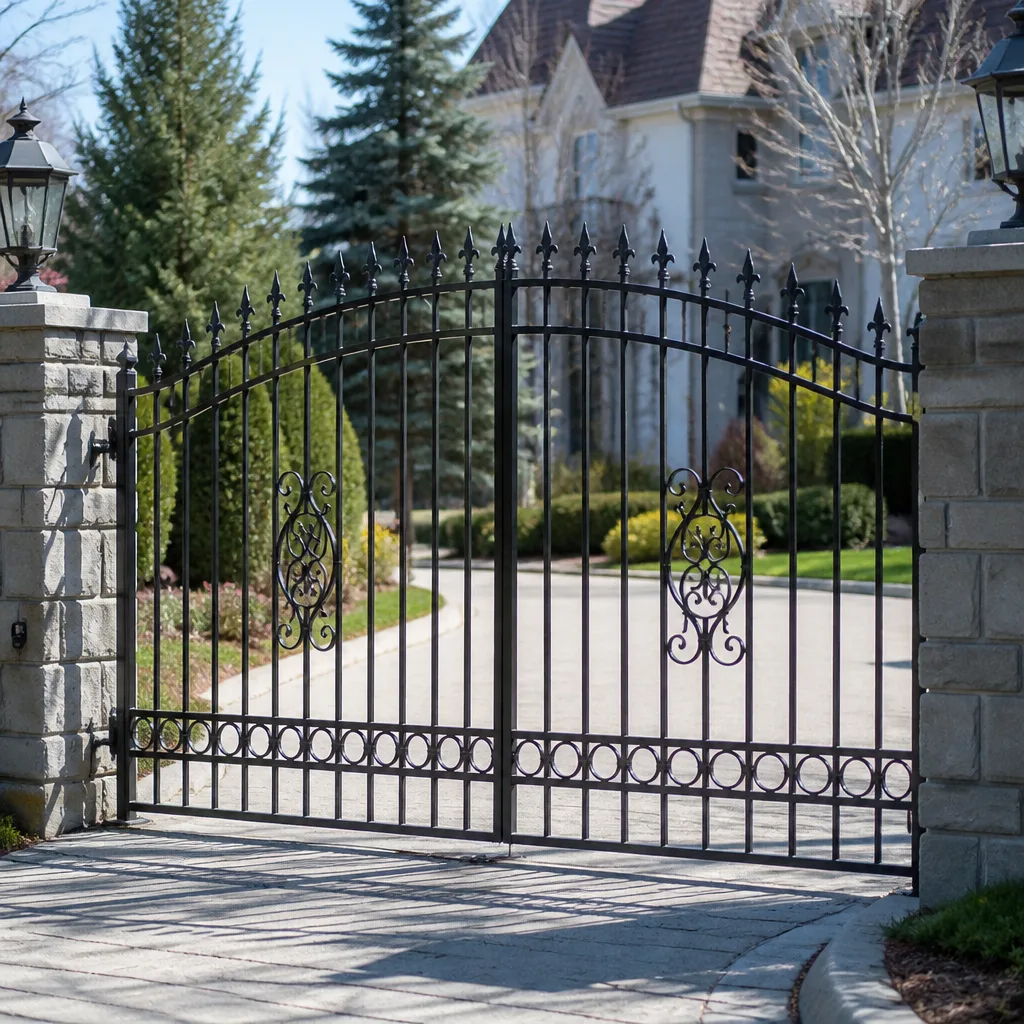 Wrought iron
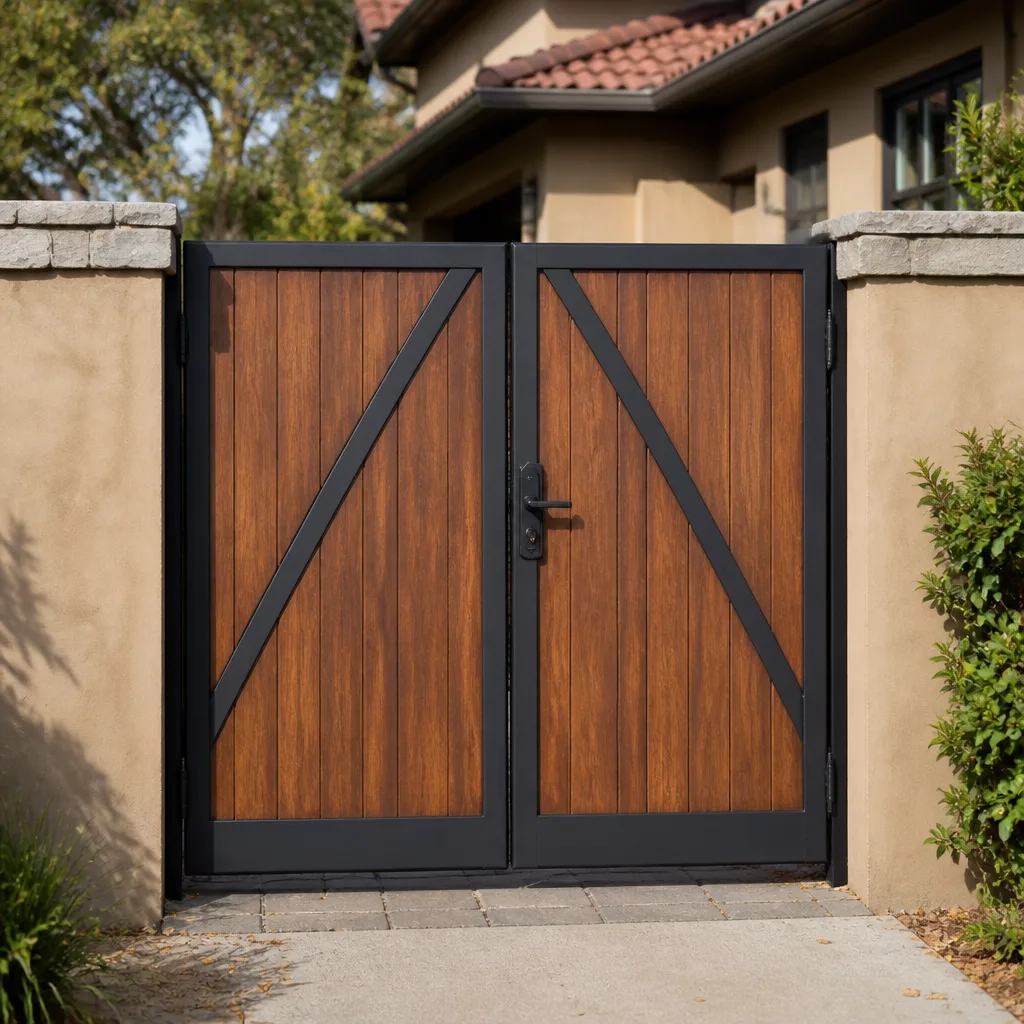 Wood & steel frame
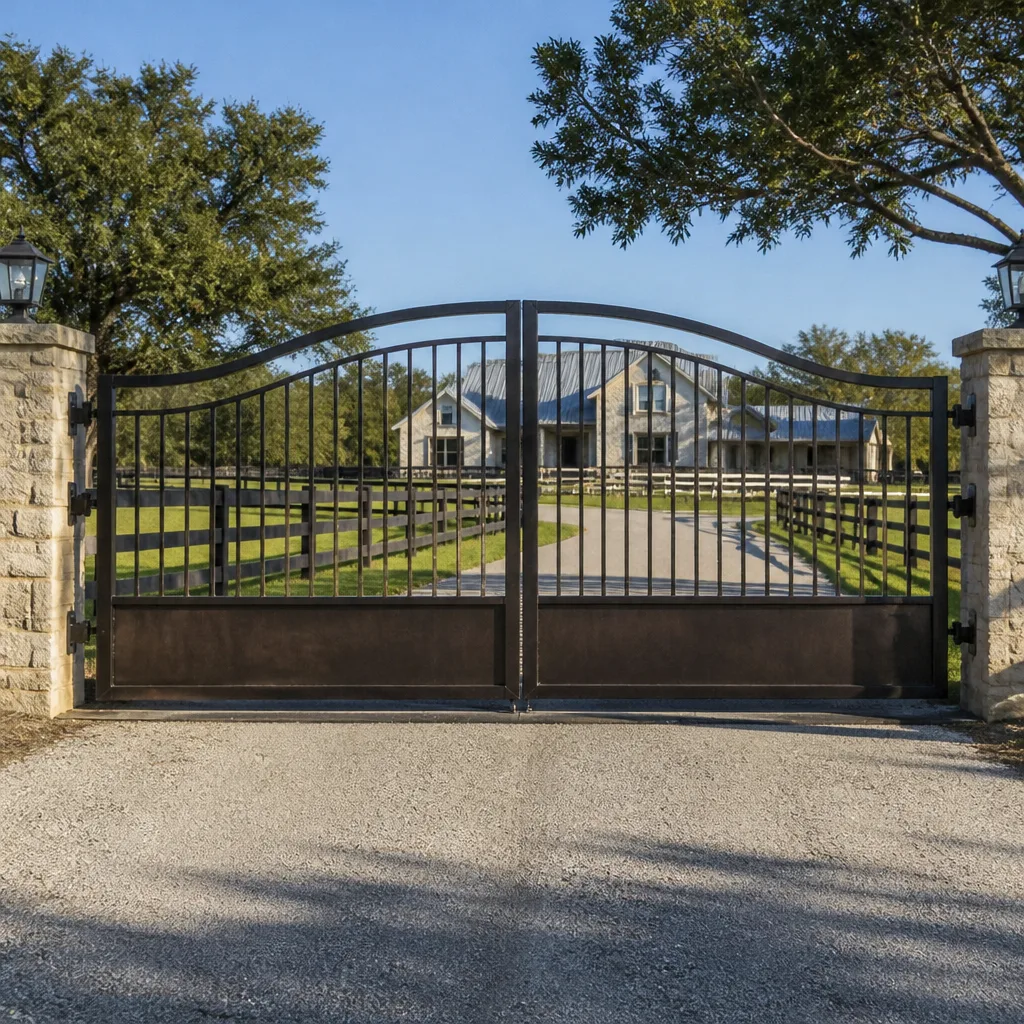 Farm & ranch
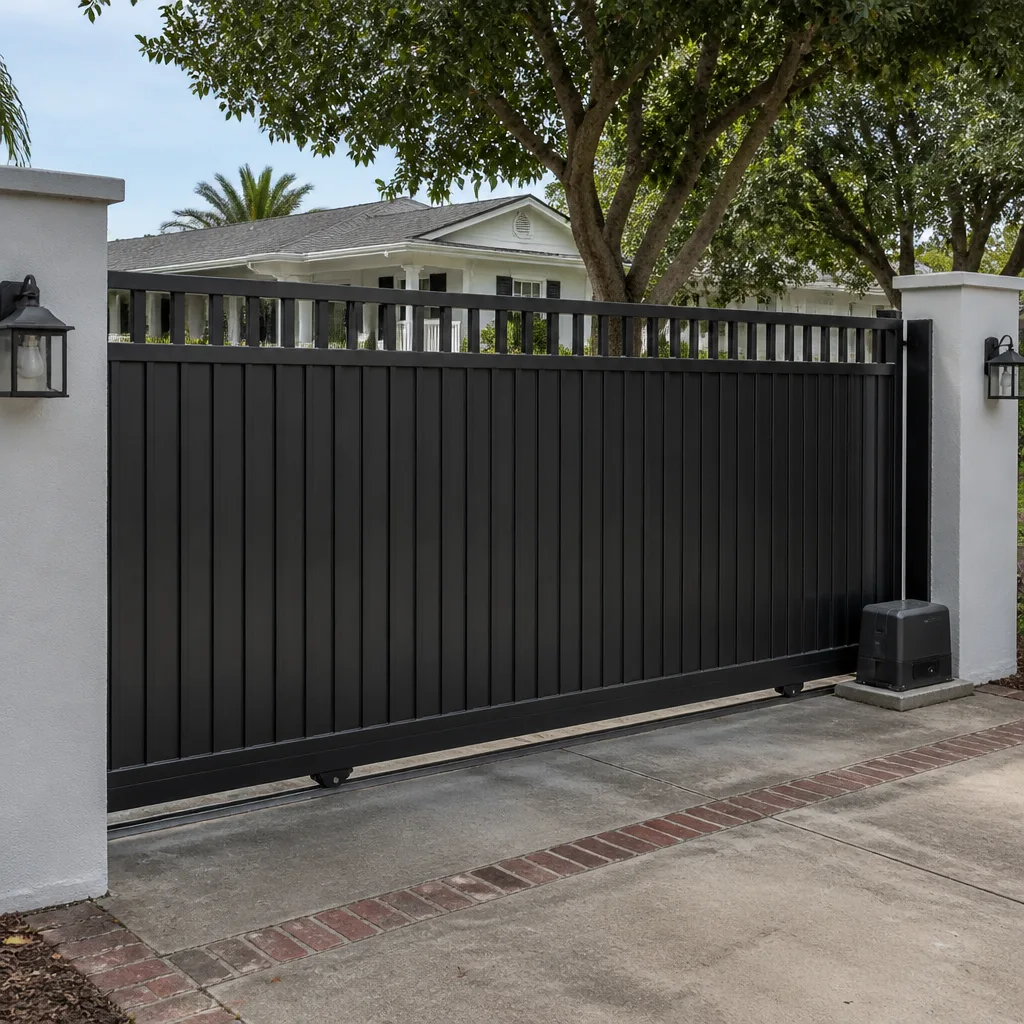 Sliding driveway gates
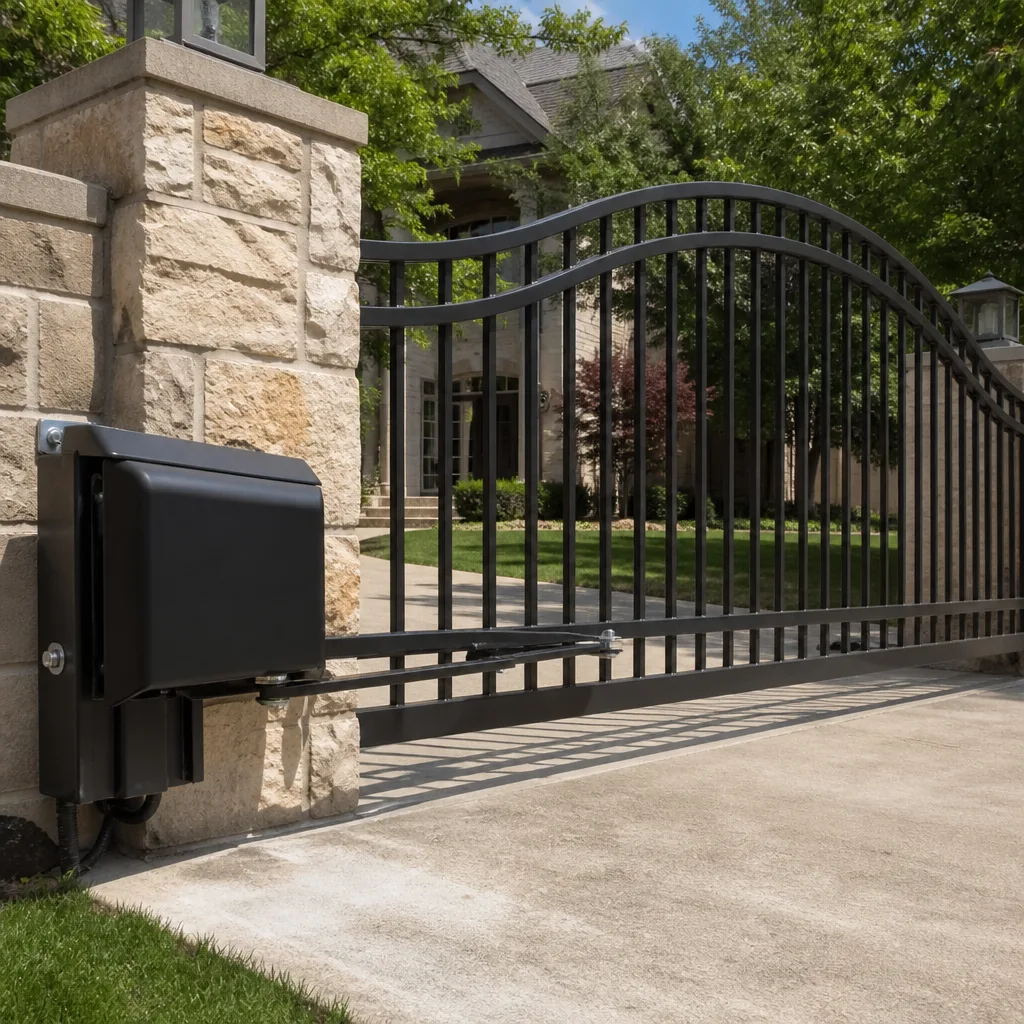 LiftMaster operators
Free on-site gate assessment - hinges, posts, and your LiftMaster or Nice gate operator checked before anything is quoted
The assessment is free and the quote is the invoice.
Get your free estimateHow to Hire a Gate Repair Contractor in Bakersfield: A Step-by-Step Guide
Most people hire a gate contractor the same way they hire anyone else: they search, they call the first number, and they take the quote. That’s how you end up paying twice. The most common calls we get come from homeowners who already paid someone else – a handyman who swapped a motor but left the root cause in place, a fence crew that adjusted a gate and inadvertently voided the operator’s warranty, or a low-bid installer who ran the wrong wire gauge for the control circuit. None of those are unusual. They happen because nobody asked the right questions before work started. This guide gives you those questions, plus the California licensing checks and red-flag signals that separate a gate specialist from a generalist. If you’re hiring a gate contractor in Bakersfield, read this first.
Quick Answer
To hire a gate repair contractor in Bakersfield, verify their California contractor license on the CSLB database, confirm which operator brands they actually service, and insist on an on-site inspection and a component-level written scope before any work begins. A legitimate gate specialist will name the brand on your operator, explain how they diagnose a control board rather than just replacing it, and separate parts from labor in the warranty. If a contractor quotes you over the phone without looking at the gate, walk away.
Styles & brands we work with
- Wrought iron
- Wood & steel frame
- Farm & ranch
- Sliding driveway gates
- LiftMaster operators
Table of Contents
- Step 1: Verify the Contractor’s License in Under Two Minutes
- Step 2: Ask These Five Technical Questions Before You Get a Quote
- Step 3: Demand a Written Scope of Work at the Component Level
- Step 4: Understand Why the Lowest Bid Is Often the Most Expensive
- Step 5: Get Labor and Parts Warranties in Writing, Separately
- Red Flags Specific to the Bakersfield Market
- How to Tell a Gate Specialist from a Generalist
- What a Proper Diagnostic Process Looks Like
Step 1: Verify the Contractor’s License in Under Two Minutes
California requires contractors who build, alter, or repair fencing and gates to hold a valid license issued by the Contractors State License Board. The license class that covers this work is C-13 for fencing, and C-61/D28 for locks, gates, and safes. When you hire a gate repair contractor in Bakersfield, the first thing to confirm is that their license exists, is active, and covers the work they’re proposing.
The CSLB maintains a public license lookup at cslb.ca.gov. You can search by license number, business name, or personnel name. It takes two minutes, and it tells you three things instantly: whether the license is active, whether it’s in good standing, and whether it has any complaints or citations attached. That last part matters more than most people realize.
- Open the CSLB license lookup on your phone before the contractor leaves your driveway.
- Search the business name on the quote, not the name on the truck.
- Confirm the license class matches the work – C-13 or C-61/D28.
- Check status: active, expired, or suspended.
- Review any complaint disclosure on the record.
If the contractor is hesitant to give you their license number, or if the number on the quote doesn’t match the name in the CSLB database, that’s your answer. A legitimate contractor hands over the license number without being asked. This step is free, and it’s the single most reliable filter you have. Skip it and no amount of good conversation on the phone will protect you. It’s also worth knowing that the license lookup works the same way for commercial gate installers working on HOA entrances and multi-unit access control systems, so this step applies whether your gate is a single-family driveway swing gate or a slide gate at an apartment complex.
Step 2: Ask These Five Technical Questions Before You Get a Quote
This is where most hiring decisions are won or lost. A specialist answers these without hesitation. A generalist pivots to price, availability, or a vague assurance that they can “take care of it.” Don’t move past a question until you get a specific answer.
- “What’s your process for diagnosing a control board before condemning it?” A good answer mentions testing the low-voltage output, checking the limit switch or encoder inputs, verifying the incoming power, and ruling out a bad sensor or a remote receiver fault before deciding the board itself is dead. A weak answer is “we replace it and see.” Replacing a board before finding the root cause is how you end up paying twice.
- “What operator brands do you work on regularly?” You’re listening for brand names matched to the actual equipment on your gate. If they say LiftMaster, ask what they’d look at first on a LiftMaster control fault. If they mention nothing specific, they’re likely reading the label for the first time.
- “How do you test safety devices and loop detectors?” Loops, photo-eyes, and edge sensors are part of every automated gate. A specialist carries the equipment to test them, not just eyeball them. If they don’t test obstruction detection, the safety system is unverified.
- “Do you run a new power or low-voltage line, or do you sub that out?” Electric gate repair often touches wiring. If they outsource it, you’ll be managing two contractors and the responsibility for the finished job gets blurry.
- “Why do you think this failure happened?” A repair-first specialist has a theory. A parts-swapper has a quote.
These five questions do two things. They tell you whether the person in front of you actually understands gate systems, and they tell the contractor you’re not going to accept a generic answer. That alone improves the quality of the quote you receive.
Step 3: Demand a Written Scope of Work at the Component Level
A written scope is your protection against scope creep and surprise invoices. It doesn’t need to be long, but it does need to tell you exactly what component is being worked on, what part is being replaced, where that part comes from, and what’s guaranteed afterward. If your electric gate repair quote simply says “repair gate – $X,” it’s not a scope, it’s a number.
Here’s what a legitimate scope should include:
- Component-level itemization. Not “motor repair” but “operator motor, control board, limit switch bracket, and safety sensor” as separate lines with the work described for each.
- Parts sourcing disclosure. Whether the parts are OEM (original equipment manufacturer) or aftermarket, and which brand. If they won’t say, ask directly.
- Labor warranty terms. How long the workmanship is covered and what conditions void it.
- Parts warranty terms. Kept separate from labor – this is a common point of dispute. A part can be under warranty while the labor to install it is not.
- What’s excluded. If concrete, trenching, or electrical work is not included, say so up front.
- Access and cleanup. Who moves the gate, who leaves the site in what condition.
Ask for the scope before you sign anything, and compare it line by line with any other quote you’ve received. If two quotes differ by a wide margin, the difference is almost always visible in the itemization. One quote includes the safety sensor, the other doesn’t. One names OEM parts, the other is silent on it. When you ask a gate repair contractor for a written scope and they hand you a one-line estimate, that’s a signal about how the repair itself will go.
Step 4: Understand Why the Lowest Bid Is Often the Most Expensive
The lowest bid usually wins for one reason nobody talks about on the phone: parts substitution. An aftermarket control board, a cheap motor, or a non-OEM receiver may cost a fraction of what the original equipment costs, and it often fails sooner, requiring a second repair. When you compare quotes, you’re not really comparing prices. You’re comparing parts.
Here’s how to spot aftermarket components in a quote before work starts:
- The quote names a brand but not a part number or model. Ask for both.
- The quoted part price is dramatically lower than the same part sourced from the manufacturer. Ask where it comes from.
- The contractor can’t tell you whether the part is OEM or equivalent. A real specialist knows the difference and will say so.
- The quote contains the word “or similar” next to any component. That’s a substitution clause, and it means you don’t know what you’re getting.
- The labor warranty on a replacement part is shorter than the parts warranty you’d get elsewhere. Reads as confidence from the contractor that the part will last.
None of this means a bargain is impossible. It means a bargain should come with an explanation. If a quote is significantly lower than the others, ask why. A legitimate contractor will tell you: a different brand of safety edge, a good price they negotiated, a component that’s genuinely equivalent. If the answer is vague, the price reflects something, and that something usually isn’t you.
Step 5: Get Labor and Parts Warranties in Writing, Separately
Warranty is where honest contractors and fast ones part ways. A written warranty should spell out two things separately: how long the labor is covered, and how long the parts are covered. When those terms are combined into a single number, the contractor can point to the part and point to the labor as the same thing, and you have no leverage when the repair fails in the window.
Ask these warranty questions before you sign:
- What’s the labor warranty, in days or months, and what voids it?
- What’s the parts warranty, and who honors it – you or me?
- Is the warranty transferable if I sell the property?
- What happens if the same component fails again inside the window?
- Are the warranty terms printed on the invoice, or only on a website I can’t find later?
Get the answers in writing on the quote or the final invoice. Verbal warranties are the easiest thing in the world to argue about six months later. For a residential gate in Bakersfield, labor and parts warranties running a full year are common; a shorter labor window is a sign the contractor expects the repair might not hold. Separately, ask whether the warranty covers commercial-grade equipment – the operators used at an HOA or a multi-unit property are different animals from a residential swing gate operator, and the warranty should reflect that.
Red Flags Specific to the Bakersfield Market
Bakersfield has a wide spread of gate work, from older residential properties with basic swing gates to new commercial installations with Loop Detector-based access control. That range creates opportunities for contractors who are willing to bid anything without knowing the equipment. Here’s what to watch for in this market specifically:
They can’t name the operator brand on-site
Every operator has a brand, and every brand has its own failure modes. LiftMaster LA-series swing and slide operators use different diagnostic sequences than a FAAC or BFT commercial unit. If the contractor walks up to your gate, looks at the operator housing, and doesn’t know the brand, they’re going to learn on your gate. Ask them to read it and say it out loud. That’s a fifteen-second test.
They don’t bring loop detector test equipment
A gate that opens and closes on its own, or fails to close at all, is frequently a loop or sensor issue, not a motor problem. Loops sit in the concrete or pavement below the gate and require specific testing equipment to verify they’re picking up correctly. If the contractor’s answer to an erratic gate is “probably the board,” without testing the loops and safety edges first, they’ve skipped the diagnosis.
They quote over the phone without inspection
No legitimate gate specialist can give you a firm price over the phone. What they can give you is a ballpark range, contingent on inspection. If the number they give is firm and specific, ask what they based it on. If the answer is “experience” or “the usual,” the price is going to change when they see the gate, and that’s the point where you’re already committed.
They blame the last contractor without evidence
A contractor who walks onto a site, looks at an existing installation, and immediately says “whoever did this messed it up” is selling you a full replacement. Not because your gate needs it, but because the framing makes the replacement easier to justify. A real specialist explains what’s there, what’s working, and what needs attention. The honest answer is sometimes “the gate is fine, the operator needs a part.” That answer is worth finding.
They avoid questions about the C-13 or C-61/D28 license
In a market with a lot of contractor choice, the license question still filters more people out than it should. It’s the cheapest and most reliable check you have. Use it before you use any other.
How to Tell a Gate Specialist from a Generalist
The difference is almost always visible in the way they talk about the equipment. A generalist talks about the gate as a thing that “opens and closes.” A specialist talks about the operator, the control board, the limit switch, the safety edge, the loop, the wiring harness, and the remote receiver, and they name the brand each time. If you’re in Bakersfield and your gate isn’t working, the specialist is the one you want when the generalist is already booked on a different job.
Here’s how the two profiles differ in practice:
- Brand fluency. A specialist works across multiple brands and knows how they differ. We work on your brand, whether it’s LiftMaster, FAAC, BFT, or Linear, and the diagnostic sequence changes with the equipment.
- Equipment that’s part of the visit. A specialist brings the tools to test what they’re diagnosing. A generalist brings what fits in a toolbox.
- Repair-first posture. A specialist’s first instinct is to fix the component that failed. A generalist’s first instinct is often to replace the whole operator.
- Full-lifecycle coverage. A specialist can repair, diagnose electric faults, and install a new system when that’s the right answer. A generalist hands off the parts they don’t want to touch.
- Both residential and commercial. A specialist is comfortable on a driveway gate and on a commercial slide gate at a warehouse or HOA entrance. A generalist usually isn’t.
None of this is a knock on generalists. They do good work in their lane. But a gate is not a lane most generalists should be in. The operator wiring, the safety devices, and the control hierarchy are their own specialty, and they require the right experience. Our technicians have up to 11 years of experience working specifically on gate systems, residential and commercial, across the brands we service. That’s the level of focus to look for when you’re comparing contractors in Bakersfield or anywhere else.
What a Proper Diagnostic Process Looks Like
When a gate stops working, the failure could be anywhere in the system: the operator’s motor, the control board, the low-voltage harness, a safety sensor, a limit switch, a remote, a keypad, or the incoming power. A competent diagnostic process checks these in order and rules each one out rather than guessing. Here’s the general sequence a specialist works through.
- Confirm the failure mode. Does the gate not move at all? Move partway and stop? Reverse mid-travel? Open but not close? Each symptom narrows the suspect list before anyone opens a housing.
- Verify incoming power. A bad breaker, a tripped GFCI, or a low-voltage transformer issue can mimic a dead operator. No point diagnosing a control board if the power’s off.
- Check the safety devices. Photo-eyes, safety edges, and loop detectors can cause a gate to reverse, refuse to close, or intermittently stop. Testing them first prevents wasting time on the wrong part.
- Test the control board inputs and outputs. Does the board receive a command and fail to output? Does the limit switch register? A specialist checks the board’s behavior before condemning it.
- Inspect the mechanical side. A binding gate or a worn trolley can look like an electrical problem. Rollers, hinges, tracks, and cantilever trolley assemblies should all be checked for free movement.
- Confirm the fix before you approve it. Once the root cause is identified, the repair is straightforward. A good contractor explains what failed, why it failed, and what the repair does to prevent the same failure from coming back.
This is also the answer to a common question we get: “Why can’t you just tell me over the phone?” Because the phone can’t see the gate, the operator, the sensors, or the wiring, and a guess is not a diagnosis. The best a responsible contractor can do over the phone is give you a ballpark and point you toward an on-site inspection. Anyone who quotes a firm price over the phone without seeing the system is guessing, and the price will change when they see it.
Common Mistakes to Avoid
- Hiring the first contractor who answers. In a market with a lot of choices, the first one through is rarely the best fit. Call two or three, ask the five questions above, and compare the written scopes. The comparison itself is free.
- Accepting a phone estimate as final. A firm phone price is a guess dressed as a quote, and it will almost always go up after inspection. Ask for a ballpark with the explicit caveat that the written estimate will set the final price.
- Skipping the license check. Two minutes on the CSLB database will filter out the contractors you don’t want. It’s the only step that’s both free and definitive.
- Letting a generalist replace an operator because they can’t diagnose it. A generalist who doesn’t know the brand occasionally recommends a full replacement because diagnosing the existing system is outside their scope. Get a second opinion from a gate specialist before authorizing replacement.
- Signing an invoice with a single-number warranty. Labor and parts must be written separately with their own terms and their own duration. Combined terms give the contractor room to blame the part, then the labor, then the part again.
- Assuming the motor is the problem. Gate failures frequently trace to a sensor, a loop, a limit switch, or a wiring issue. If the contractor is on-site and hasn’t tested anything but the motor, the diagnosis isn’t complete.
- Ignoring installation as a repair option. When a gate has been repaired repeatedly and the components are at the end of their life, replacement is often the better long-term decision. But that decision should come from a contractor who’s diagnosed the system, not from one who replaced it on the first visit.
You can see our full range of what we cover by visiting Gate Repair Bakersfield.
See the difference
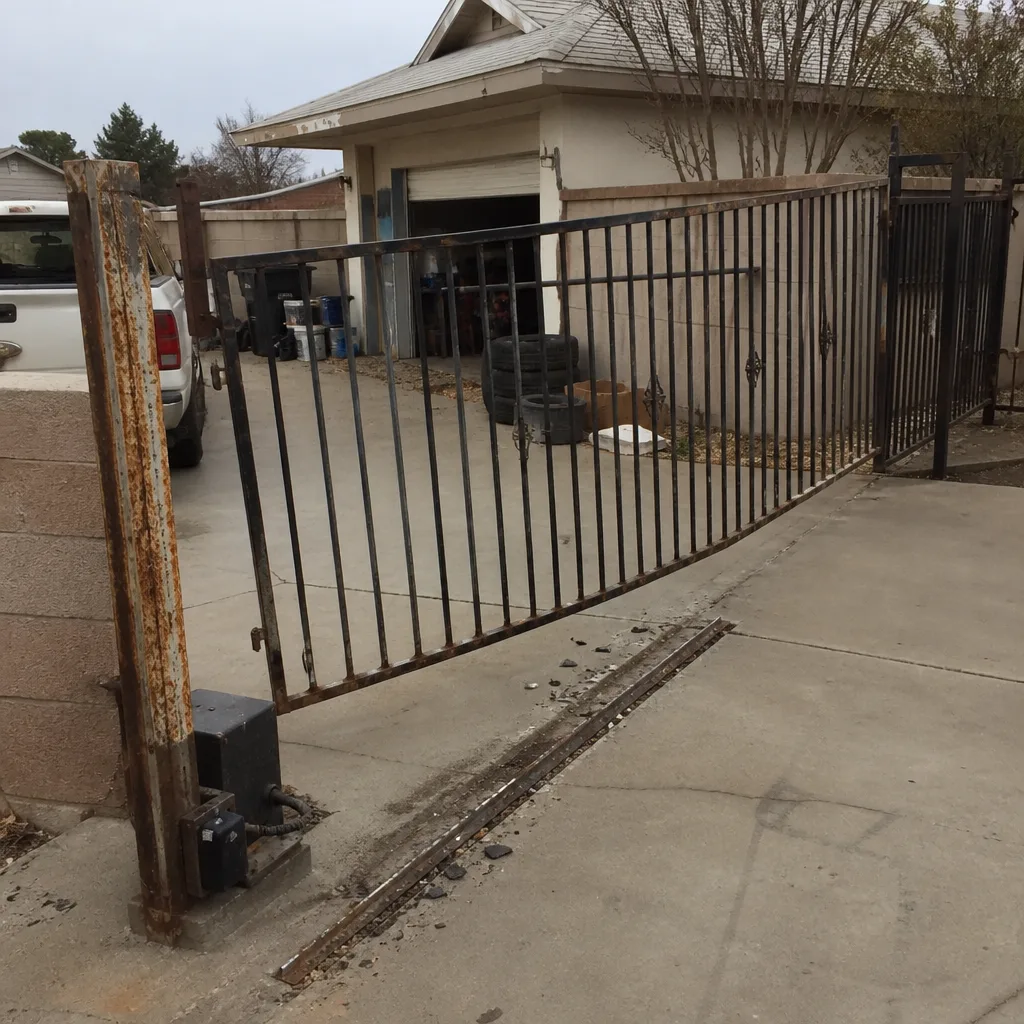 Before
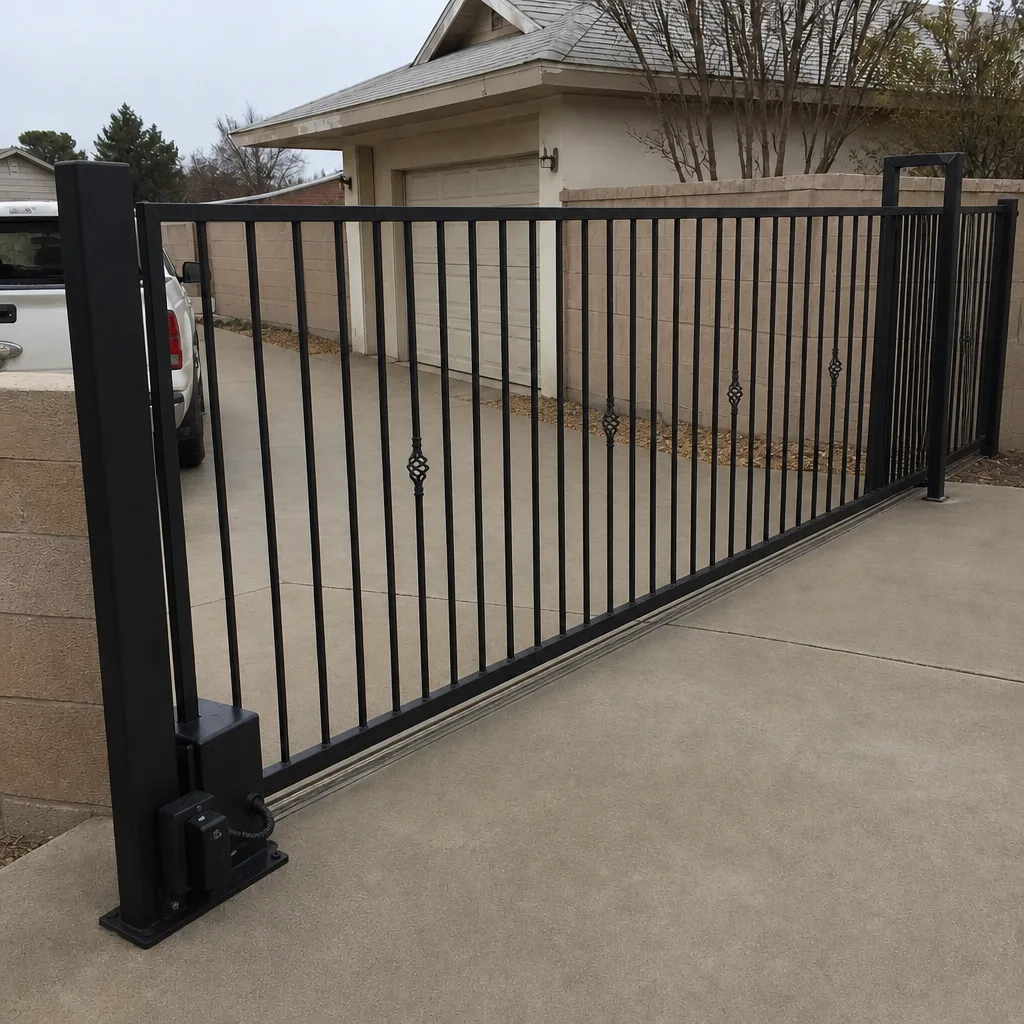 After
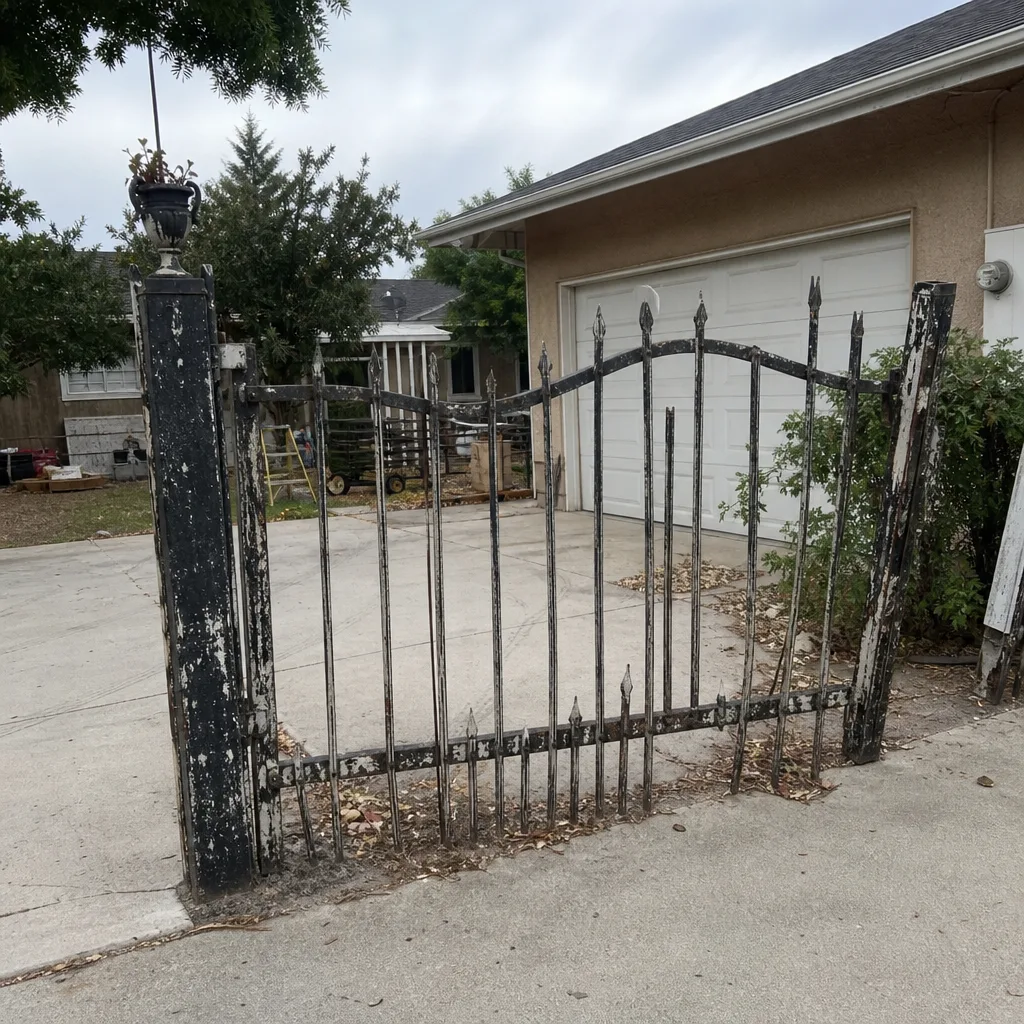 Before
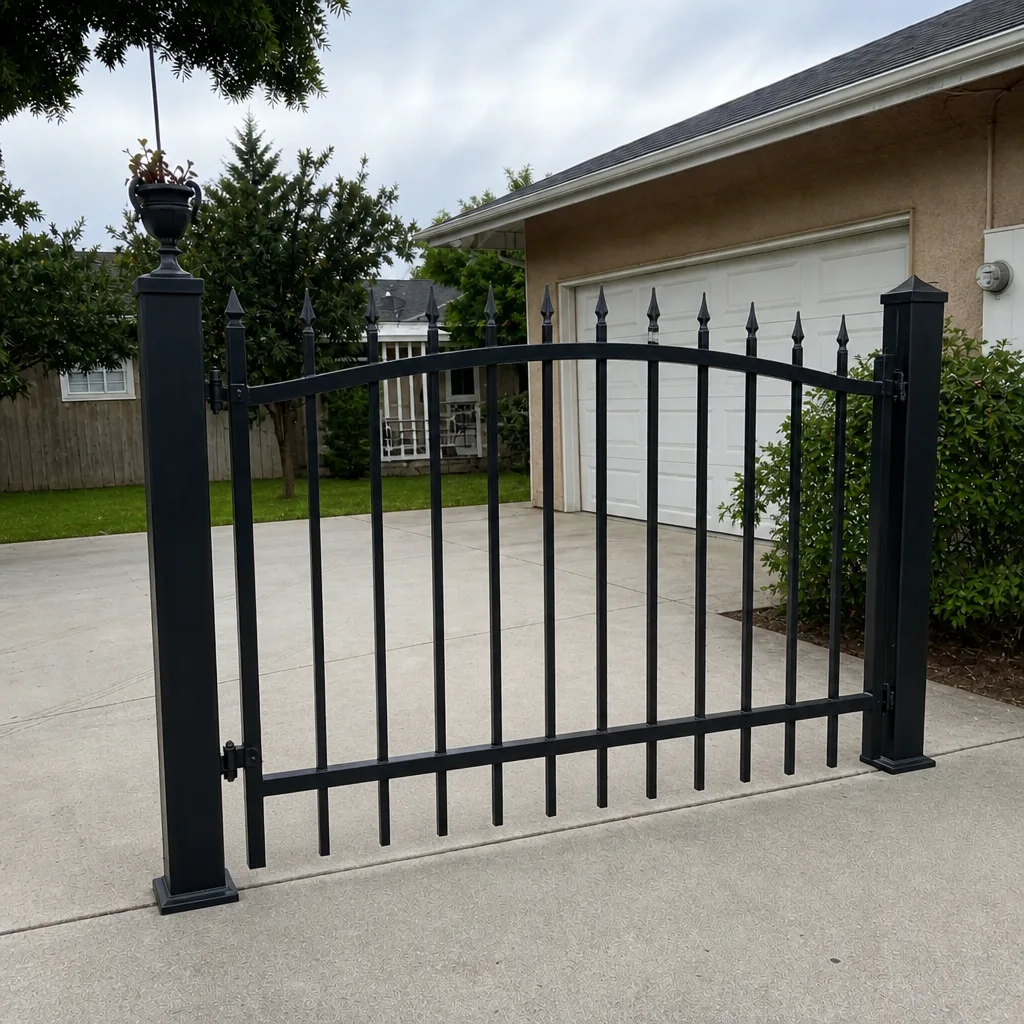 After
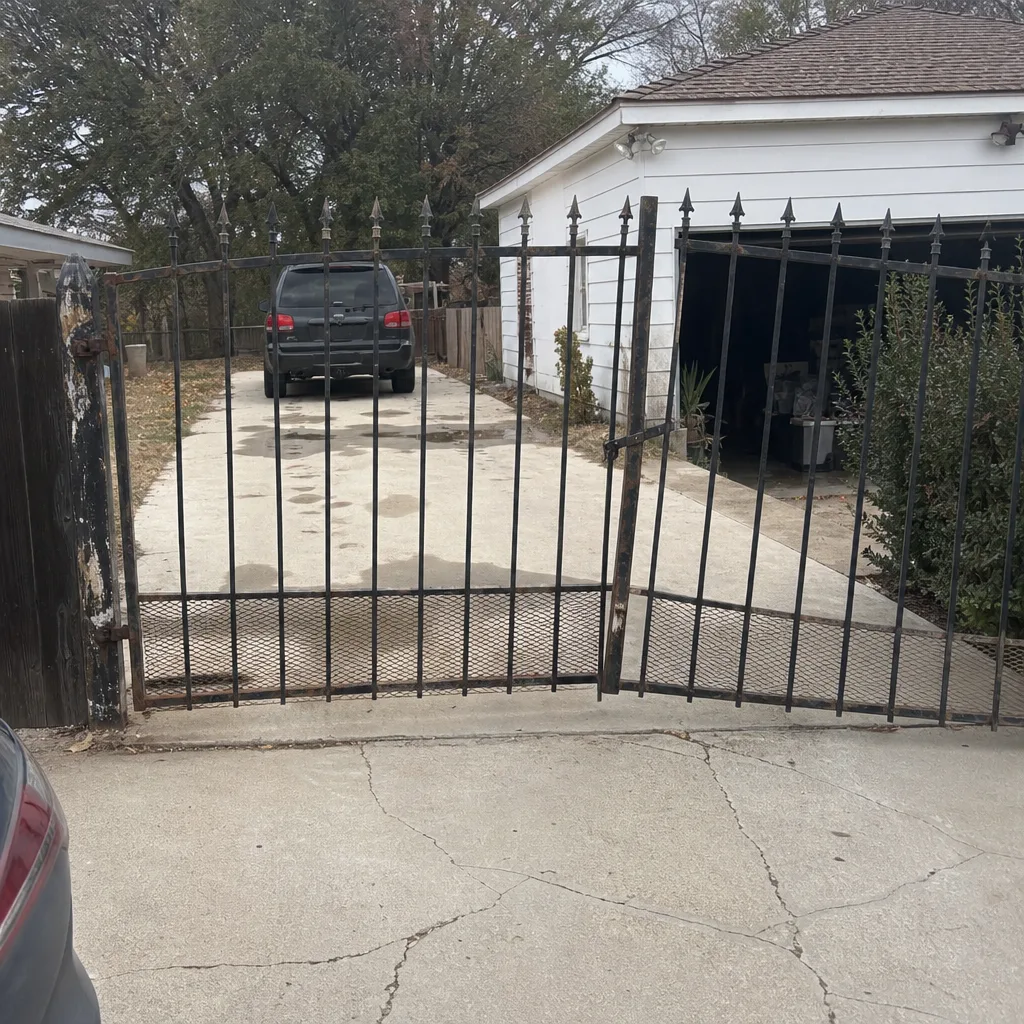 Before
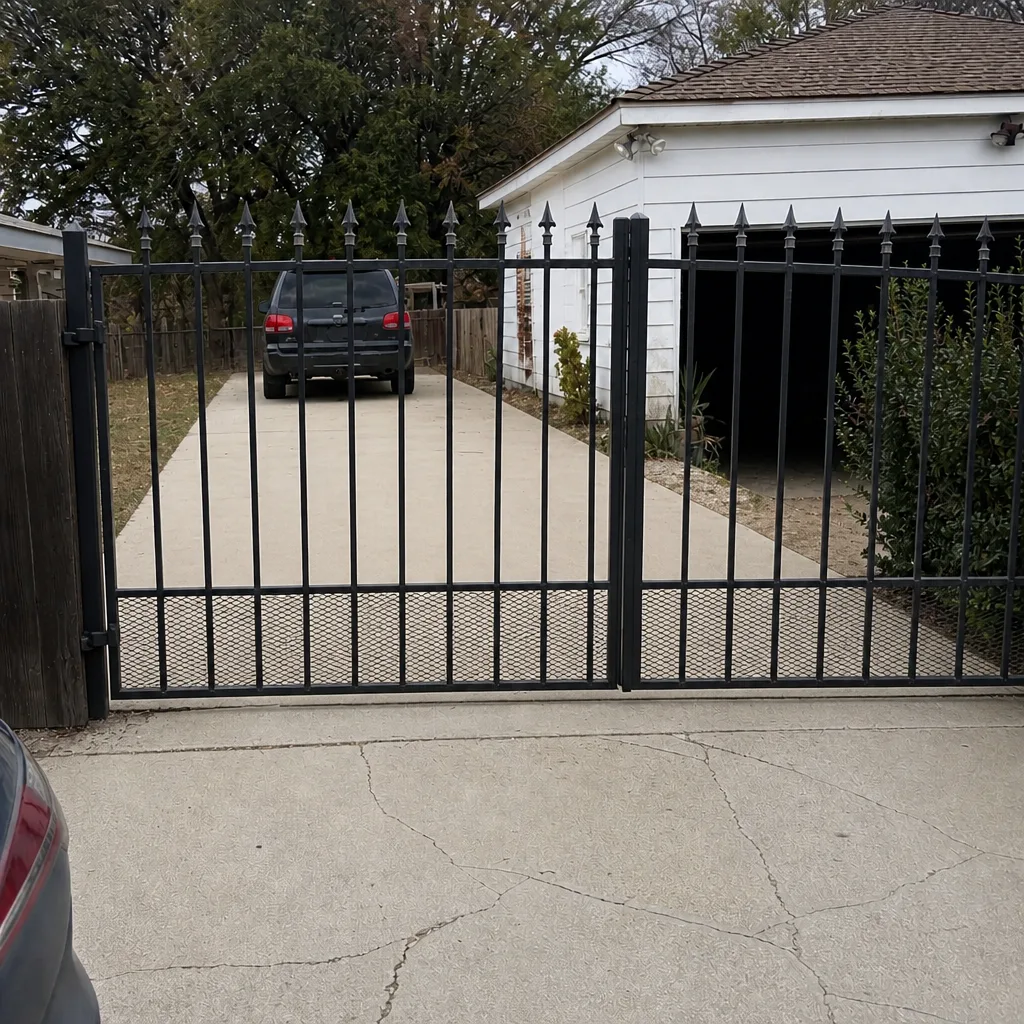 After
When to Call a Professional
Call a specialist when the gate moves erratically, stops partway, reverses unexpectedly, or fails to respond to the remote at all. Call when the operator motor runs but the gate doesn’t move, or when the gate moves but the safety sensor doesn’t respond to an obstruction. Call when you’ve had a repair that didn’t hold, or when a contractor has diagnosed the system and wants to replace parts you don’t understand. Call when the wiring, the control board, or the power supply is in question, because those are components where a wrong answer can be genuinely dangerous and a trained specialist should be the one working on them.
Gate Repair Bakersfield offers free estimates in Bakersfield – call (866) 389-4932. We answer 24/7. Fast dispatch from 7am to 7pm, Sunday through Friday. Our technicians have up to 11 years of experience on residential and commercial gate systems, and we work on your brand across LiftMaster, FAAC, BFT, Linear, and the other brands we service.
Frequently Asked Questions
The price of a gate repair in Bakersfield depends on what’s actually failed. A simple adjustment or a sensor replacement is on the lower end; a control board or motor replacement is higher, and commercial-grade equipment is priced differently from residential. The written estimate sets the final price, and it’s quoted and agreed before any work starts. Call (866) 389-4932 for an exact quote – estimates are free.
California requires a contractor license for gate and fencing work, and the classes that cover it are C-13 (fencing) and C-61/D28 (locks, gates, and safes). You can verify a contractor’s license on the CSLB database at cslb.ca.gov in about two minutes by searching the business name on their quote. If the license isn’t active or the class doesn’t match the work, hire someone else.
We can give you a ballpark based on the symptoms, but we can’t diagnose a gate without inspecting it. Gate failures can originate in the motor, the control board, the safety sensors, the loops, the wiring, or the mechanical hardware, and those look identical to a homeowner from the outside. The on-site inspection is what makes a firm number possible.
We service LiftMaster, FAAC, BFT, Linear, Viking, Ghost Controls, DoorKing, Elite, and Mighty Mule, covering both residential and commercial-grade equipment. Each brand has its own diagnostic sequence and its own typical failure points, so knowing the specific operator is part of the job. If your gate is a brand not on that list, call us anyway and tell us the make and model.
Because low bids are almost always achieved through parts substitution. Aftermarket control boards, motors, and sensors cost less than OEM equipment and often fail sooner, so you pay for the first repair and the second. When you get a low quote, ask for the part numbers and whether the parts are OEM or aftermarket. The answer tells you most of what you need to know.
Yes. We work on both residential systems and commercial-grade equipment, including operators used at HOA entrances, multi-unit properties, and small business properties. The equipment is different in each case, and a repair on a commercial operator’s control system gets the same diagnostic approach as a residential one.
Repair is the right answer most of the time, especially when a single component like a sensor, control board, or motor has failed and the rest of the system is in good shape. Replacement becomes the better choice when the gate has been repeatedly repaired, the components are at the end of their service life, or the operator’s brand no longer has parts available. Get a diagnosis before you decide.
The Bottom Line
Hiring a gate repair contractor in Bakersfield isn’t complicated, but it does reward attention. Verify the license on the CSLB database. Ask the five technical questions before anyone quotes you a price. Insist on a component-level written scope with parts sourcing disclosed and labor and parts warranties kept separate. Treat a surprisingly low bid as an invitation to ask what’s being substituted, and treat a phone-only firm quote as a guess. The contractor who names the brand on your operator, explains how they test the control board before condemning it, and hands you a written estimate without being asked is the one you want working on your gate.
Call (866) 389-4932 for a free estimate. We answer 24/7. Fast dispatch from 7am to 7pm, Sunday through Friday.
Written by the team at Gate Repair Bakersfield.